A group of living things
Soil antibiotic-makers
Actinomycetota
Branching soil bacteria behind the smell of rain and many of our medicines
This branch is shown at about 1.2 billion years ago; its age is a rough estimate.
You and soil antibiotic-makers meet in the All life branch, shown at about 4.2 billion years ago (on 1 January, in a calendar from life's shared ancestor to today).
That earthy smell of a garden after rain? Much of it comes from these bacteria. Soil bacteria called Streptomyces make a chemical called geosmin, which means 'earth smell' in ancient Greek. Every Streptomyces species studied has the gene to make it.
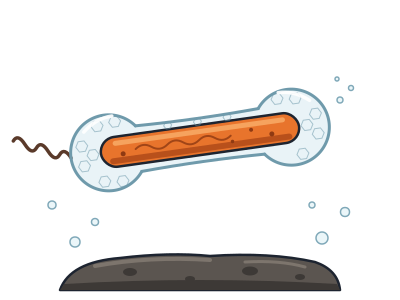
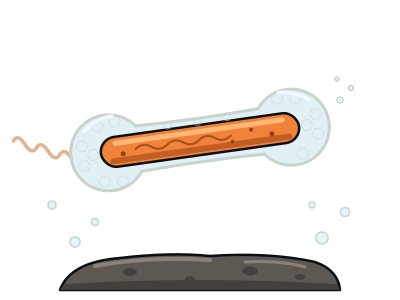
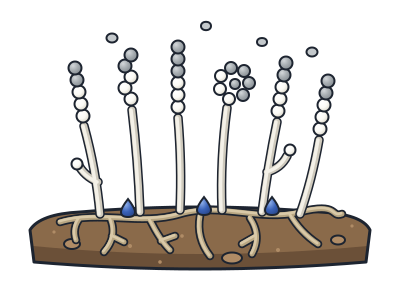
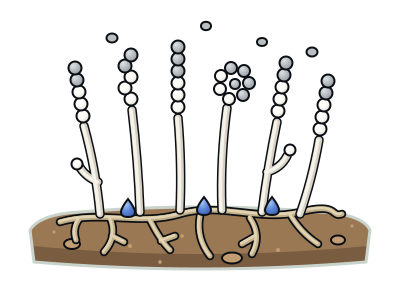
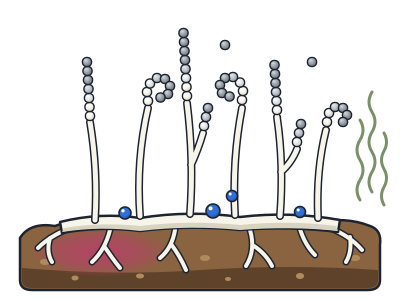
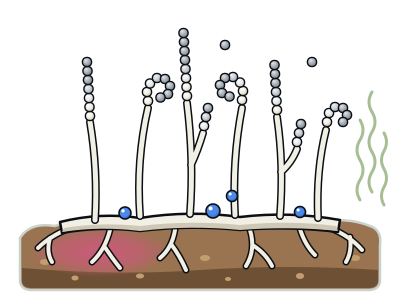
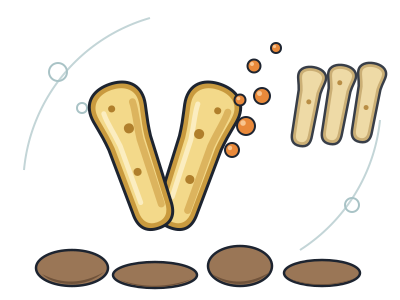
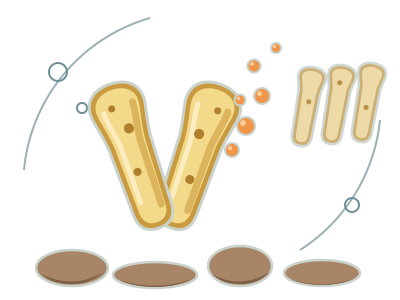
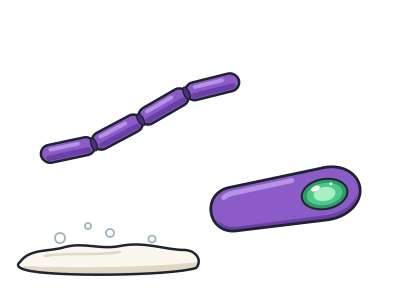
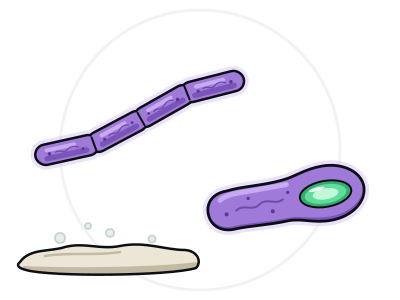
Streptomyces grows as a tangle of branching threads, a lot like a mould. Each thread is roughly 50 to 100 times thinner than a human hair. Upright threads break up into chains of spores, like strings of beads. Because they look so much like moulds, these bacteria were once thought to be fungi. They are true bacteria.
They also fill our medicine cabinets. Streptomyces makes more than two-thirds of the medically useful antibiotics that come from nature, including tetracyclines and streptomycin. Found in 1943, streptomycin was the first antibiotic that worked well against tuberculosis.
The surprise is who else is in the group. It includes the bacterium that causes tuberculosis. It also includes Bifidobacterium, one of the most common bacteria in the guts of breastfed babies. So a germ that causes a serious disease is a relative of the soil bacteria that make a medicine to fight it.
Tiny smell-followers
Springtails, soil animals only about 2 mm long, are drawn to geosmin. They eat the bacteria and carry their spores around the soil, so the smell seems to help the bacteria spread.
Free fertiliser for trees
One member, Frankia, lives in lumps on the roots of trees such as alders. It takes nitrogen from the air and turns it into a nutrient the tree can use, like built-in fertiliser.
An unusual set of genes
Most bacteria keep their genes on a closed loop. Streptomyces keeps its genes on a straight strand instead, and a big one, with up to about 12 million DNA letters.
Inside soil antibiotic-makers
- StreptomycesGrows like a tiny fungus, smells of fresh earth, and is the family behind streptomycin and many other drugs.
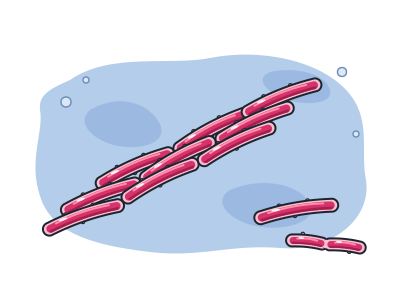
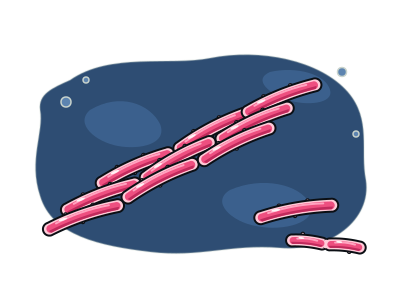
- Tuberculosis bacteriumA slow-growing germ with a waxy coat that has shaped human history; today TB is curable with medicine.
- Baby gut bacteriumAmong the first gut settlers in breastfed babies; it feeds on special sugars in milk.
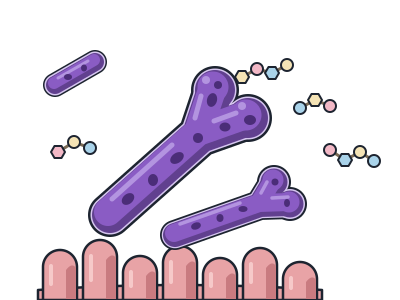
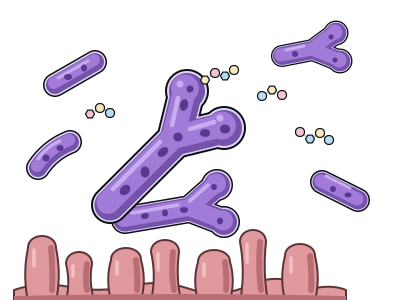
- Swiss cheese bacteriumPuffs out carbon dioxide bubbles that become the round holes and nutty taste of Emmental cheese.
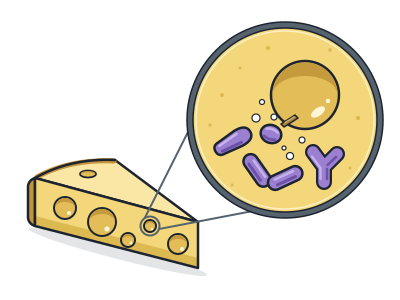
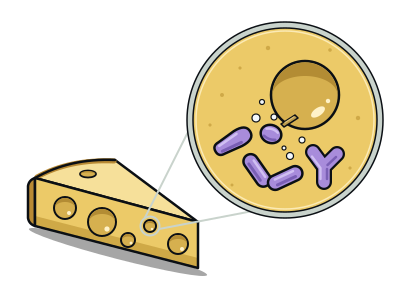
- Umami bacteriumFound in Japan in 1956 pouring out glutamate; it now brews the world's MSG flavouring by the million tonnes.
Next to it on the tree
- CyanobacteriaPond scum that filled the air with oxygen and later moved into plant cells as chloroplasts.
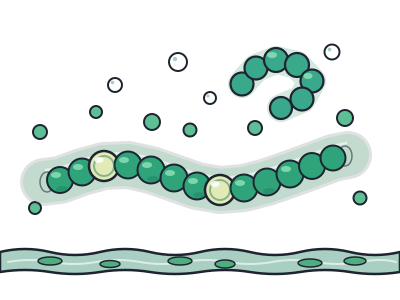
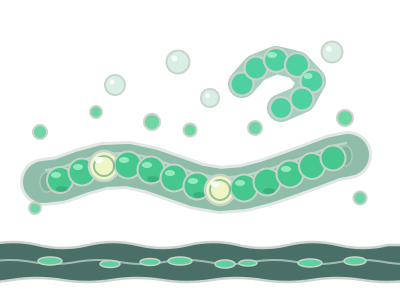
- Spore-formers and yogurt bacteriaTough bacteria that brew yogurt, live on your skin, and can sleep for years as armoured spores.
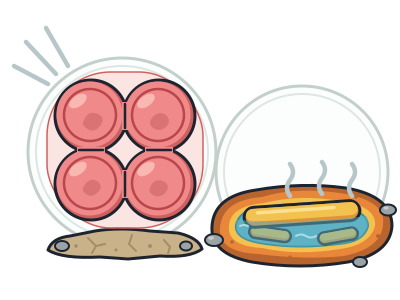
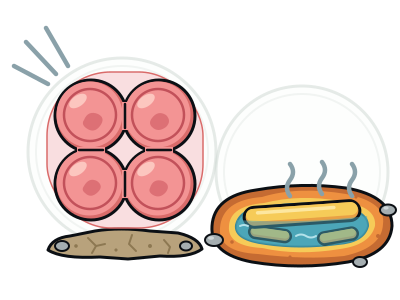
- Extreme survivorsA small branch of champions: one survives huge radiation doses, its cousin loves hot springs.
- Tiny-genome bacteriumPart of a hidden branch of ultra-small bacteria found only by reading DNA, perhaps a quarter of all bacterial kinds.
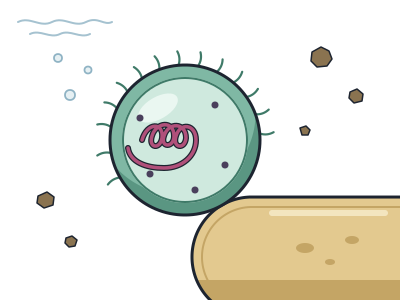
- Hot-spring filamentOrange-green threads that glide through hot-spring mats, using sunlight without ever making oxygen.
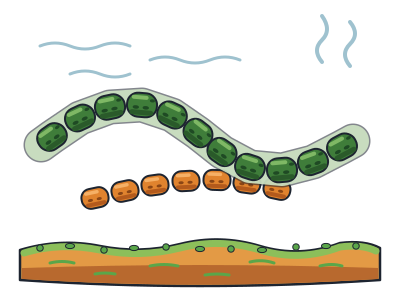
- Toga bacteriumWears a loose outer sheath like a toga and thrives at 80 °C; many of its genes came from archaea.