A species
Tuberculosis bacterium
Mycobacterium tuberculosis
A slow, waxy germ that shaped history and can now be cured
You and the tuberculosis bacterium meet in the All life branch, shown at about 4.2 billion years ago (on 1 January, in a calendar from life's shared ancestor to today).
This tiny germ grows slowly and wears a waxy coat, yet it has shaped human history. It causes tuberculosis, or TB. Some bacteria can split in two about every 20 minutes. This one divides only about once a day. Its coat is so waxy that the usual lab dye doesn't work well on it, so scientists use special stains to see it.
TB has troubled people for thousands of years. Some ancient Egyptian mummies show signs of it in their spines. In the 1800s people called it 'consumption' or 'the White Plague'. Before there were medicines for it, patients were often sent to special hospitals called sanatoriums to rest and breathe fresh air. In 1882 a scientist called Robert Koch announced that he had found the germ behind it.
Here's the surprise. The germ belongs to the same big group of bacteria as soil bacteria called Streptomyces, and as a helpful bacterium that lives in babies' guts. The first antibiotic that worked against TB was found in 1943, and it was made by a Streptomyces soil bacterium. So a relative of the germ helped people fight it.
TB spreads through the air when someone with active TB in their lungs or throat coughs, sneezes, speaks or sings. Today it can be cured with several medicines taken every day for 4 to 6 months. Even so, about 10.7 million people fell ill with TB in 2024.
Rope-makers
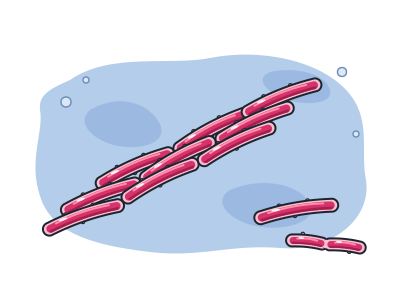
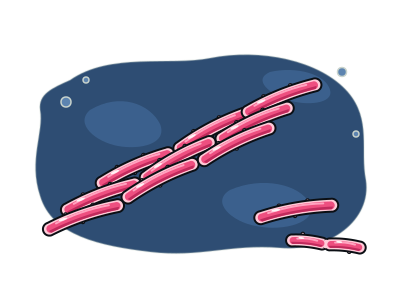
Under a microscope, the cells often stick together side by side in long strands, like the strands of a rope. Scientists call this 'cording'.
Quiet passengers
About a quarter of the world's people are thought to have been infected with TB germs. Only about 5 to 10 in every 100 of them ever get sick. People with this quiet, inactive form have no symptoms and can't pass it on.
Code cracked
Scientists finished reading the germ's full genetic code in 1998. It is about 4 million letters long and holds about 4,000 genes.
Next to it on the tree
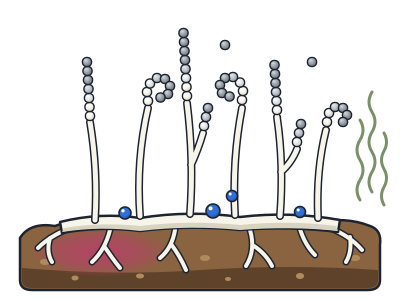
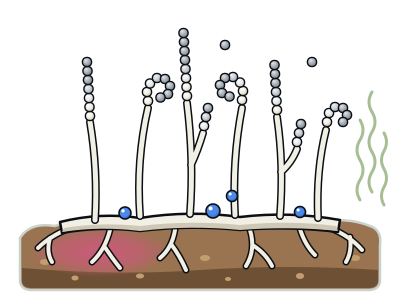
- StreptomycesGrows like a tiny fungus, smells of fresh earth, and is the family behind streptomycin and many other drugs.
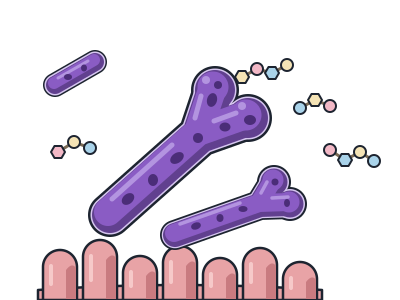
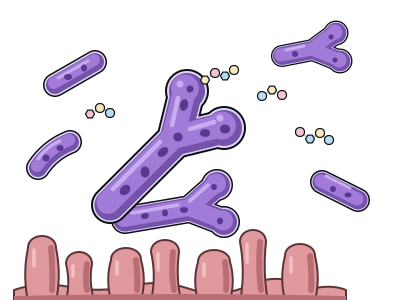
- Baby gut bacteriumAmong the first gut settlers in breastfed babies; it feeds on special sugars in milk.
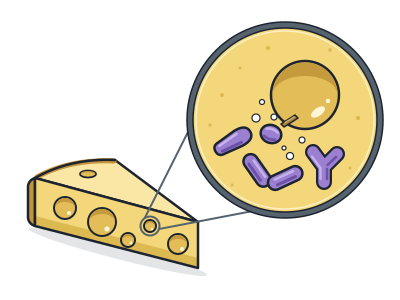
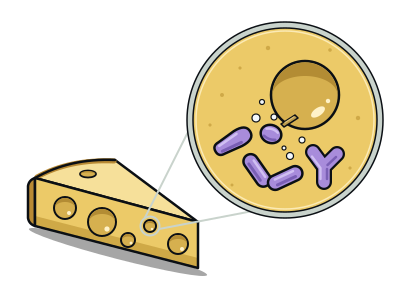
- Swiss cheese bacteriumPuffs out carbon dioxide bubbles that become the round holes and nutty taste of Emmental cheese.
- Umami bacteriumFound in Japan in 1956 pouring out glutamate; it now brews the world's MSG flavouring by the million tonnes.