A species
Baby gut bacterium
Bifidobacterium longum
One of the early bacteria to move into a breastfed baby's gut, where it lives on milk sugars
You and the baby gut bacterium meet in the All life branch, shown at about 4.2 billion years ago (on 1 January, in a calendar from life's shared ancestor to today).
Soon after birth, a baby's gut starts filling up with tiny living things. This bacterium is among the early settlers. In breastfed babies it can become one of the most common bacteria in the gut. In adults it makes up only a small share, just a few per cent.
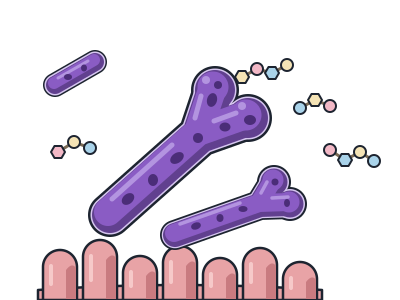
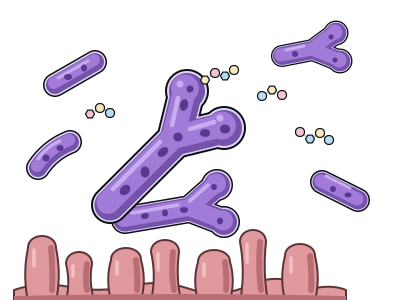
Its secret is food. Breast milk has special sugars that babies cannot digest. These sugars pass through to the gut, where they feed helpful bacteria, mainly this one and its close relatives. One type, called infantis, carries a set of genes that lets it break these milk sugars down. As it feeds, it gives off acids such as acetate.
The surprise is its family. On the tree of life it sits with Streptomyces, a soil bacterium famous for making antibiotics, and with the germ that causes tuberculosis. All of them have DNA rich in two of its four chemical letters, G and C. So a friendly helper in babies is related to a soil chemist and to a serious disease.
Each cell is a tiny rod, often with a forked, Y-shaped end, and that split gives the group its name. It has no tail, so it cannot swim. It can cope with a tiny bit of oxygen, but it grows best without any.
Found in 1899
A French children's doctor, Henri Tissier, first spotted Y-shaped bacteria like this in the poo of healthy breastfed babies at the Pasteur Institute in Paris. He called them 'bifidus', meaning split in two.
About 200 milk sugars
Breast milk holds up to about 200 different kinds of these special sugars. After lactose and fats, they are the third biggest solid part of the milk.
Not just in people
Bacteria in the same group live in many other animals too, even honeybees. One type of this species comes from pigs.
Next to it on the tree
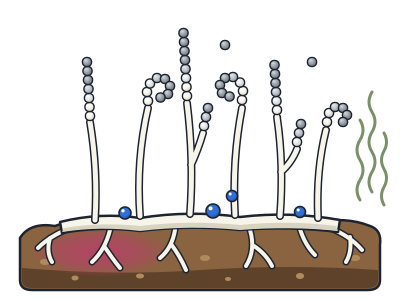
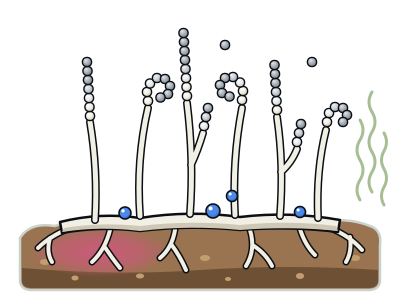
- StreptomycesGrows like a tiny fungus, smells of fresh earth, and is the family behind streptomycin and many other drugs.
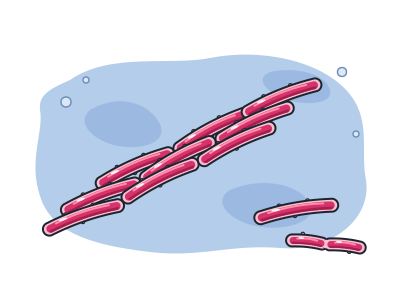
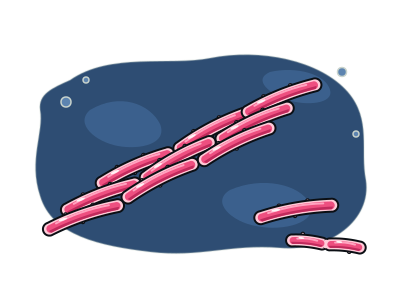
- Tuberculosis bacteriumA slow-growing germ with a waxy coat that has shaped human history; today TB is curable with medicine.
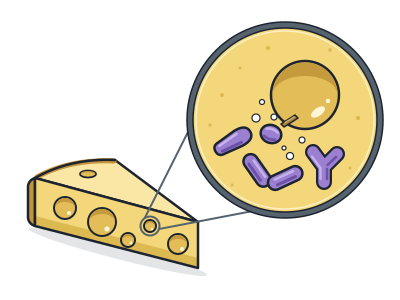
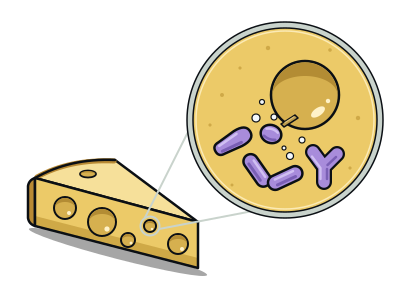
- Swiss cheese bacteriumPuffs out carbon dioxide bubbles that become the round holes and nutty taste of Emmental cheese.
- Umami bacteriumFound in Japan in 1956 pouring out glutamate; it now brews the world's MSG flavouring by the million tonnes.