A species
Swiss cheese bacterium
Propionibacterium freudenreichii
The tiny bubble-blower behind the holes in Swiss cheese
You and the swiss cheese bacterium meet in the All life branch, shown at about 4.2 billion years ago (on 1 January, in a calendar from life's shared ancestor to today).
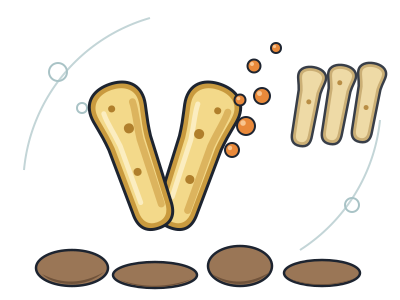
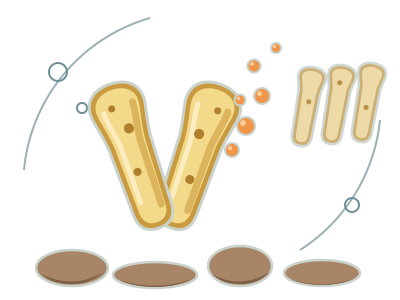
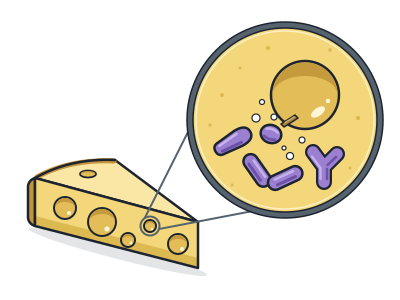
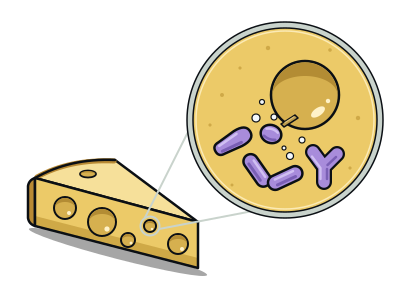
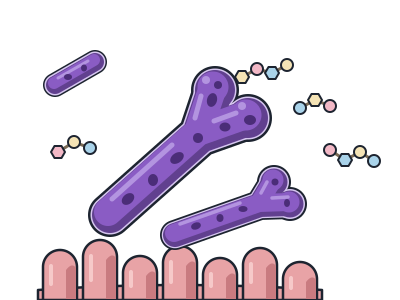
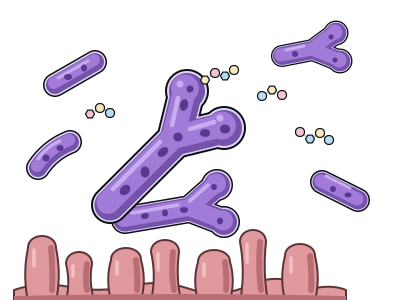
The round holes in a slice of Emmental are made by gas from this tiny bacterium. Inside the ripening cheese, it feeds on lactate, a leftover made by other cheese bacteria. It turns the lactate into carbon dioxide gas, plus acids that help give Swiss-type cheeses their sweet, nutty flavour. The gas gathers into bubbles, and the stretchy curd swells around them. Cheesemakers call these holes "eyes".
The surprise is its family. It belongs to the same big group of bacteria as Streptomyces, the soil microbes famous for making antibiotics. That group also includes the germ that causes tuberculosis. This cheese-maker is a harmless relative, though. Food safety authorities in the US and Europe class it as safe to eat.
Each cell is a stubby rod only a few thousandths of a millimetre long, so dozens could line up end to end across a human hair. Yet a single gram of Emmental holds about a billion living ones. After pressing, the huge wheels rest in warm cellars at about 20 to 24 °C. The bacteria wake up, and the eyes grow slowly over weeks.
Despite its nickname, it does not only live in cheese. It and its close dairy relatives have also been found in raw milk, soil, silage and other fermenting plant material.
A vitamin factory
It can build vitamin B12 from scratch, and factories use it to make both vitamin B12 and propionic acid.
Hay helps the holes
In 2015, Swiss scientists found that tiny specks of hay in milk give the bubbles somewhere to start. They said very clean milk from modern milking machines has fewer specks, which explains why some Swiss cheeses had been getting fewer holes.
Named after a cheese scientist
It was identified in the early 1900s while scientists studied Emmental. Its species name honours one of them, Eduard von Freudenreich.
Next to it on the tree
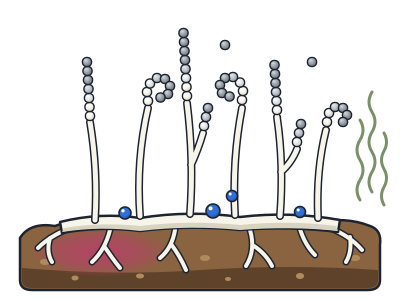
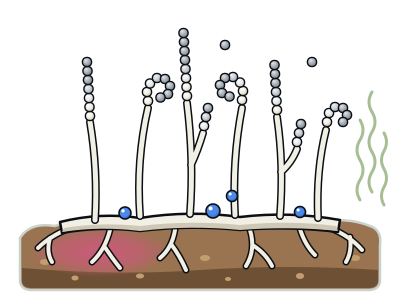
- StreptomycesGrows like a tiny fungus, smells of fresh earth, and is the family behind streptomycin and many other drugs.
- Tuberculosis bacteriumA slow-growing germ with a waxy coat that has shaped human history; today TB is curable with medicine.
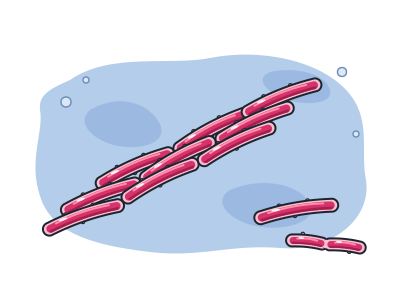
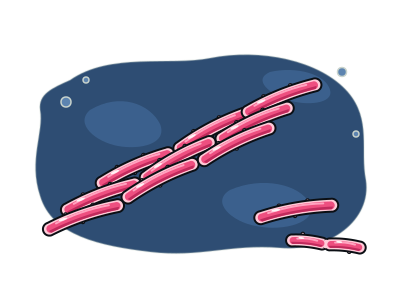
- Baby gut bacteriumAmong the first gut settlers in breastfed babies; it feeds on special sugars in milk.
- Umami bacteriumFound in Japan in 1956 pouring out glutamate; it now brews the world's MSG flavouring by the million tonnes.