A species
Streptomyces
Streptomyces coelicolor
A bacterium that grows like a mould and gives soil its earthy smell
You and the streptomyces meet in the All life branch, shown at about 4.2 billion years ago (on 1 January, in a calendar from life's shared ancestor to today).
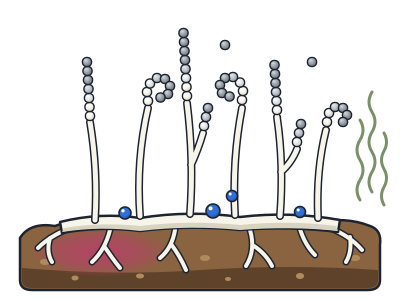
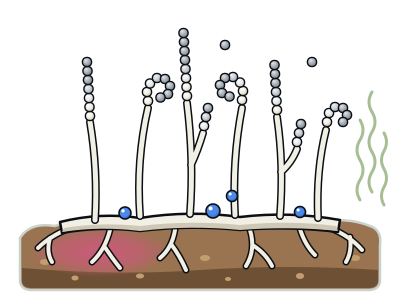
It looks like a tiny fungus, but it is a bacterium. It doesn't live as separate single cells. It grows a branching web of very thin threads, then sends up fluffy white threads that turn into chains of grey spores. Its real relatives are other bacteria, including the germ that causes tuberculosis. Part of its DNA even keeps genes in the same ancient order as the tuberculosis germ's.
You have probably smelled its family. The earthy smell of freshly dug soil, or of dry ground after rain, comes mostly from a chemical called geosmin, made mainly by Streptomyces bacteria. The smell draws in springtails, tiny soil animals about 2 mm long. They eat the colonies and carry the spores away, a bit like bees carrying pollen.
This family is also a medicine chest. In 1943 scientists found streptomycin in another member of the family living in soil. It was the first antibiotic that worked against tuberculosis. So a relative of the tuberculosis germ helped to fight it.
This species doesn't make streptomycin itself. In labs it is known for making two coloured antibiotics, one blue and one red.
A record-breaking gene count
In 2002 it became the first Streptomyces to have all its DNA read. It has about 7,800 genes, the most found in any bacterium at that time.
A built-in chemistry set
Its DNA holds more than 20 groups of genes for making special chemicals. That is one reason the family is so good at producing medicines.
A student's discovery
Albert Schatz, a student in Selman Waksman's lab at Rutgers University in New Jersey, was the one who isolated streptomycin.
Next to it on the tree
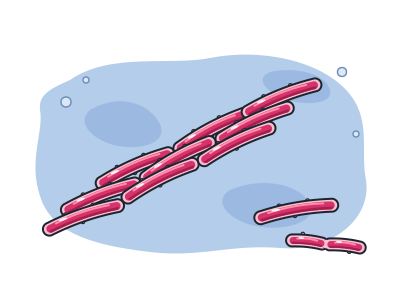
- Tuberculosis bacteriumA slow-growing germ with a waxy coat that has shaped human history; today TB is curable with medicine.
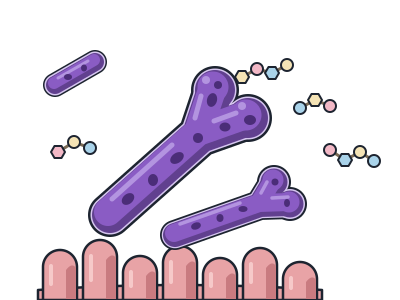
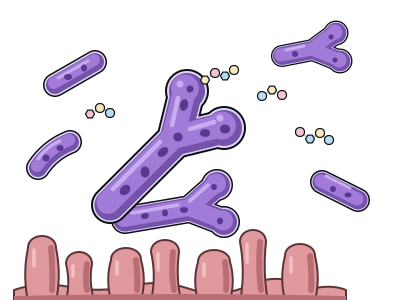
- Baby gut bacteriumAmong the first gut settlers in breastfed babies; it feeds on special sugars in milk.
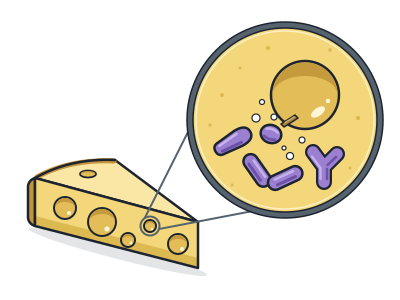
- Swiss cheese bacteriumPuffs out carbon dioxide bubbles that become the round holes and nutty taste of Emmental cheese.
- Umami bacteriumFound in Japan in 1956 pouring out glutamate; it now brews the world's MSG flavouring by the million tonnes.