A species
Conan the bacterium
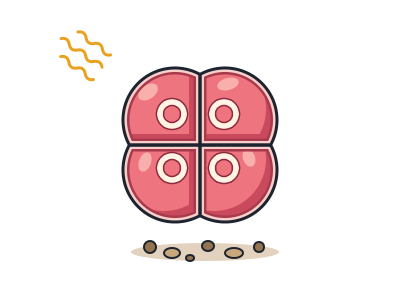
Deinococcus radiodurans
A tiny pink bacterium that stitches its shattered DNA back together.
You and the conan the bacterium meet in the All life branch, shown at about 4.2 billion years ago (on 1 January, in a calendar from life's shared ancestor to today).
This pink bacterium can survive a blast of radiation about 1,000 times stronger than a dose that would kill a person. About 5 grays of radiation can kill a human. This microbe survives about 5,000 grays with almost no loss of living cells. A chest X-ray, by comparison, is only about 0.001 grays. It can even take more radiation than the water bear, a tiny animal famous for its toughness.
It is not unbreakable. A dose like that smashes its DNA into hundreds of pieces. Its real trick is repair. It carries several copies of its genetic instructions, so broken pieces can be matched against each other. The pieces grow overlapping ends that line up like jigsaw pieces, then get joined back together. Within hours, its shattered chromosomes are stitched back into whole ones.
It also holds lots of manganese compared with iron. Manganese is a metal that helps protect its proteins from damage. That includes the very proteins that do the repairs.
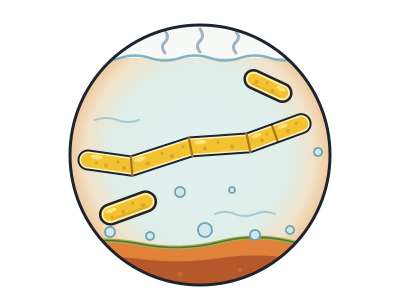
On the tree it sits beside the hot-spring bacterium, a relative in the same small group of bacteria. Yet the two are tough in different ways. Its relative loves heat, while this one prefers mild temperatures. Their survival tricks seem to have developed largely separately.
Found in a spoiled tin
It was discovered in 1956 in Oregon, USA. Scientists were blasting tinned meat with radiation to sterilise it, but one tin spoiled anyway, and this bacterium was inside.
Three years in space
Dried clumps of these cells were placed outside the International Space Station from 2015. Clumps about half a millimetre thick were still alive after three years, because dead cells on top shielded the living ones underneath.
A helper for clean-ups
Scientists have changed some strains in the lab so they might help clean up radioactive waste sites, for example by turning toxic mercury into a less harmful form or locking up uranium.