A species
Listeria
Listeria monocytogenes
The germ that grows in your fridge and rides inside cells on a rocket tail.
You and the listeria meet in the All life branch, shown at about 4.2 billion years ago (on 1 January, in a calendar from life's shared ancestor to today).
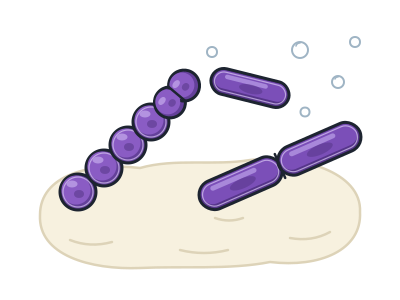
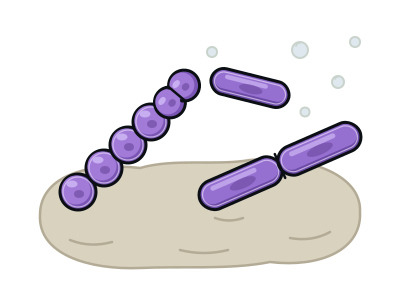
Most food-poisoning germs slow almost to a stop in the cold. This one doesn't. It can keep multiplying inside a fridge, even at temperatures close to freezing. That is why food-safety advice warns about chilled ready-to-eat foods such as deli meats, soft cheeses and smoked seafood, especially ones that stay in the fridge a long time. The cold only slows it down, but thorough cooking kills it.
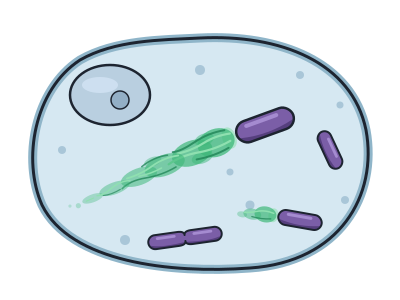
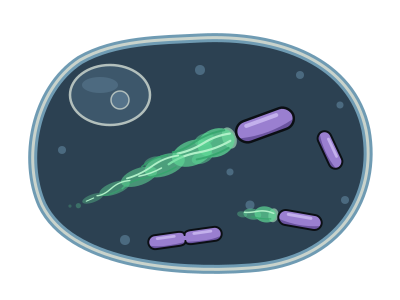
Its strangest trick happens inside the body. After slipping into a cell, it hijacks the cell's own skeleton protein, called actin, and gets the cell to build a long 'comet tail' behind it. The tail pushes it along like a tiny rocket. It even lets the germ poke straight into the next cell without ever going outside.
On the tree it sits among the hay bacillus and golden staph, its relatives in the same broad group of bacteria. Some of its neighbours make tough spores, but it does not. It lives all over the world in soil, water and the guts of animals.
Serious illness from it is rare. But it can be very dangerous for pregnant women, newborn babies, people aged 65 or older and anyone with a weak immune system.
Named after a surgeon
Its name honours Joseph Lister, a pioneer of germ-free surgery. Listerine mouthwash is named after the same man, but it has nothing to do with the germ.
Found through sick rabbits
Scientists first described it in 1926, after laboratory rabbits in Cambridge suddenly died. The infected rabbits had lots of one kind of white blood cell in their blood.
Circling disease
In sheep and cattle, a brain infection it causes is called 'circling disease'. The germ has been found in at least 42 kinds of mammals and 29 kinds of birds. Outbreaks are linked to spoiled silage, a stored animal feed.
Next to it on the tree
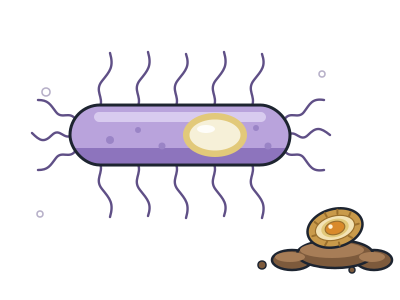
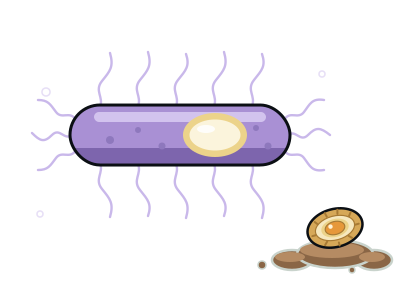
- Hay bacillusA harmless soil bacterium that seals itself into a spore able to survive boiling, drying and even space.
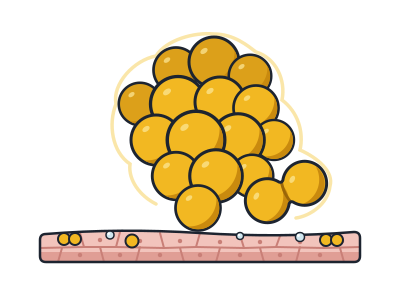
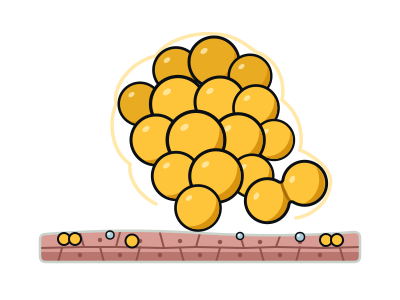
- Golden staphLives harmlessly in many noses, but can cause infections, and some strains shrug off antibiotics.
- Botulinum bacteriumMakes the most potent natural toxin known, which doctors now use in tiny doses as Botox.
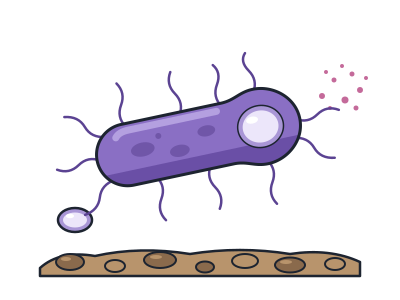
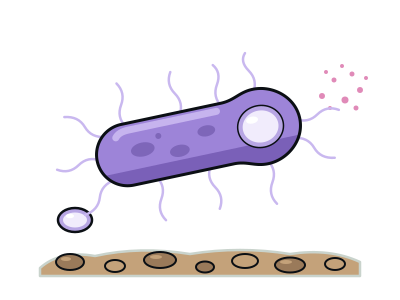
- Wall-less bacteriumOne of the smallest free-living cells, with no cell wall and a tiny genome; it causes walking pneumonia.
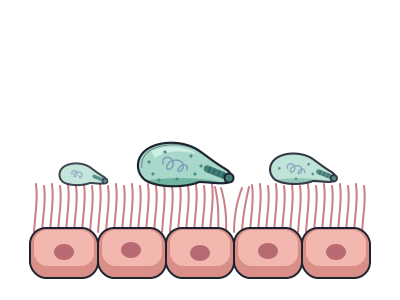
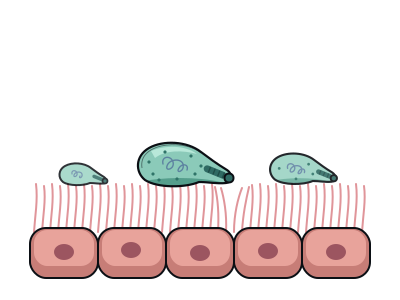
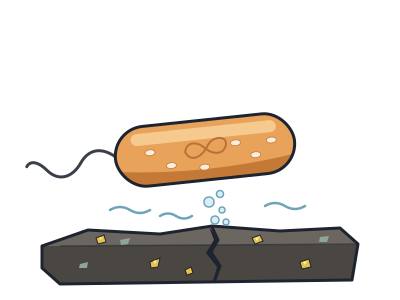
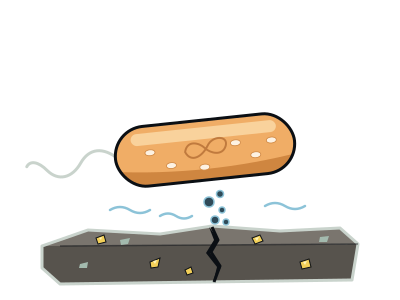
- Lone deep-earth bacteriumLives alone 2.8 km down a South African gold mine, a whole ecosystem made of one species.
- Lactic acid bacteriaThe sour-makers behind yogurt, cheese, sauerkraut and sourdough, turning sugar into tangy acid.