A species
Wall-less bacterium
Mycoplasma pneumoniae
A tiny, soft-bodied bacterium that lost its wall and causes walking pneumonia
You and the wall-less bacterium meet in the All life branch, shown at about 4.2 billion years ago (on 1 January, in a calendar from life's shared ancestor to today).
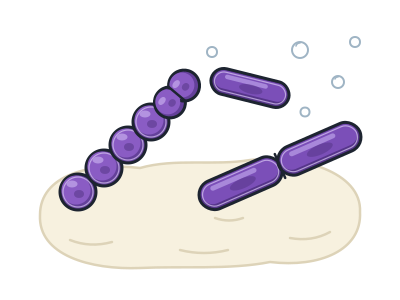
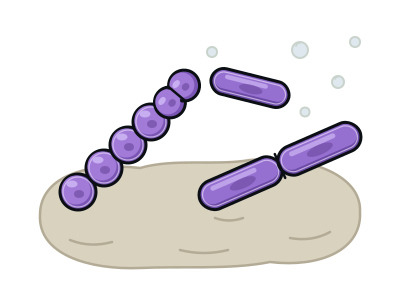
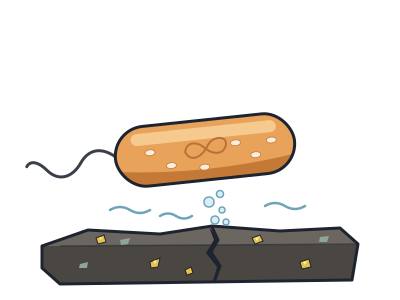
This is one of the smallest cells that can grow and copy itself without living inside another cell. It is about 1 to 2 micrometres long and only about a tenth of that wide. That is too thin to see properly with an ordinary light microscope. Unlike most bacteria, it has no stiff cell wall, only a thin, bendy outer layer. It has very few genes too: about 690, compared with roughly 4,300 in a common gut bacterium.
You might guess something so simple is an early form of life. It is not. Its relatives are ordinary bacteria with walls, such as the hay bacillus and the yogurt bacterium. Over a very long time, its ancestors lost their wall and many genes, including the ones for making their own building blocks. In nature, it now lives only in people.
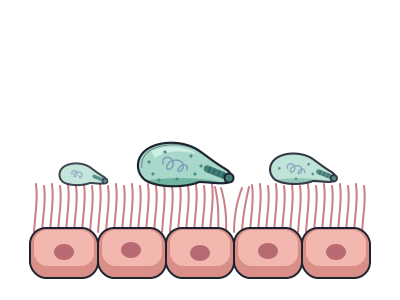
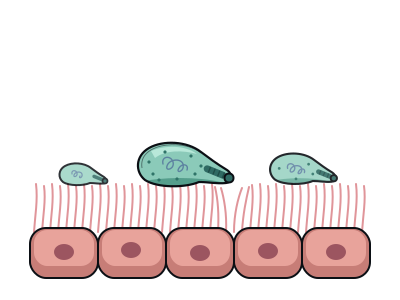
It clings to the lining of the airways with a narrow tip at one end. It can glide slowly along surfaces, even though it has no whip-like tail to swim with. It spreads in coughs and sneezes, especially among children. Usually it causes a chest cold with a slow, nagging cough, but it can also cause pneumonia. A mild case, where people still feel well enough to be up and about, is nicknamed 'walking pneumonia'.
Mistaken for a virus
It was first found in 1944 and called the 'Eaton agent'. Because it was so small, people thought it was a virus. In 1962 scientists grew it in the lab and showed it was a bacterium-like living thing.
Penicillin can't touch it
Penicillin-type antibiotics such as amoxicillin work by attacking the cell wall. This bacterium has no wall, so those medicines don't work on it. Doctors use other kinds of antibiotics instead.
Borrowed cholesterol
Without a wall, its thin outer layer needs extra strength. It gets this from sterols, fatty substances like cholesterol, which it takes from the person it lives in.
Next to it on the tree
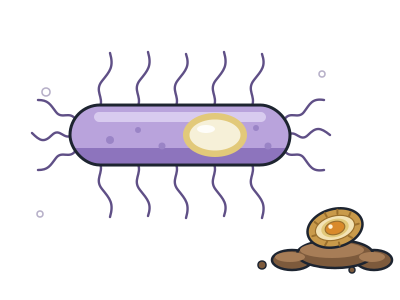
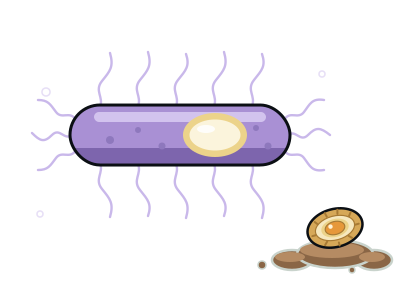
- Hay bacillusA harmless soil bacterium that seals itself into a spore able to survive boiling, drying and even space.
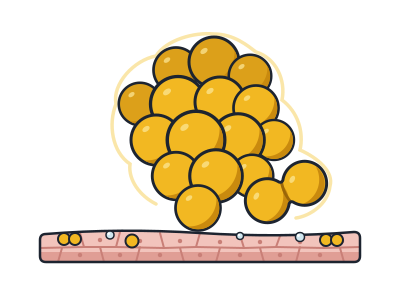
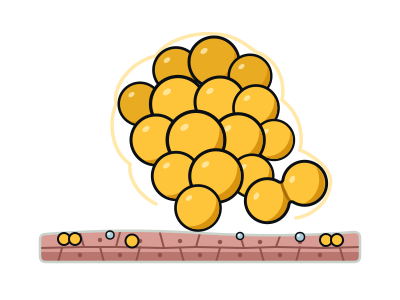
- Golden staphLives harmlessly in many noses, but can cause infections, and some strains shrug off antibiotics.
- Botulinum bacteriumMakes the most potent natural toxin known, which doctors now use in tiny doses as Botox.
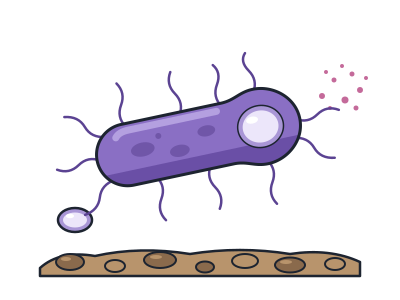
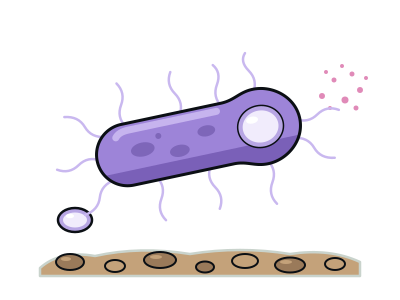
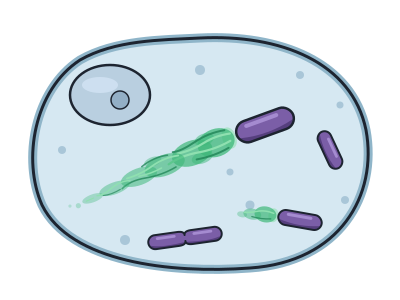
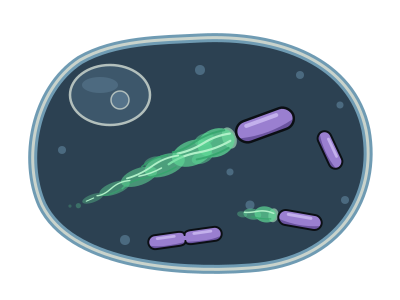
- ListeriaA food-safety microbe that can grow in the fridge and rockets around inside cells on tails of protein.
- Lone deep-earth bacteriumLives alone 2.8 km down a South African gold mine, a whole ecosystem made of one species.
- Lactic acid bacteriaThe sour-makers behind yogurt, cheese, sauerkraut and sourdough, turning sugar into tangy acid.