A group of living things
Hermit crabs and king crabs
Anomura
Crab-shaped, but not true crabs: king crabs grew from hermit crab ancestors.
This branch is shown at about 250 million years ago; its age is a rough estimate.
You and hermit crabs and king crabs meet in the Two-sided animals branch, shown at about 580 million years ago (on 11 November, in a calendar from life's shared ancestor to today).
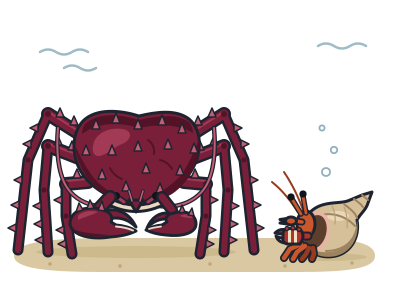
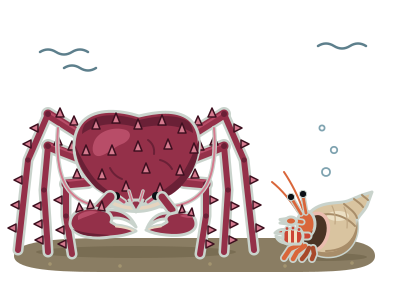
A king crab looks like a crab and is sold as crab. But it is not a true crab. DNA studies show that king crabs come from hermit crab ancestors, the animals that live inside borrowed snail shells. Over millions of years, some hermit crabs gave up living in shells and became fully crab-shaped.
This group also includes porcelain crabs, squat lobsters and mole crabs. Its closest relatives are the true crabs, which are its sister group. A crab-like body evolved several separate times inside this group, in king crabs, porcelain crabs and the hairy stone crab. Scientists call this carcinisation.
One way to tell them apart is to count legs. All members have ten legs, but the last pair is tiny and often tucked inside the gill chamber, where it cleans the gills. So they seem to walk on fewer legs than true crabs do.
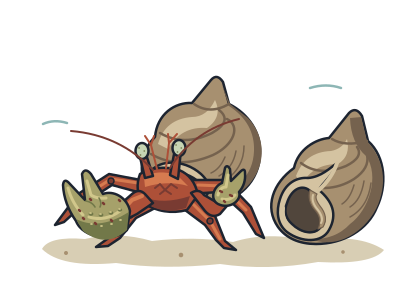
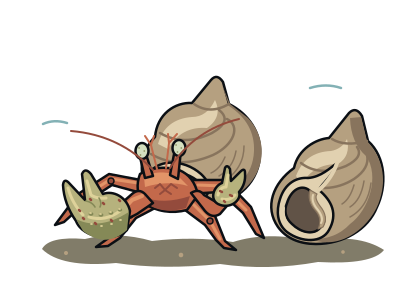
Most hermit crabs do not grow their own spiral shells. They borrow empty snail shells and move to bigger ones as they grow. Before moving in, they test a new shell to check that it is empty and easy to carry.
A name about tails
The group's scientific name means 'differently tailed', because the tail ends of its members come in so many different shapes.
Sea stars for a new shell
In captivity, king crabs have been seen eating lots of sea stars and their relatives in the weeks before they moult, probably to get calcium for their next shell.
Not red until cooked
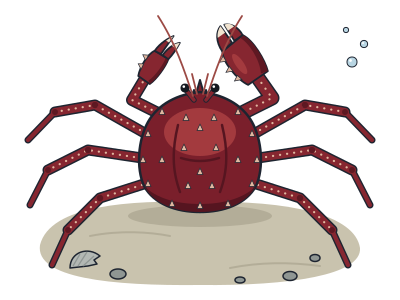
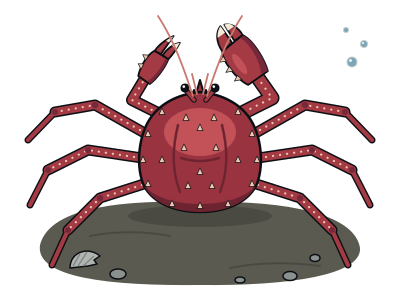
Living red king crabs are a dark burgundy, or red-purple, colour. They turn bright red only when they are cooked.
Inside hermit crabs and king crabs
- Common hermit crabLives in empty snail shells and moves house as it grows.
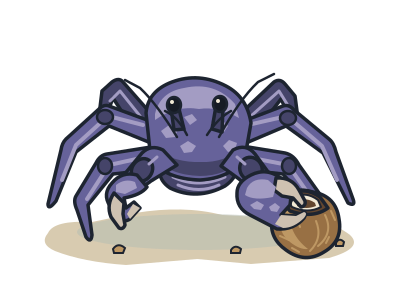
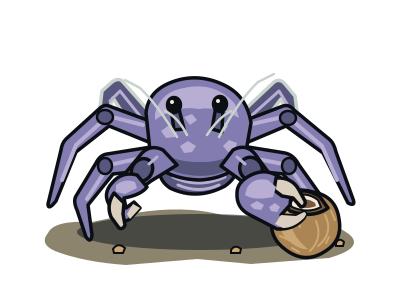
- Coconut crabThe largest land arthropod, strong enough to crack coconuts.
- Red king crabA giant spiny crab of cold northern seas whose legs can span more than a metre and a half.
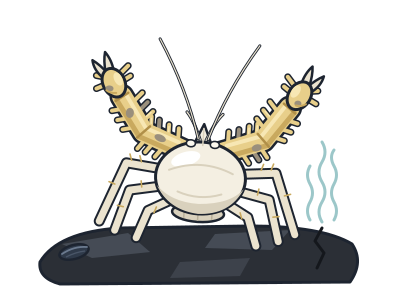
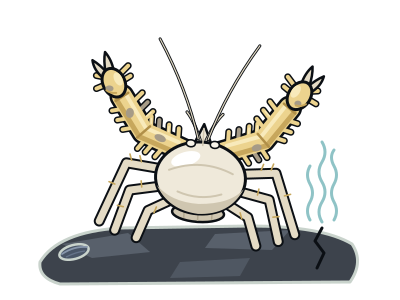
- Yeti crabA white deep-sea crab with furry arms that may farm bacteria in its hairs.
Next to it on the tree
- Pistol shrimpSnaps its claw so fast it makes a bubble that bangs louder than a gunshot.
- True crabsDecapods with the tail tucked tightly under a broad shell, so they scuttle sideways.
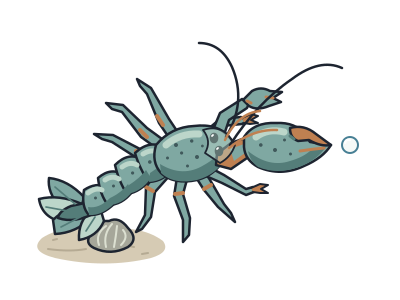
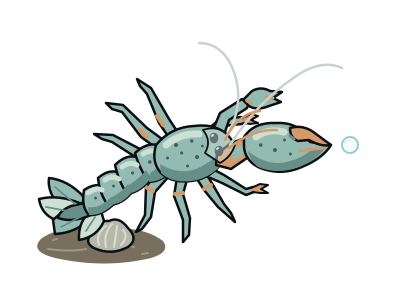
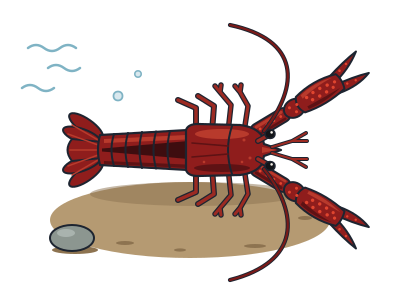
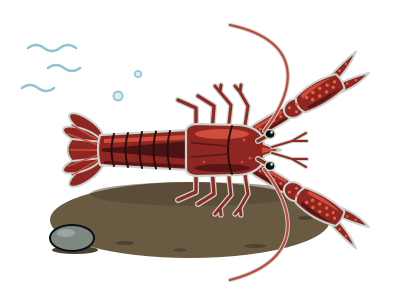
- Lobsters and crayfishClawed decapods with long tails, in the sea and in freshwater streams.
- Caribbean spiny lobsterA clawless lobster that migrates in long single-file lines across the seafloor.
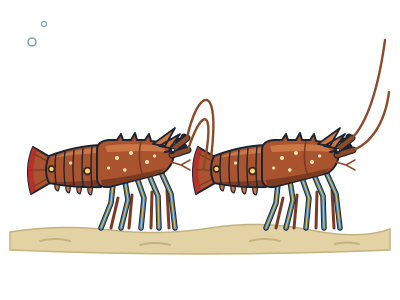
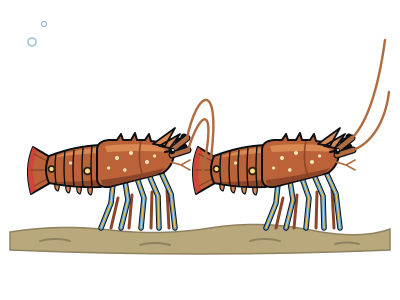
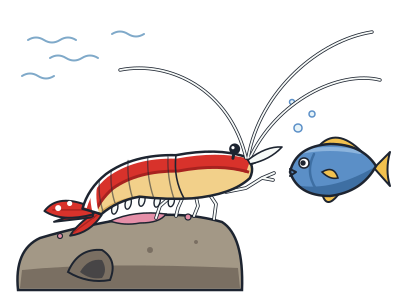
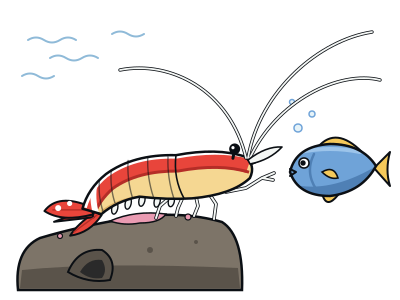
- Pacific cleaner shrimpRuns a cleaning station where fish line up to have parasites picked off.
- Whiteleg shrimpThe shrimp most of us eat, farmed in ponds by the million around the tropics.