A species
Pacific cleaner shrimp
Lysmata amboinensis
A tiny striped shrimp that runs a cleaning service for reef fish.
You and the pacific cleaner shrimp meet in the Two-sided animals branch, shown at about 580 million years ago (on 11 November, in a calendar from life's shared ancestor to today).
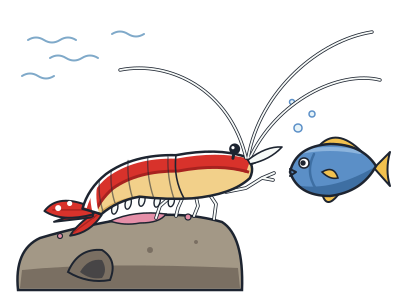
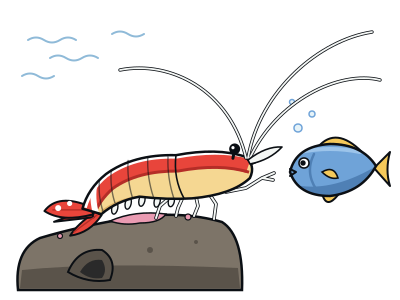
On a coral reef, a small striped shrimp waits at the mouth of a cave. Fish swim up and hold still. The shrimp climbs aboard and picks off parasites and dead skin, sometimes working right inside a fish's open mouth. The fish gets cleaned and the shrimp gets a meal. Places like this are called cleaning stations.
This shrimp is a relative of crabs, lobsters and crayfish. Like them, it has ten legs and a hard outer shell that it moults as it grows. Its body is only about 5 to 6 centimetres long, roughly the length of your little finger. It has a red-and-white striped back and long white feelers.
Being a cleaner can be risky, because many of its customers eat small crustaceans. In one study on a Red Sea reef, about two in every five visits came from fish that eat shrimp-sized prey. The shrimp cleaned these fish less often than harmless ones. They also rocked their white front legs back and forth, mostly towards the dangerous fish. Scientists think this may mean "I'm a cleaner, don't eat me".
It lives on warm reefs across the Indian and Pacific Oceans and the Red Sea. It usually lives in pairs, hiding in caves and under rock ledges.
Male first, then both
Every one of these shrimp starts life as a male, then becomes able to act as both male and female. There is no purely female form, so partners take turns.
A long drift at sea
A female-acting shrimp carries about 200 to 500 greenish eggs under its body. The tiny young then drift in the open sea for about 5 to 6 months before settling on a reef.
An Atlantic lookalike
A very similar cleaner shrimp in the Atlantic was long thought to be the same species. They were split in 1990, partly because of their tails: the Pacific one has two white spots on each side, the Atlantic one a white stripe.
Next to it on the tree
- Pistol shrimpSnaps its claw so fast it makes a bubble that bangs louder than a gunshot.
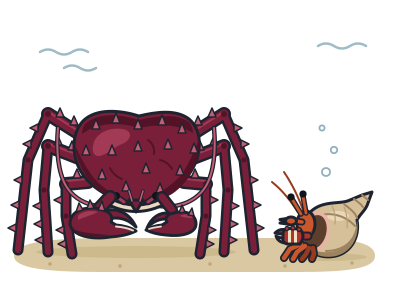
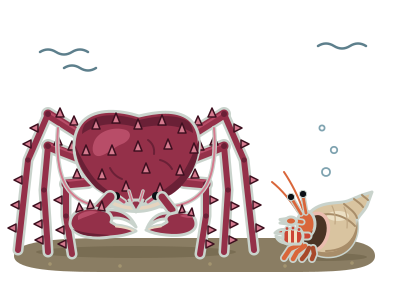
- True crabsDecapods with the tail tucked tightly under a broad shell, so they scuttle sideways.
- Hermit crabs and king crabsCrab-like decapods that are not true crabs; king crabs grew from hermit crab ancestors.
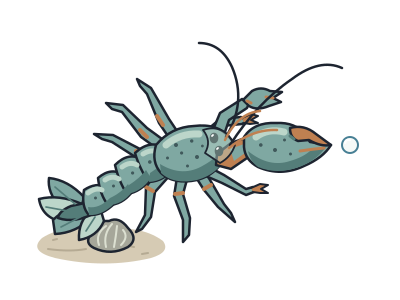
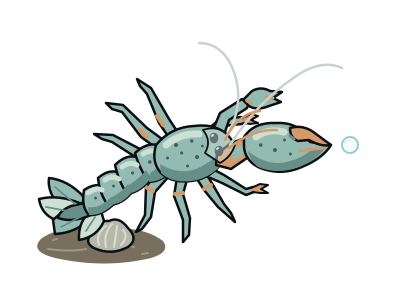
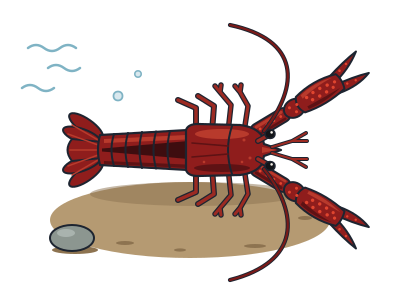
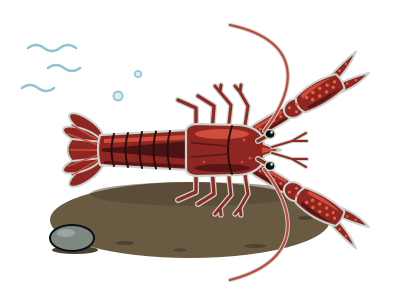
- Lobsters and crayfishClawed decapods with long tails, in the sea and in freshwater streams.
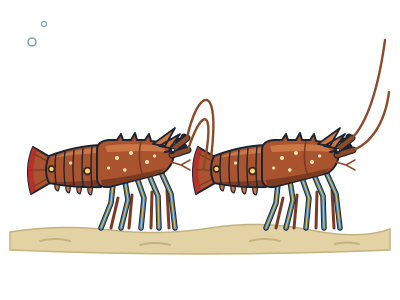
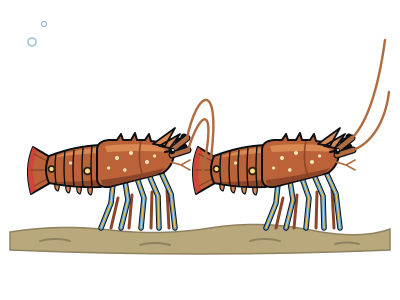
- Caribbean spiny lobsterA clawless lobster that migrates in long single-file lines across the seafloor.
- Whiteleg shrimpThe shrimp most of us eat, farmed in ponds by the million around the tropics.