A species
Pistol shrimp
Alpheus heterochaelis
A tiny shrimp with a bubble-powered bang.
You and the pistol shrimp meet in the Two-sided animals branch, shown at about 580 million years ago (on 11 November, in a calendar from life's shared ancestor to today).
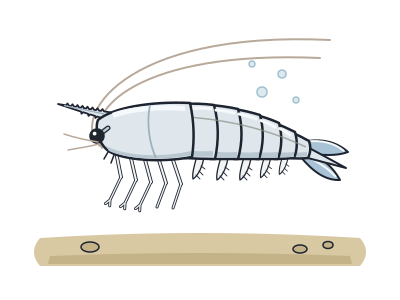
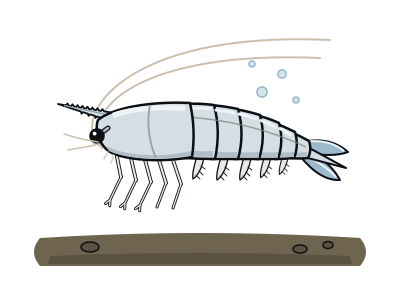
Pistol shrimp snap their oversized claw so fast that they make a tiny bubble—and that bubble makes the bang. The closing claw shoots out a jet of water. As the pressure drops, a bubble forms, then collapses with a loud snap. The sound comes from that collapse, not the claw clapping shut. A gunshot comparison needs care: underwater decibel readings cannot be compared directly with those taken in air.
This small shrimp belongs to the same wider group as crabs, lobsters and hermit crabs. Its unusual claw is more than a noisy family difference. The snap can stun small prey, making the collapsing bubble part of its hunting equipment.
There is protection behind the punch, too. A helmet-like part of its outer shell helps weaken incoming shock waves and protect its brain. Between snaps, it shelters beneath rocks and shells, and commonly lives among oyster reefs.
Left or right
The oversized snapping claw can be on either side of the body.
Not just the males
Both males and females have a snapping claw.
A varied menu
Its food includes worms, small crustaceans, shellfish and small fish.
Next to it on the tree
- True crabsDecapods with the tail tucked tightly under a broad shell, so they scuttle sideways.
- Hermit crabs and king crabsCrab-like decapods that are not true crabs; king crabs grew from hermit crab ancestors.
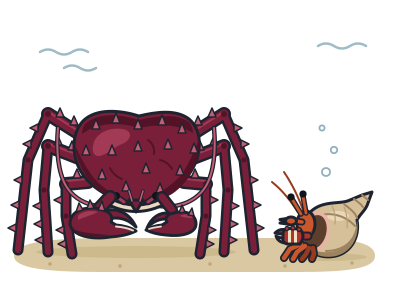
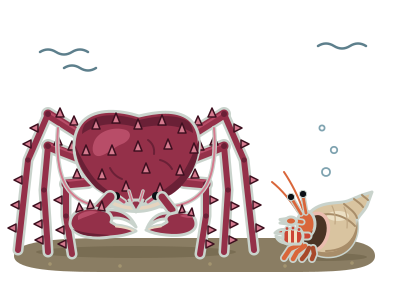
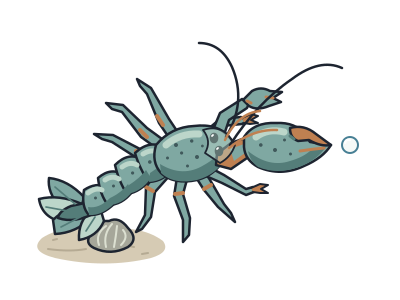
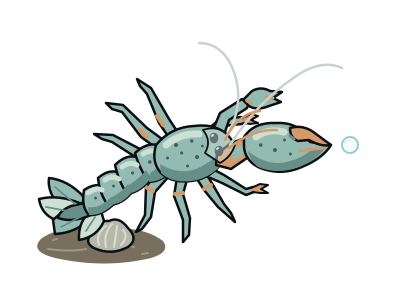
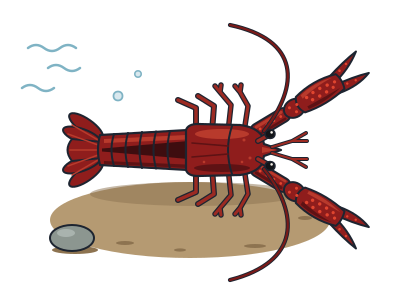
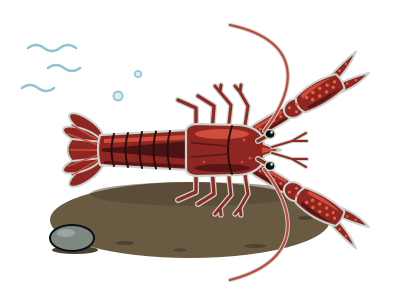
- Lobsters and crayfishClawed decapods with long tails, in the sea and in freshwater streams.
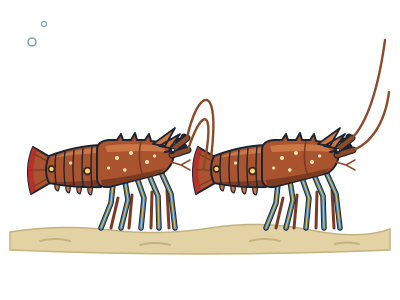
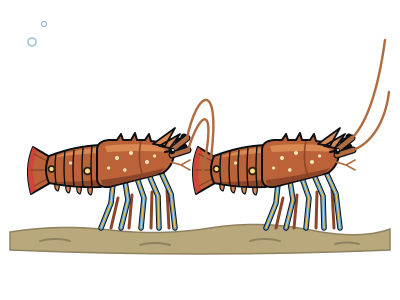
- Caribbean spiny lobsterA clawless lobster that migrates in long single-file lines across the seafloor.
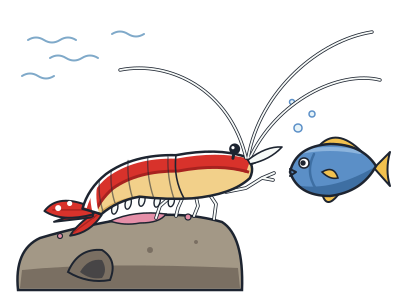
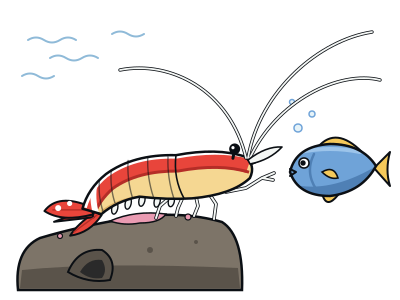
- Pacific cleaner shrimpRuns a cleaning station where fish line up to have parasites picked off.
- Whiteleg shrimpThe shrimp most of us eat, farmed in ponds by the million around the tropics.