A group of living things
Crabs, lobsters and shrimp
Decapoda
Ten legs, many shapes—and more than one way to become crab-like.
This branch is shown at about 455 million years ago; its age is a rough estimate.
You and crabs, lobsters and shrimp meet in the Two-sided animals branch, shown at about 580 million years ago (on 11 November, in a calendar from life's shared ancestor to today).
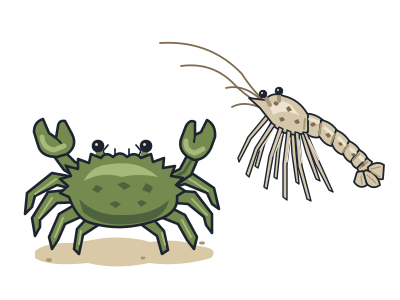
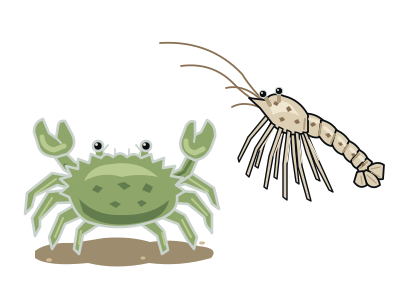
Ten legs link crabs, lobsters and shrimps, but their family has another surprise: a crab-like shape evolved independently at least five times. These relatives share five pairs of main legs. Legs ending in pincers count towards the ten; they are not extra arms.
The crab shape combines a broad, flattened front shell with the rear part of the body folded underneath. Shrimps and lobsters instead have visibly longer bodies. So a crab-like outline is not a reliable family label: looking like a crab does not always mean belonging to the true-crab branch.
Evolution has also moved away from the crab-like shape more than once. It is not a one-way journey, and living shrimps and lobsters are not unfinished crabs. Most members of this group live in the sea, but some live in fresh water or on land.
A big family
About 15,000 living species belong to this group, including crayfish and prawns.
Shared equipment
They have a hard outer skeleton, jointed limbs and two pairs of antennae.
Changing colours
Brown shrimps can change colour to match their surroundings more closely.
Inside crabs, lobsters and shrimp
- Pistol shrimpSnaps its claw so fast it makes a bubble that bangs louder than a gunshot.
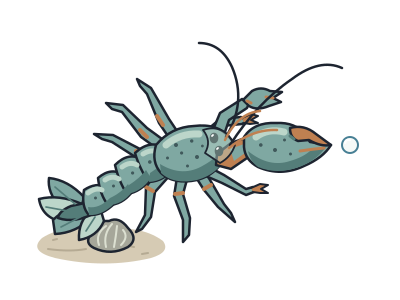
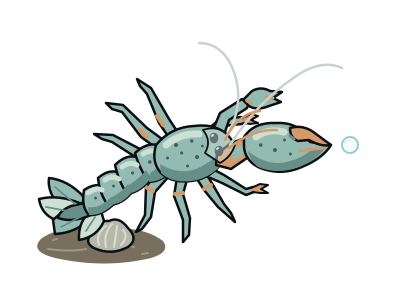
- True crabsDecapods with the tail tucked tightly under a broad shell, so they scuttle sideways.
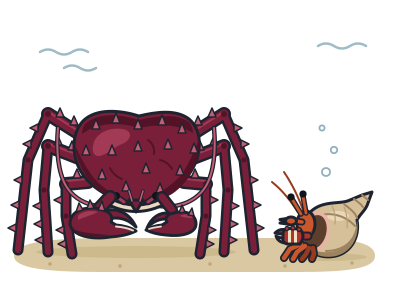
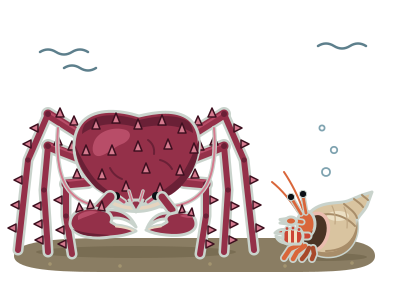
- Hermit crabs and king crabsCrab-like decapods that are not true crabs; king crabs grew from hermit crab ancestors.
- Lobsters and crayfishClawed decapods with long tails, in the sea and in freshwater streams.
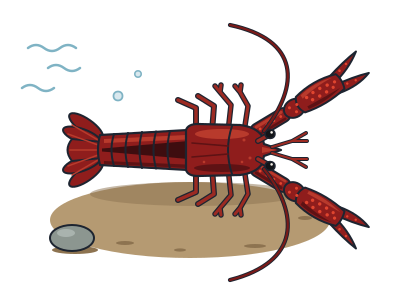
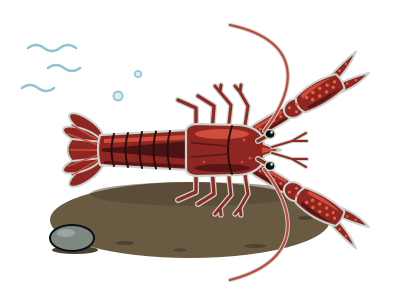
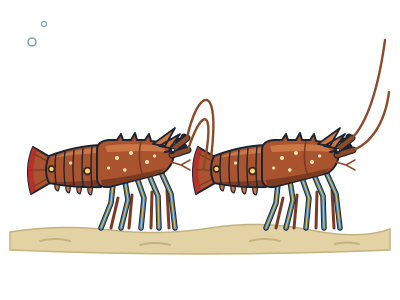
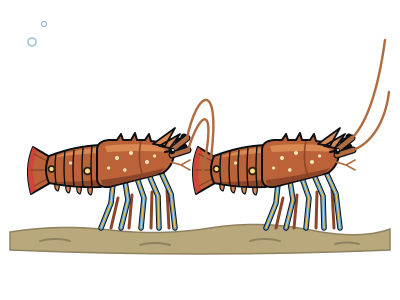
- Caribbean spiny lobsterA clawless lobster that migrates in long single-file lines across the seafloor.
- Pacific cleaner shrimpRuns a cleaning station where fish line up to have parasites picked off.
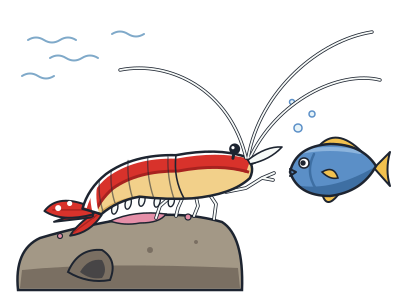
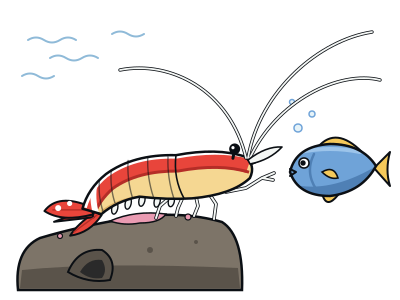
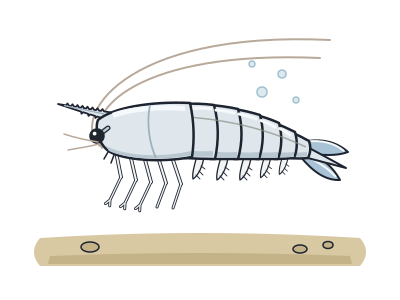
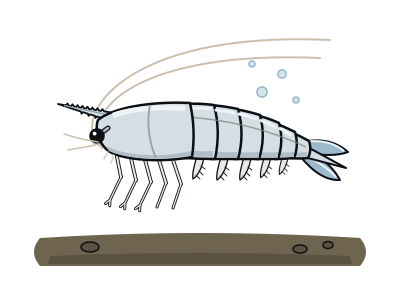
- Whiteleg shrimpThe shrimp most of us eat, farmed in ponds by the million around the tropics.
Next to it on the tree
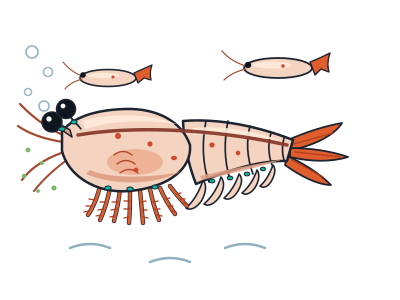
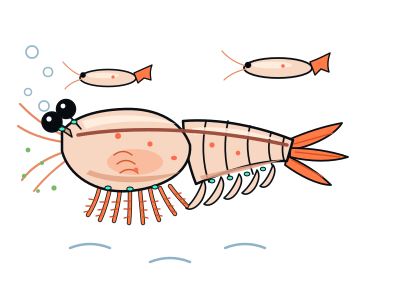
- Antarctic krillFinger-length shrimp-like animals that together outweigh almost any other wild animal and feed the great whales.
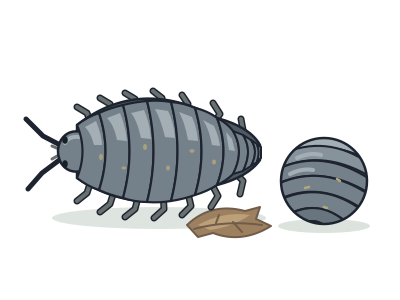
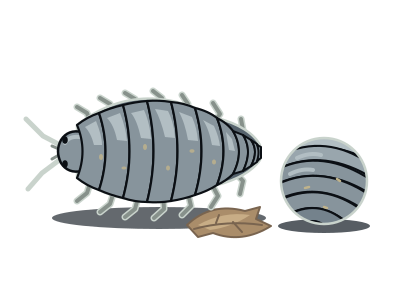
- Pill woodlouseA garden crustacean that rolls into a ball and still breathes through gill-like plates.
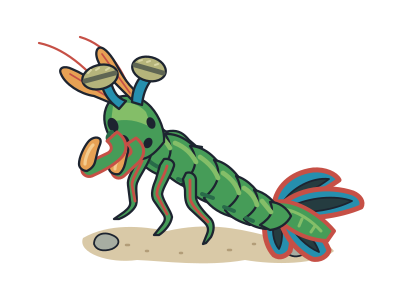
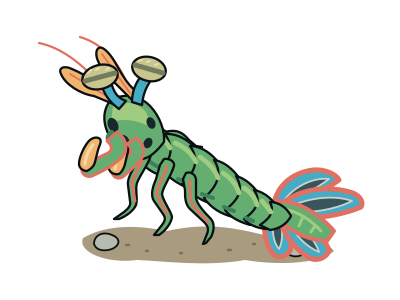
- Peacock mantis shrimpThrows one of the fastest punches in nature, and sees ultraviolet and polarised light.
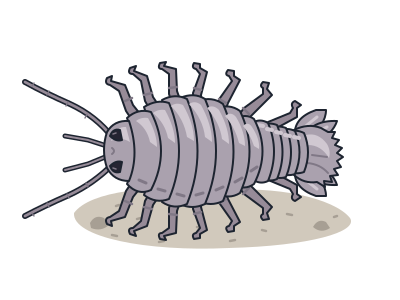
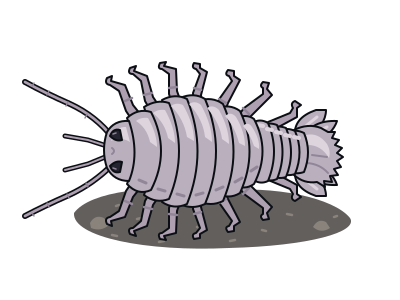
- Giant isopodA deep-sea woodlouse relative as big as a shoe that can go years without eating.
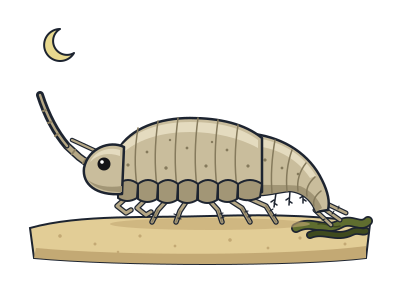
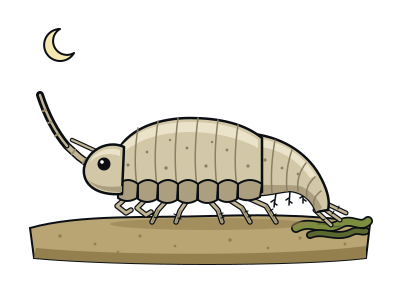
- SandhopperThe tiny jumping crustacean of beaches that steers home by the sun and moon.