A species
Caribbean spiny lobster
Panulirus argus
A lobster with no claws that walks across the seafloor in long single-file lines.
You and the caribbean spiny lobster meet in the Two-sided animals branch, shown at about 580 million years ago (on 11 November, in a calendar from life's shared ancestor to today).
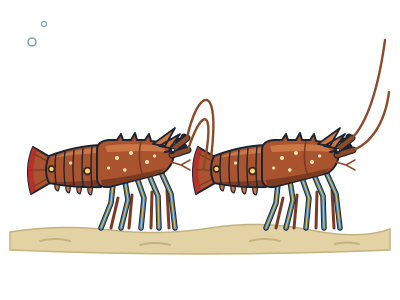
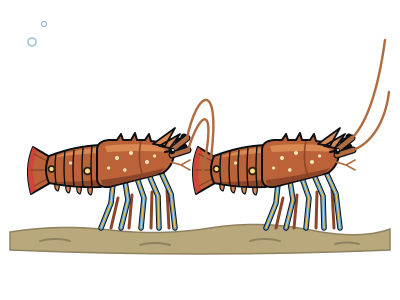
This lobster has no big claws at all. Instead it has two long, spiny feelers, often longer than its body, and its shell is covered in spines that point forward. In autumn, in some places, many of these lobsters leave shallow water and walk to deeper water in long single-file lines called queues. Each lobster keeps touching the one in front with its feelers, a bit like people walking in the dark with a hand on a friend's shoulder.
You might guess it is simply a clawed lobster that has lost its claws. It is not. Spiny lobsters and clawed lobsters are both 'lobsters' in name, but they sit on quite separate branches. On the tree, the clawed lobsters sit nearby in their own group with the crayfish, alongside crabs and shrimps.
By day it hides in cracks in the reef. At night it roams to eat snails, crabs and clams, then finds its way back to its den, or one nearby, in almost total darkness. It can sense the Earth's magnetic field and use it like a compass. When scientists moved lobsters 12 to 37 kilometres away to unfamiliar places, the lobsters still turned towards the spot where they had been caught.
Millions of eggs
Each time a female spawns, she makes somewhere between about 230,000 and 2.6 million eggs. She carries them under her tail until they hatch, about three weeks later.
Glassy babies
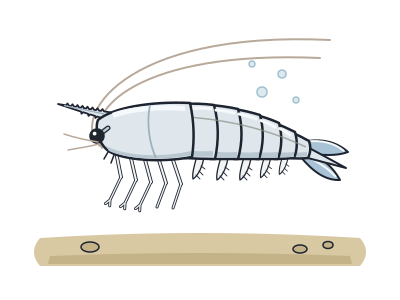
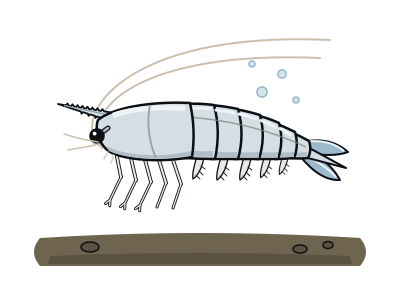
The larvae look nothing like their parents. They are flat and see-through, and they drift in the open ocean. Over about 6 to 12 months they go through about 10 stages before turning into small lobsters.
Plenty of hunters
Groupers, snappers, sharks, skates, turtles and octopuses all eat spiny lobsters.
Next to it on the tree
- Pistol shrimpSnaps its claw so fast it makes a bubble that bangs louder than a gunshot.
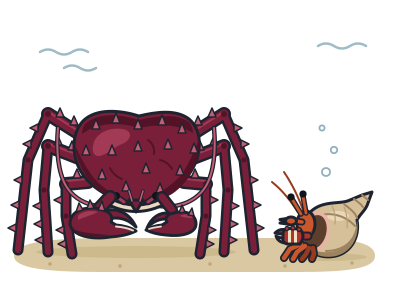
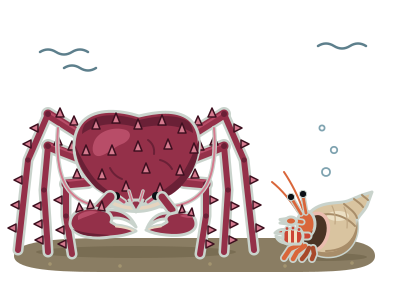
- True crabsDecapods with the tail tucked tightly under a broad shell, so they scuttle sideways.
- Hermit crabs and king crabsCrab-like decapods that are not true crabs; king crabs grew from hermit crab ancestors.
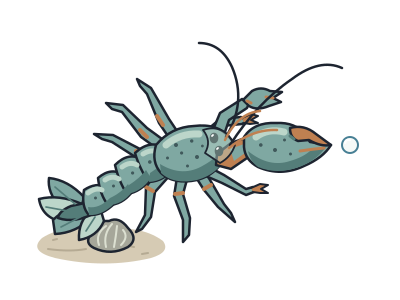
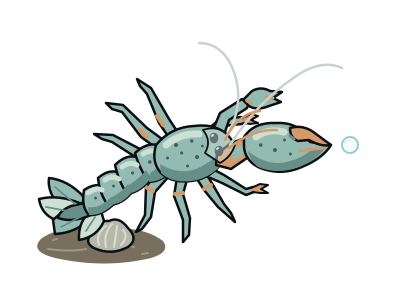
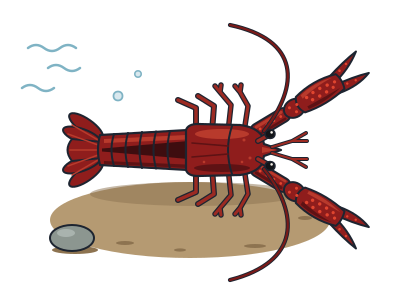
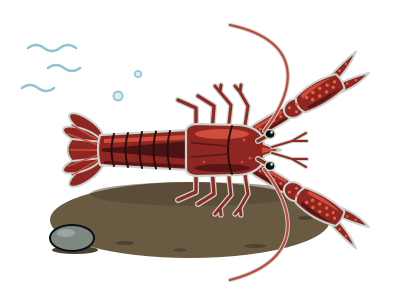
- Lobsters and crayfishClawed decapods with long tails, in the sea and in freshwater streams.
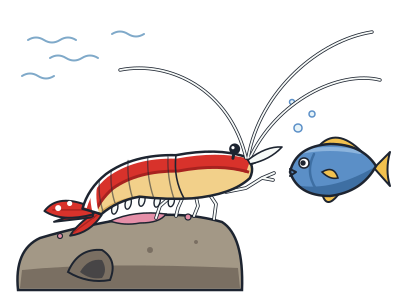
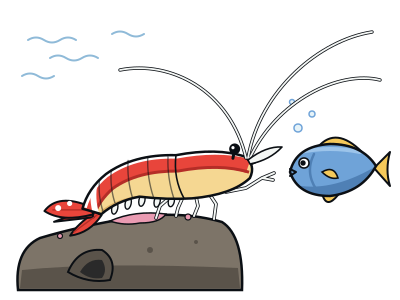
- Pacific cleaner shrimpRuns a cleaning station where fish line up to have parasites picked off.
- Whiteleg shrimpThe shrimp most of us eat, farmed in ponds by the million around the tropics.