A group of living things
True crabs
Brachyura
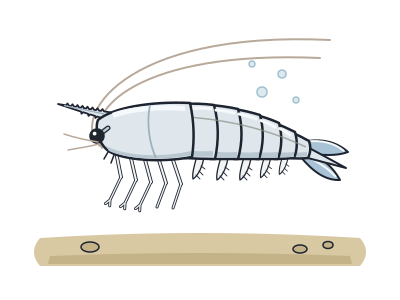
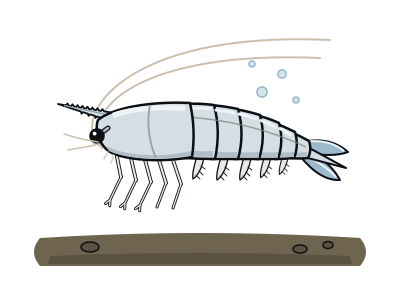
Decapods with the tail tucked tightly under a broad shell, so they scuttle sideways.
This branch is shown at about 240 million years ago; its age is a rough estimate.
You and true crabs meet in the Two-sided animals branch, shown at about 580 million years ago (on 11 November, in a calendar from life's shared ancestor to today).
Two-sided animalsStarfish, sea squirts and usChordatesVertebratesJawed vertebratesBony fish and their descendantsLobe-finned fishFish on the way to landFour-limbed animalsAmniotesMammals and their ancestorsMammalsLive-bearing mammalsPlacental mammalsPrimates, rodents and rabbitsPrimatesApesGreat apesHumans and chimpanzeesHumanMouth-first animalsMoulting animalsArthropods and kinArthropodsCrustaceans and insectsCrabs, shrimps and kinCrabs, lobsters and shrimpTrue crabs
Decapods with the tail tucked tightly under a broad shell, so they scuttle sideways.
The full page for True crabs is still being written and drawn.
Inside true crabs
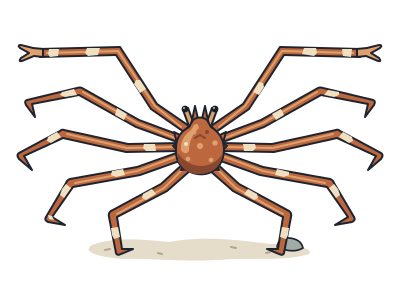
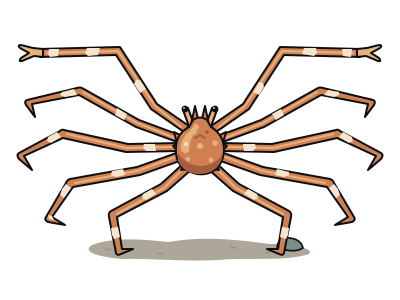
- Japanese spider crabLegs spanning almost four metres, the widest of any arthropod alive.
- Christmas Island red crabTens of millions march from forest to sea each year to breed.
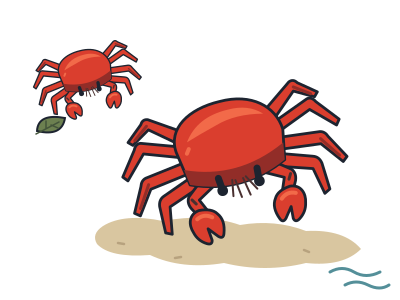
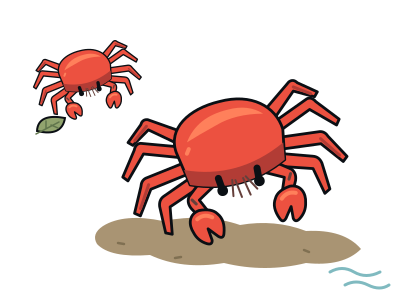
- Atlantic sand fiddlerMales wave one giant claw like a violinist's bow to court females on the mudflats.
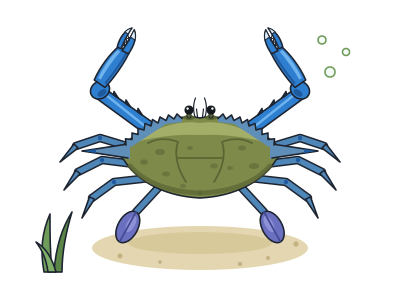
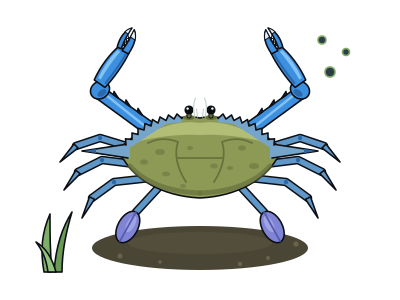
- Atlantic blue crabA fast-swimming crab with paddle-shaped back legs and bright blue claws.
Next to it on the tree
- Pistol shrimpSnaps its claw so fast it makes a bubble that bangs louder than a gunshot.
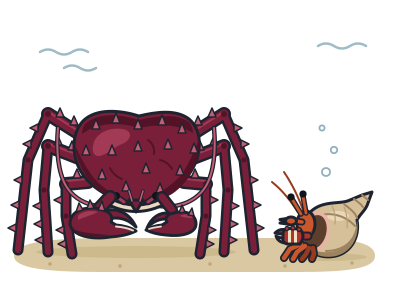
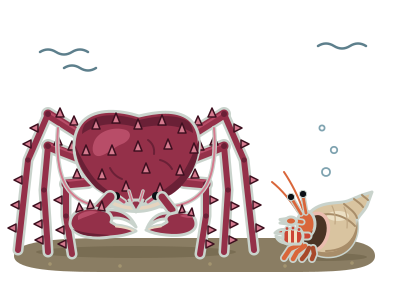
- Hermit crabs and king crabsCrab-like decapods that are not true crabs; king crabs grew from hermit crab ancestors.
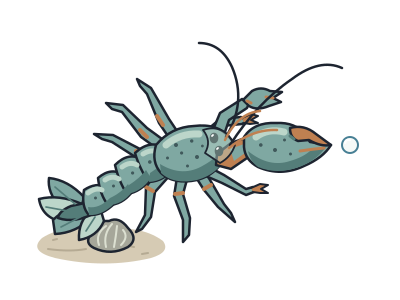
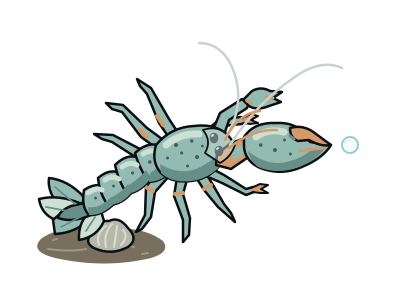
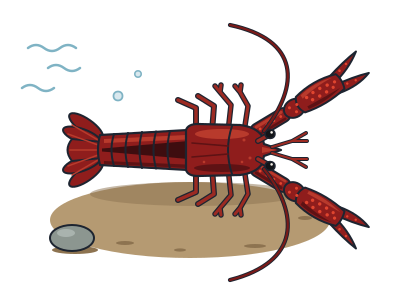
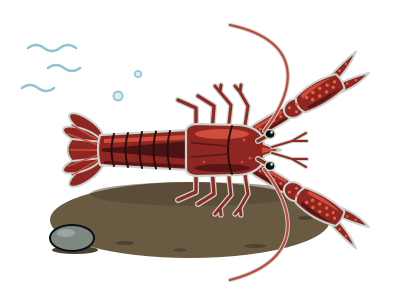
- Lobsters and crayfishClawed decapods with long tails, in the sea and in freshwater streams.
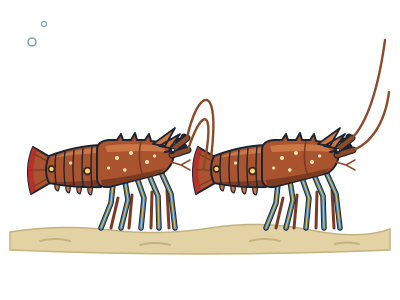
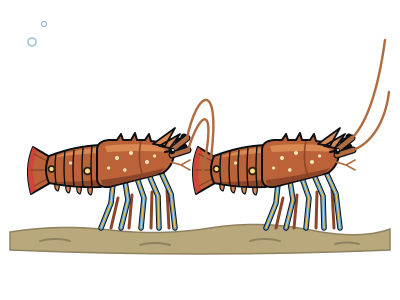
- Caribbean spiny lobsterA clawless lobster that migrates in long single-file lines across the seafloor.
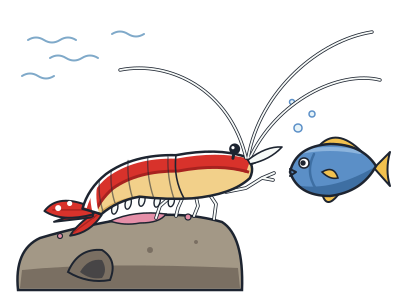
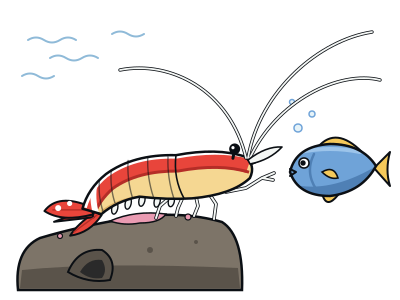
- Pacific cleaner shrimpRuns a cleaning station where fish line up to have parasites picked off.
- Whiteleg shrimpThe shrimp most of us eat, farmed in ponds by the million around the tropics.