A species
Japanese spider crab
Macrocheira kaempferi
A crab with a small-car-sized reach
You and the japanese spider crab meet in the Two-sided animals branch, shown at about 580 million years ago (on 11 November, in a calendar from life's shared ancestor to today).
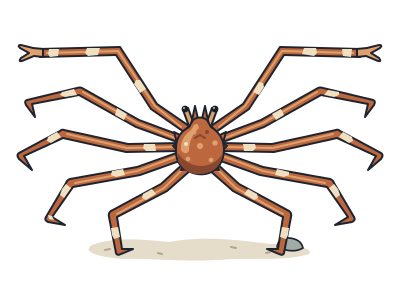
With legs spanning almost four metres in exceptional individuals, the Japanese spider crab is the widest living arthropod—the animal group that includes insects, spiders and crabs. That reach is roughly the length of a small car, measured between outstretched claw tips, not along one leg. Despite its spider-like outline, it belongs to the ten-legged group that includes shrimps and lobsters.
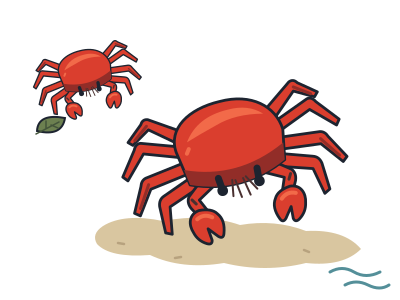
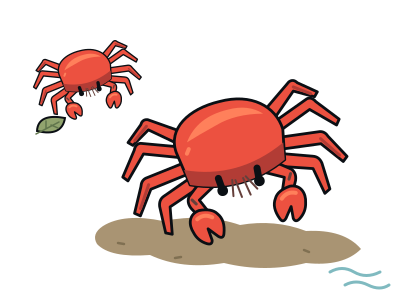
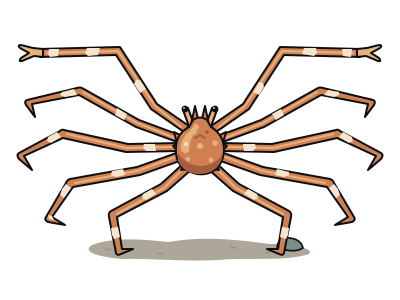
Its rounded body sits among long, thin legs. Eight legs are for walking, while the front two end in claws. The shell ranges from dark orange to pale tan, and the orange legs can carry irregular white patches. It walks across the seabed rather than swimming.
This generally calm crab spends much of its time searching for animal remains and shellfish. It also eats algae and sometimes catches small sea animals. When ready to breed, adults move into shallower water, around 50 metres deep.
Replacement legs
Lost legs can regrow through moulting, when the crab sheds its outer shell.
A living disguise
Young crabs can attach sponges or kelp to their shells to help them blend into their surroundings.
A million eggs
A female can produce more than a million eggs after mating in spring.