A species
Christmas Island red crab
Gecarcoidea natalis
A forest crab with a sea-bound family journey
You and the christmas island red crab meet in the Two-sided animals branch, shown at about 580 million years ago (on 11 November, in a calendar from life's shared ancestor to today).
Tens of millions of Christmas Island red crabs march from forest to sea each year to breed. These land travellers belong to the wider group that includes lobsters and shrimps. They are true crabs, with a small rear body section folded underneath. Coconut crabs and hermit crabs belong to a different branch of that group.
The journey begins with the first wet-season rains, usually in October or November—not necessarily at Christmas. Near the coast, males dig burrows. Mating takes place in or near these shelters. Afterwards, the males head inland, while females stay behind as their eggs develop.
The next step follows the moon and tides. Before dawn, during the moon’s last quarter, females release their eggs as the high tide starts to fall. The eggs hatch when they touch seawater. The young spend about a month developing at sea before the survivors return to land. Adults, by contrast, spend most of their lives on land.
Males go first
Males lead the migration, with females joining along the way.
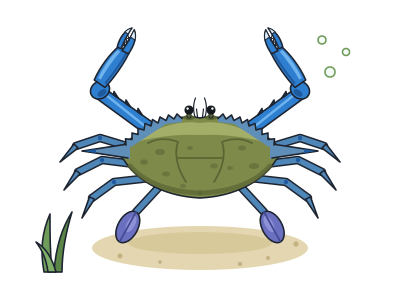
Matching pincers
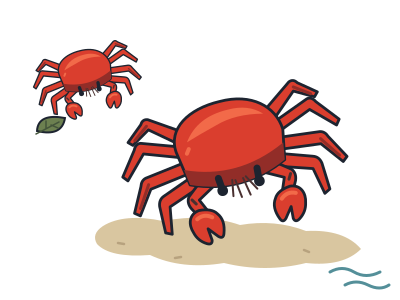
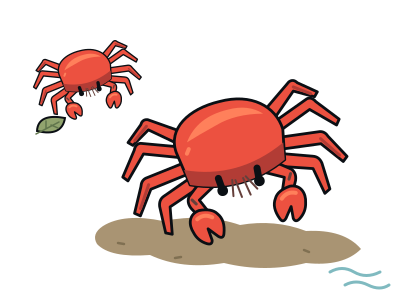
The two claws are approximately equal in size.
Crab crossings
Barriers, underpasses, crab bridges and traffic diversions help migrating crabs cross roads safely.