A group of living things
Lobsters and crayfish
Astacidea
Clawed, long-tailed animals of the sea floor and freshwater streams
This branch is shown at about 270 million years ago; its age is a rough estimate.
You and lobsters and crayfish meet in the Two-sided animals branch, shown at about 580 million years ago (on 11 November, in a calendar from life's shared ancestor to today).
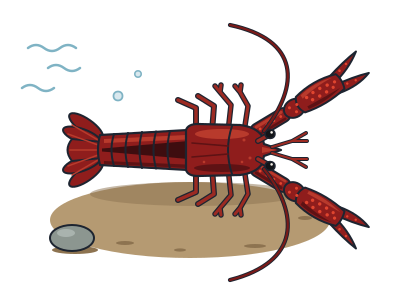
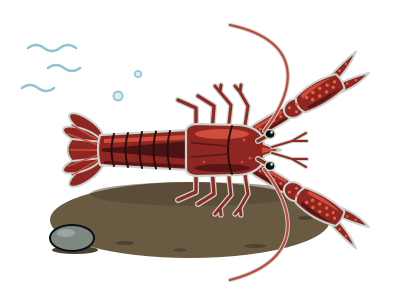
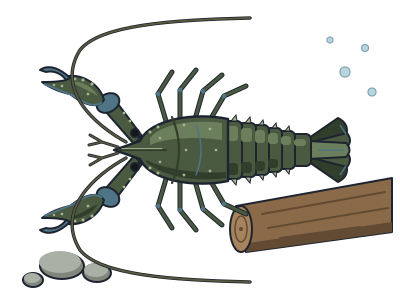
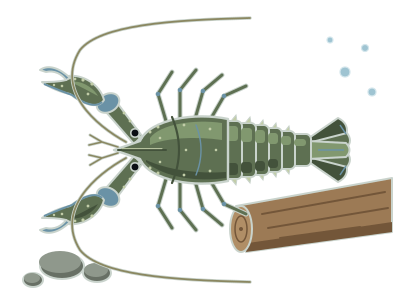
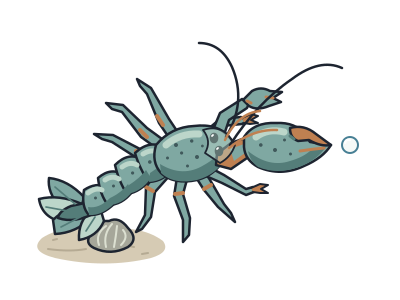
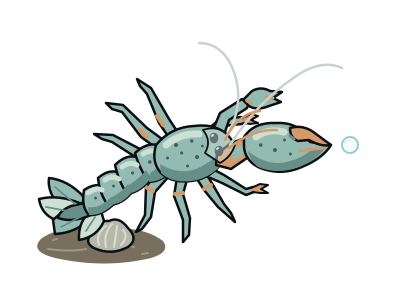
Picture a shrimp in a suit of armour with a pair of big claws, and you are close to a lobster or crayfish. This branch of the crab and shrimp part of the tree is made up of armoured animals with claws and long tails. Some live on the sea floor. Others live only in fresh water. The group includes the big clawed lobsters of the ocean, small reef lobsters, and crayfish from both the north and south of the world.
Crayfish are not baby lobsters, and they are not fish. They are their own freshwater branch. Many studies suggest that the clawed lobsters of the sea are their closest living relatives. Spiny lobsters have no claws and sit on a different branch, even though they share the name.
Members of this group have claws on their first three pairs of walking legs, and the front pair is much bigger than the rest. Crayfish breathe through feathery gills. They live in streams, swamps, ditches and even rice paddies, but most cannot cope with polluted water. When danger comes, a crayfish flips its tail and shoots backwards.
Sizes vary hugely. The smallest crayfish are about 2 cm long. The Tasmanian giant freshwater crayfish is the world's biggest freshwater animal without a backbone. Old reports say it once grew to over 80 cm long, longer than a child's arm. Most big ones today weigh about 2 to 3 kg.
In berry
A female crayfish carrying eggs stuck under her tail is said to be 'in berry'. Her young hatch looking like tiny adults.
Many names
Depending on where you live, you might call them crayfish, crawfish, crawdads, or yabbies in Australia.
Crayfish hotspot
South-eastern North America has more crayfish species than anywhere else, with over 330. Australia has more than 100.
Inside lobsters and crayfish
- American lobsterCan live for decades and keeps growing, moulting its whole shell each time.
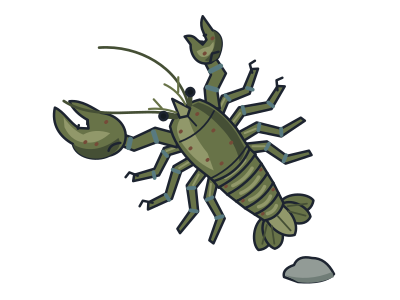
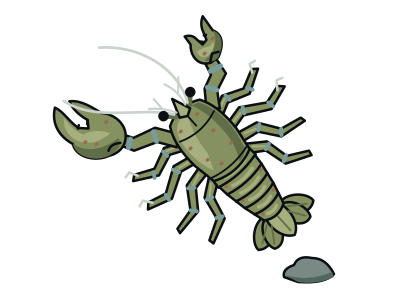
- Red swamp crayfishA small freshwater lobster that has spread from Louisiana swamps around the world.
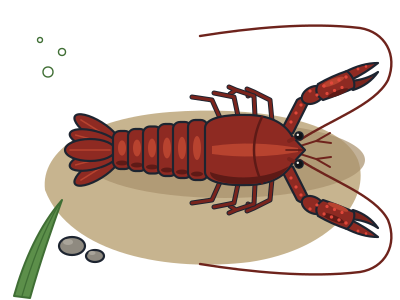
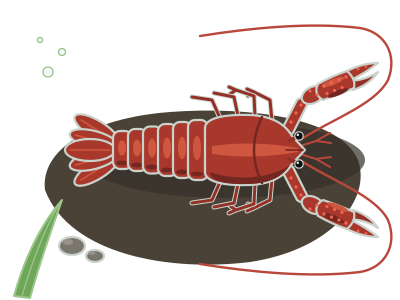
- Tasmanian giant freshwater crayfishThe biggest freshwater invertebrate, as heavy as a cat and able to live for 60 years.
Next to it on the tree
- Pistol shrimpSnaps its claw so fast it makes a bubble that bangs louder than a gunshot.
- True crabsDecapods with the tail tucked tightly under a broad shell, so they scuttle sideways.
- Hermit crabs and king crabsCrab-like decapods that are not true crabs; king crabs grew from hermit crab ancestors.
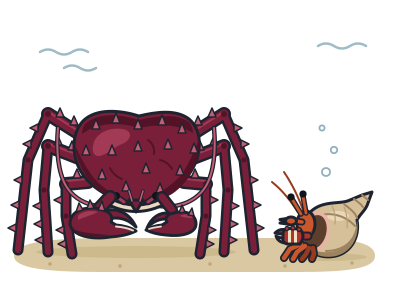
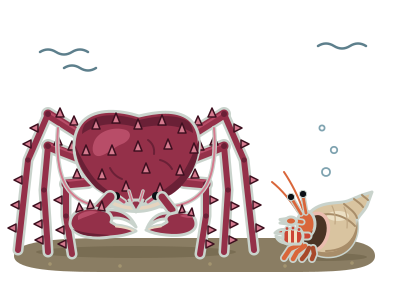
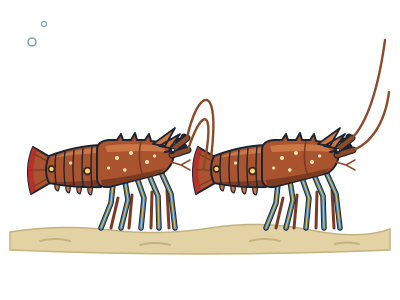
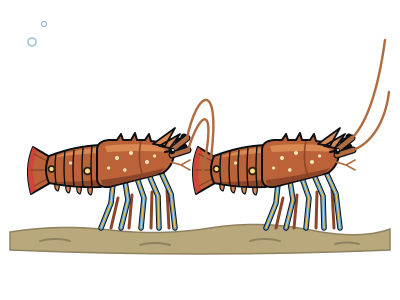
- Caribbean spiny lobsterA clawless lobster that migrates in long single-file lines across the seafloor.
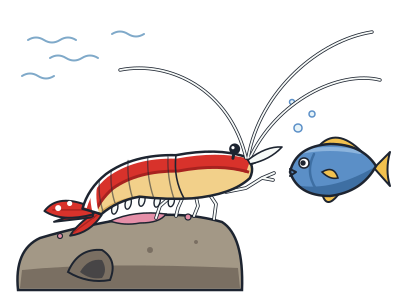
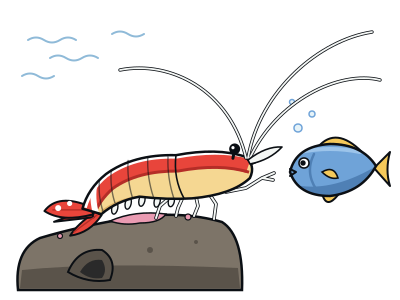
- Pacific cleaner shrimpRuns a cleaning station where fish line up to have parasites picked off.
- Whiteleg shrimpThe shrimp most of us eat, farmed in ponds by the million around the tropics.