A species
Red swamp crayfish
Procambarus clarkii
A pocket-sized freshwater lobster that hitched rides from Louisiana to the world
You and the red swamp crayfish meet in the Two-sided animals branch, shown at about 580 million years ago (on 11 November, in a calendar from life's shared ancestor to today).
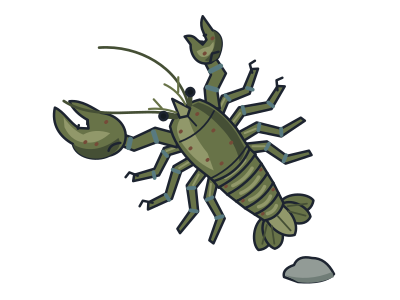
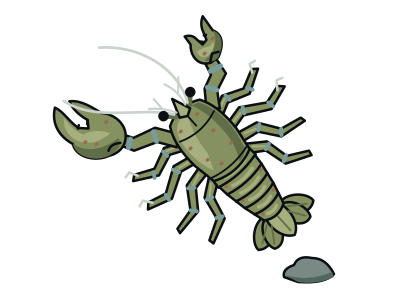
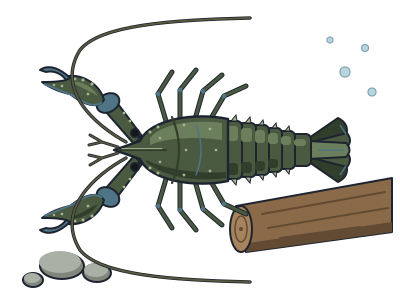
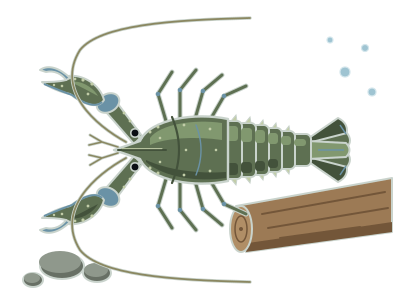
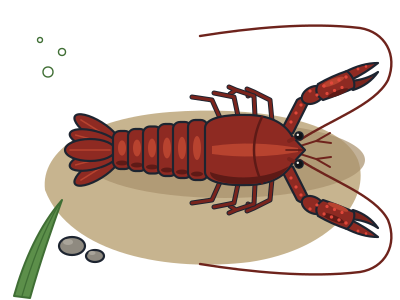
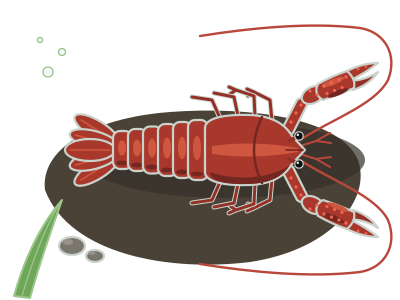
It looks like a lobster shrunk to the size of your finger, and that makes sense. Freshwater crayfish are the sister group of the clawed lobsters of the sea, such as the American lobster. The red swamp crayfish is one of about 640 kinds of crayfish. Native crayfish live on every continent except Antarctica and mainland Africa, from Louisiana to Tasmania.
Its home is the swamps and slow waters of the southern United States and northern Mexico, including Louisiana. But people have carried it around the world. In 1927 it was shipped from New Orleans to Japan, and in the 1970s from Louisiana to Spain. Fish farms, food markets, fishing bait and the pet trade spread it further. It now lives wild in the Americas, Europe, Asia and Africa.
It is very tough. It can survive dry spells of up to about four months, which helps it settle almost anywhere. It has been called one of the world's worst invasive species. It eats fish eggs, pushes native crayfish out of their food and shelter, and weakens riverbanks with its burrows. It can also carry crayfish plague, a disease that kills native crayfish.
Bigger claws for the boys
Adult males usually have noticeably bigger claws than females.
From Louisiana dish to Chinese rice fields
In 1990 Louisiana produced about 90% of the world's farmed crayfish. By 2018 China was the biggest producer, mostly from crayfish raised in rice fields, and the US made only about 4%.
Crayfish in caves
Some have moved into a spring in Portugal and caves in Italy. They were the first cave-living crayfish ever recorded in Europe, and some of the Italian ones are an unusual bluish-white.