A species
American lobster
Homarus americanus
Decades of life, one new shell at a time.
You and the american lobster meet in the Two-sided animals branch, shown at about 580 million years ago (on 11 November, in a calendar from life's shared ancestor to today).
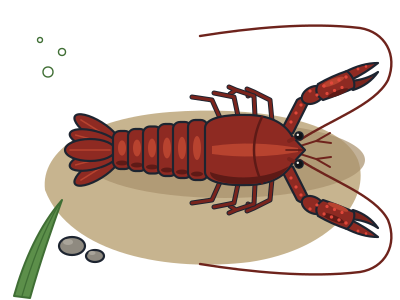
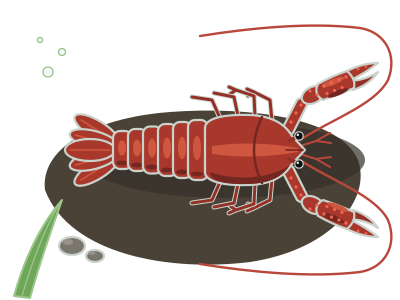
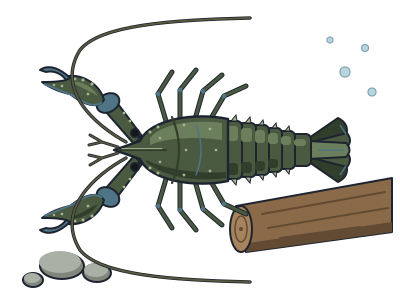
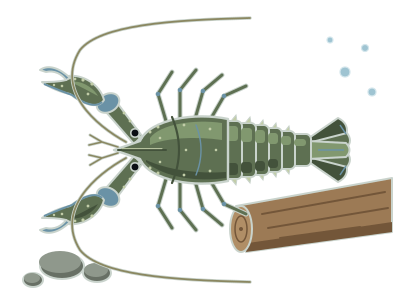
An American lobster can live for decades and keeps growing after reaching adulthood. This relative of crabs and shrimps belongs to the same family of clawed lobsters as the European lobster. Unlike people, it must shed its hard outer covering to grow—a process called moulting.
That means replacing more than the shell on its back. The coverings of its claws, feelers and parts around its mouth come off too. It slips out, then absorbs water to expand its body before the new shell hardens. While soft and vulnerable, it shelters beneath rocks or in a burrow. It often eats its discarded shell, recovering calcium to help harden its new armour.
Its home is the cold north-west Atlantic, from Labrador in Canada to North Carolina in the United States. Growing larger does not mean living forever: predators, illness and moulting difficulties can end its life. As it gets bigger, growth slows and shell changes become less frequent.
Two claws, two jobs
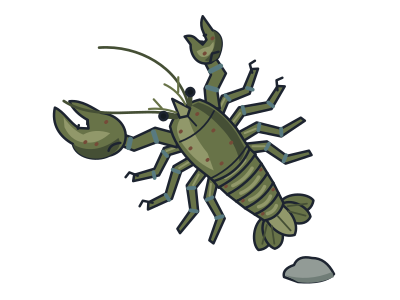
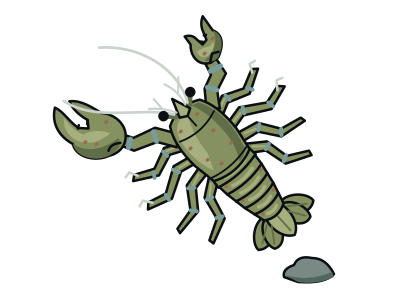
The broad claw crushes shells. The narrower claw grips and cuts food.
A backwards burst
Its muscular tail can send it backwards through the water in quick bursts.
Eggs under the tail
Females carry their eggs beneath their tails for about a year before they hatch.