A species
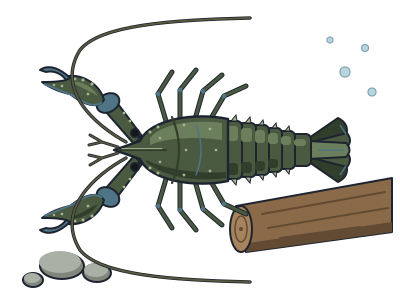
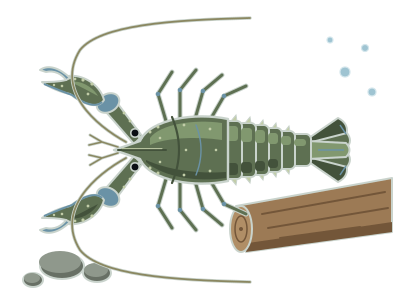
Tasmanian giant freshwater crayfish
Astacopsis gouldi
A river crayfish whose biggest giants weighed as much as a cat, and which may live for 60 years.
You and the tasmanian giant freshwater crayfish meet in the Two-sided animals branch, shown at about 580 million years ago (on 11 November, in a calendar from life's shared ancestor to today).
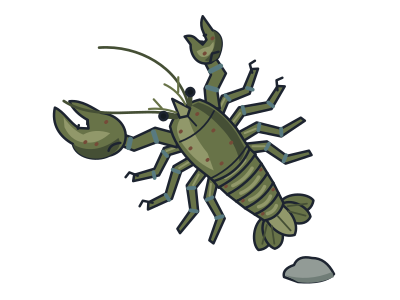
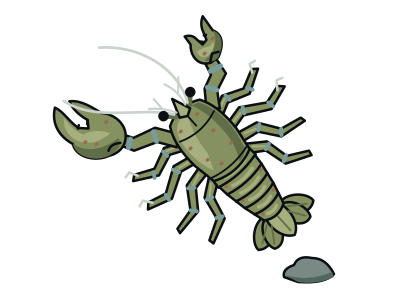
This is the biggest invertebrate (an animal without a backbone) that lives in fresh water anywhere in the world. Old records describe giants of about 6 kilograms, as heavy as a pet cat, and about 80 centimetres long. Today, one weighing 2 to 3 kilograms counts as large. It is also reported to live for up to about 60 years.
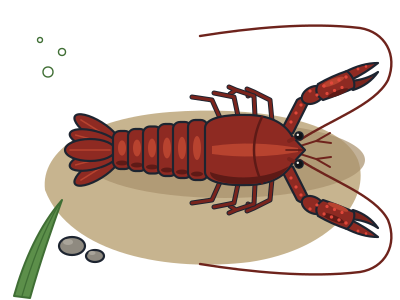
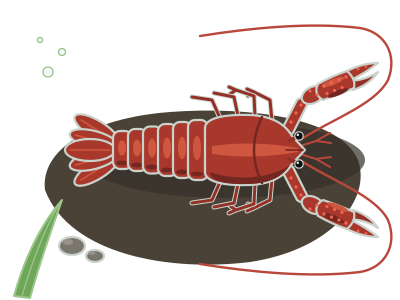
On the tree it sits with the lobsters and crayfish, beside the American lobster and the red swamp crayfish. Tasmanians often call it a 'lobster', but it is a freshwater crayfish. Its closest relatives are other crayfish from the southern half of the world.
It lives naturally only in northern Tasmania. It is found in the Arthur River system in the north-west and in many of the rivers that flow north into Bass Strait. It needs cool, clean water rich in oxygen, and it shelters under sunken logs and undercut banks. Even with its strong pincers, which are much bigger in males, it is not a fierce hunter. It mostly eats rotting wood and leaves and the microbes growing on them. Now and then it takes small fish, insects or dead animals.
It grows very slowly. Males take about 9 years to become adults and females about 14 years. Females breed only every second year, and a mother carries her eggs under her tail for about nine months, right through winter. Because it breeds so slowly, it is easily harmed. Catching it has been banned since 1998, but poaching and damage to streams are still the main threats.
An Aboriginal name
In palawa kani, the language of Tasmanian Aboriginal people, it is called lutaralipina.
Blue-white crayfish
Most are dark brown-green to black or blue, but those in the Frankland River system in north-west Tasmania are mostly a pale blue-white.
Raised and released
In May 2021, about 60 young crayfish raised in captivity were released into the wild. Reports called it the first time this had been done for the species.