A species
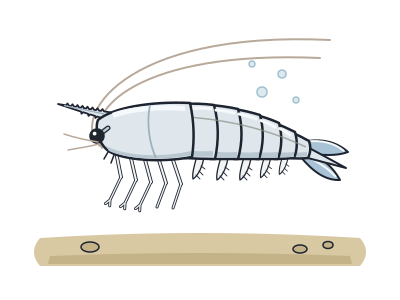
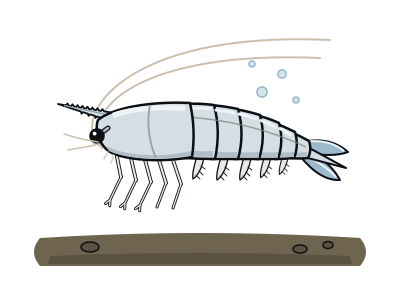
Whiteleg shrimp
Penaeus vannamei
The shrimp on most of our plates, farmed by the million around the tropics.
You and the whiteleg shrimp meet in the Two-sided animals branch, shown at about 580 million years ago (on 11 November, in a calendar from life's shared ancestor to today).
Bought a bag of frozen prawns lately? There is a good chance they were whiteleg shrimp. In 2023, farms around the world grew about 9 million tonnes of shrimp from its group of close relatives, and about 80% of that was this one species. The biggest shrimp-farming countries are China, India, Ecuador, Vietnam and Indonesia. On most farms, shrimp reach harvest size in roughly three to five months.
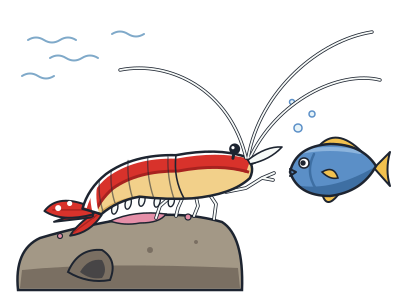
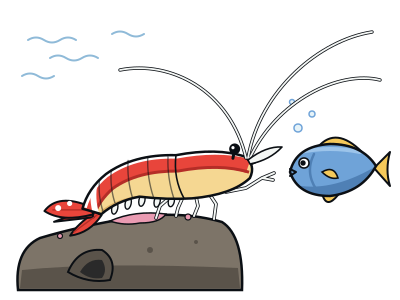
On the tree it sits beside crabs, lobsters and other shrimp. But not every 'shrimp' belongs to the same branch. The pistol shrimp and cleaner shrimp shown nearby are from a different group, which carry their eggs on their bodies until they hatch. The whiteleg shrimp has branching gills and simply releases its eggs into the sea.
In the wild, it lives only along the warm Pacific coast from Mexico to northern Peru, where the water is normally above 20 °C all year. Adults spawn in open water. The drifting young are carried towards the shore. They grow up in estuaries, lagoons and mangrove swamps, then head back out to sea. Alive, it is see-through and whitish, not pink, and its pale legs give it its name.
A life of new shells
Its hard outer shell cannot stretch, so to grow it sheds the old one and makes a bigger one. This is called moulting. One shrimp moults about 50 times in its life, far more times than most other animals with a jointed hard outer shell.
Hundreds of thousands of eggs
One female can release about 100,000 to 250,000 eggs, each only about 0.22 mm across, smaller than a grain of salt. They hatch about 16 hours later.
From Panama to the world
It was first bred in captivity in Florida in 1973, from young hatched from a wild female caught in Panama. Farming of whiteleg shrimp in Asia grew from almost nothing in 1999 to about 1.1 million tonnes by 2004.
Next to it on the tree
- Pistol shrimpSnaps its claw so fast it makes a bubble that bangs louder than a gunshot.
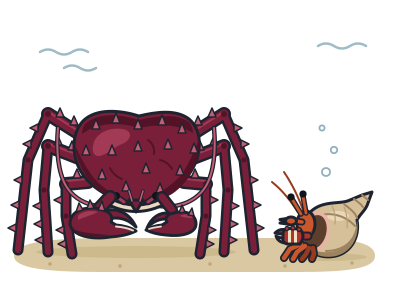
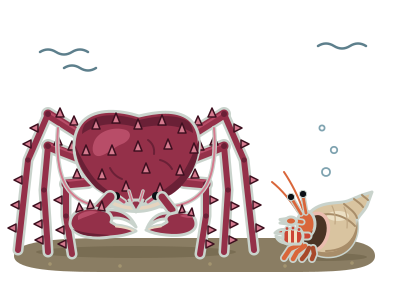
- True crabsDecapods with the tail tucked tightly under a broad shell, so they scuttle sideways.
- Hermit crabs and king crabsCrab-like decapods that are not true crabs; king crabs grew from hermit crab ancestors.
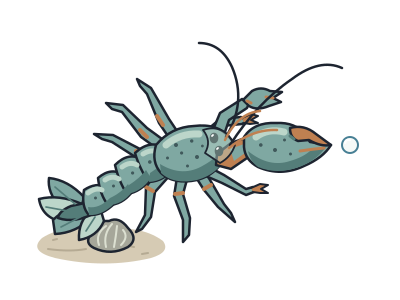
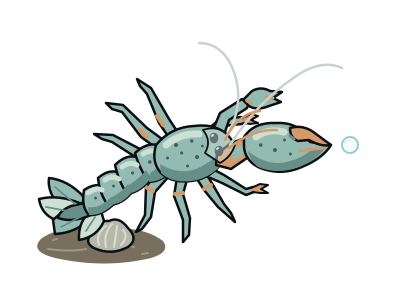
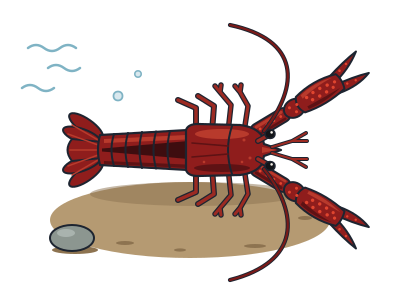
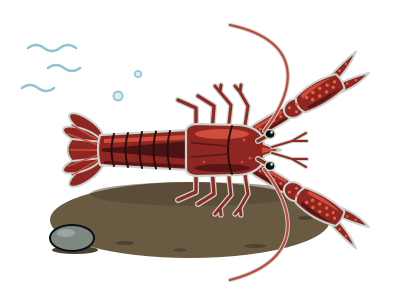
- Lobsters and crayfishClawed decapods with long tails, in the sea and in freshwater streams.
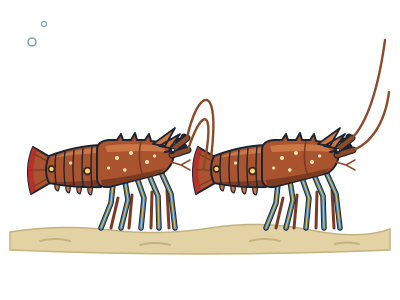
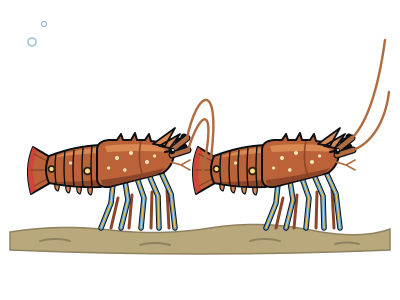
- Caribbean spiny lobsterA clawless lobster that migrates in long single-file lines across the seafloor.
- Pacific cleaner shrimpRuns a cleaning station where fish line up to have parasites picked off.