A species
Giant isopod
Bathynomus giganteus
A deep-sea woodlouse relative as big as a shoe.
You and the giant isopod meet in the Two-sided animals branch, shown at about 580 million years ago (on 11 November, in a calendar from life's shared ancestor to today).
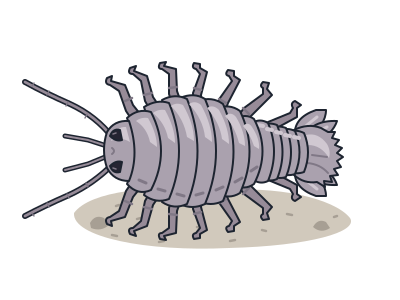
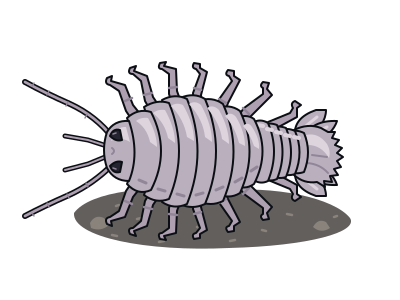
Imagine a garden woodlouse as long as a large adult shoe. The giant isopod is its deep-sea relative: both belong to the same animal group. It is also related to crabs, shrimps, lobsters and krill. Despite its insect-like appearance, it belongs to the crustaceans, not the insects.
Its body uses energy very slowly. One aquarium animal identified as this species reportedly survived about five years without eating. That was a captive record, not a measured normal gap between meals in the wild. Giant isopods can also bury themselves in the seabed and stay still, saving energy between feeding opportunities.
On the ocean floor, it eats dead animals that sink from above, including fish, squid and whales. This helps recycle nutrients in the deep sea. Small hooked claws at the ends of its legs help it grip the seabed as it moves around.
Fourteen walking legs
An adult has seven pairs of walking legs: 14 legs altogether.
Two pairs of feelers
It has one short pair of antennae and one long pair. The longer pair can reach nearly half its body length.
It can swim too
A tail fan and fluttering paddles underneath its body help it swim. The paddles also help it breathe.
Next to it on the tree
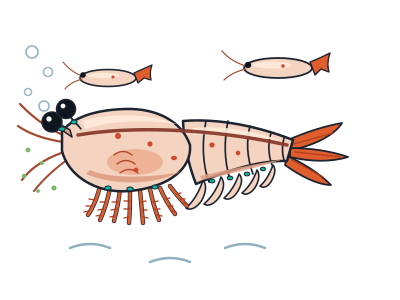
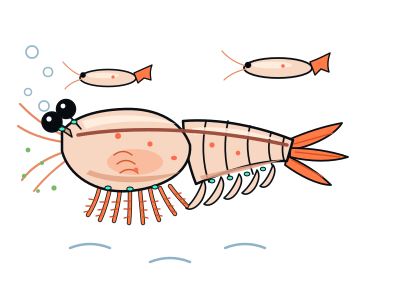
- Antarctic krillFinger-length shrimp-like animals that together outweigh almost any other wild animal and feed the great whales.
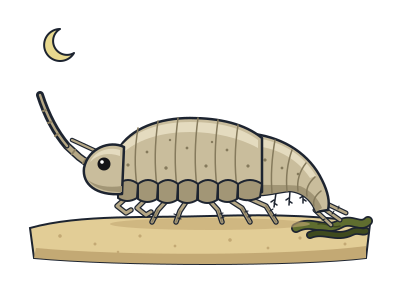
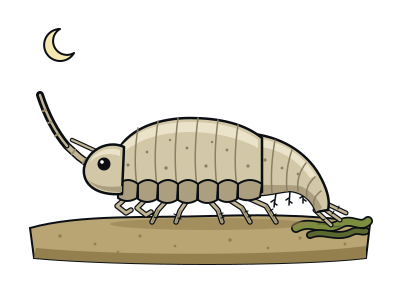
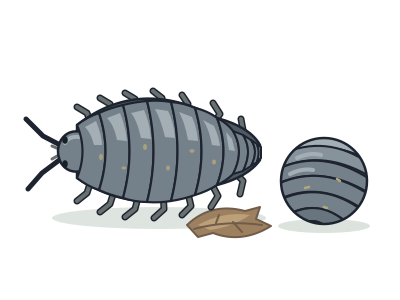
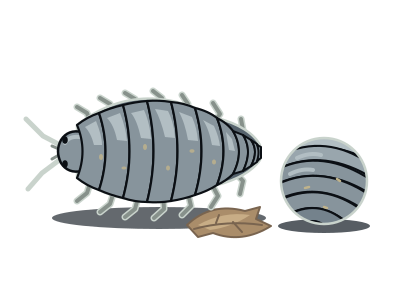
- Pill woodlouseA garden crustacean that rolls into a ball and still breathes through gill-like plates.
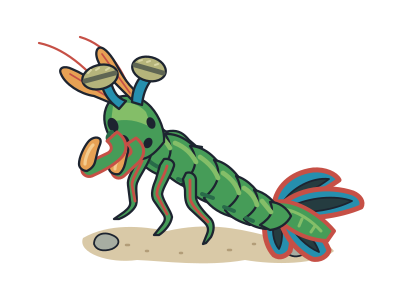
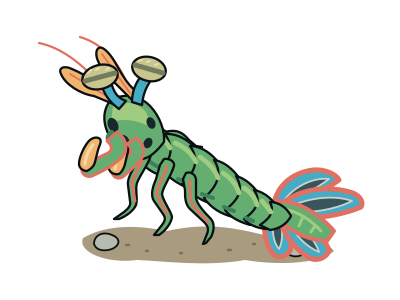
- Peacock mantis shrimpThrows one of the fastest punches in nature, and sees ultraviolet and polarised light.
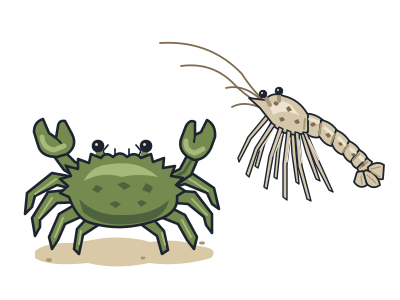
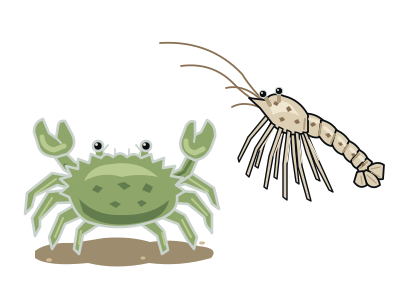
- Crabs, lobsters and shrimpTen-legged crustaceans; the crab shape evolved at least five separate times.
- SandhopperThe tiny jumping crustacean of beaches that steers home by the sun and moon.