A species
Pill woodlouse
Armadillidium vulgare
A crab relative that rolls into a garden ball.
You and the pill woodlouse meet in the Two-sided animals branch, shown at about 580 million years ago (on 11 November, in a calendar from life's shared ancestor to today).
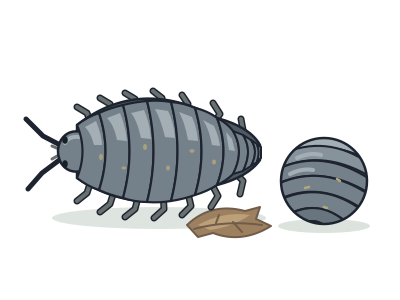
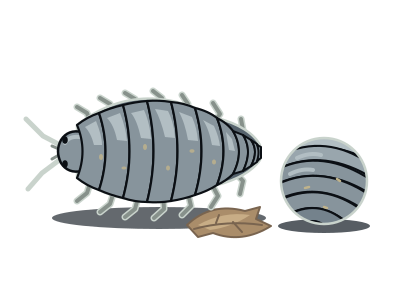
A pill woodlouse is a garden relative of crabs and shrimps that can roll into a completely closed ball. It is a crustacean, not an insect. When it tucks away its head and legs, its softer underside is protected from predators. Rolling up also helps it avoid drying out.
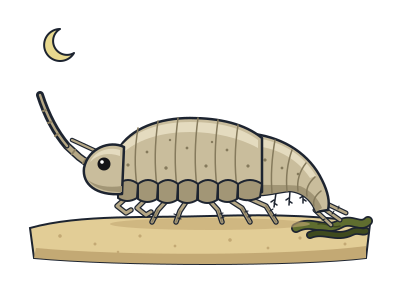
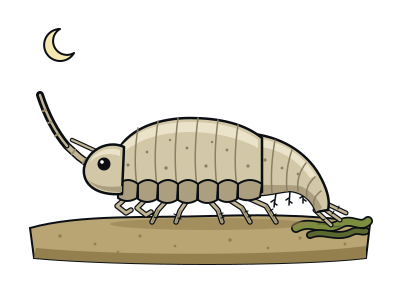
Its breathing equipment keeps another link to its watery family. Beneath the rear of its body sit gill-like plates. Two pairs contain specialised structures that work as tiny lungs for breathing air, rather than ordinary underwater gills. Its breathing surfaces need moisture, which helps explain why it favours damp, dark shelters.
Mostly active at night, it eats mainly decaying leaves and other decomposing material. Chewing up dead plants helps return nutrients to the soil. It is not strictly a dead-leaf eater, though: it sometimes nibbles seedlings and roots too.
Fourteen walking legs
An adult has seven pairs of walking legs, carried on seven main body sections.
A pouch for the young
The female carries her eggs and newly hatched young in a pouch underneath her body.
Changing in halves
It sheds its outer covering in two stages: the back half first, then the front.
Next to it on the tree
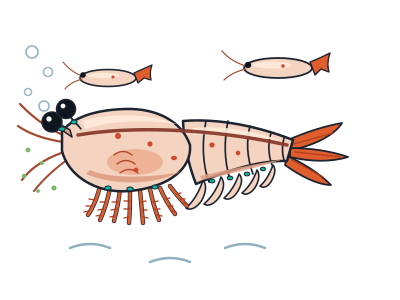
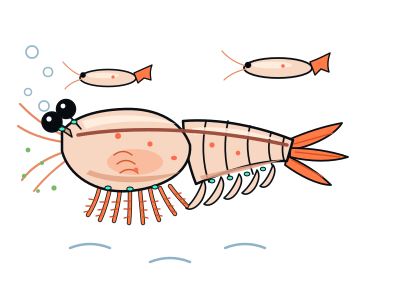
- Antarctic krillFinger-length shrimp-like animals that together outweigh almost any other wild animal and feed the great whales.
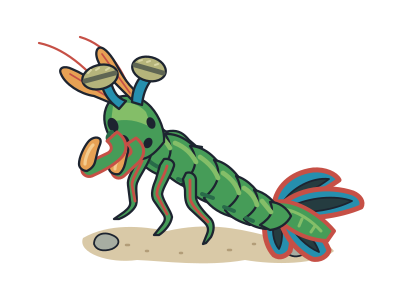
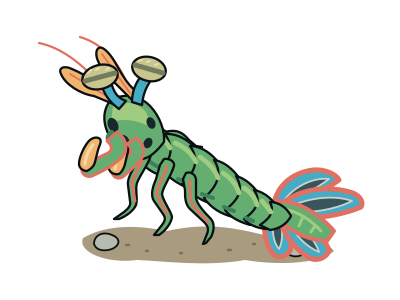
- Peacock mantis shrimpThrows one of the fastest punches in nature, and sees ultraviolet and polarised light.
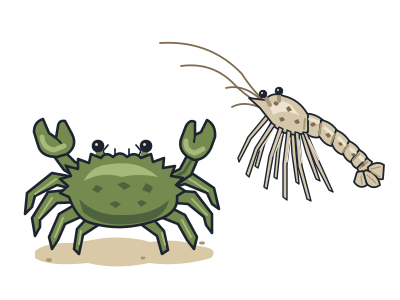
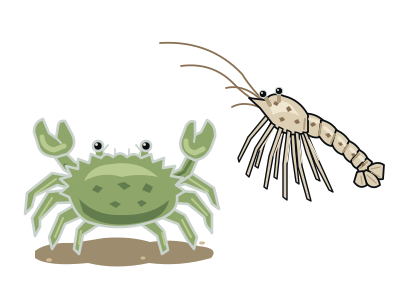
- Crabs, lobsters and shrimpTen-legged crustaceans; the crab shape evolved at least five separate times.
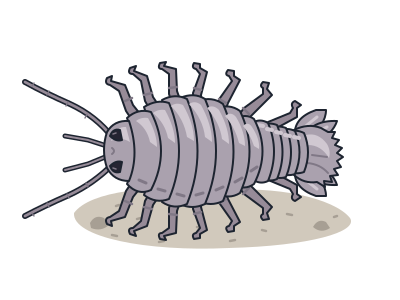
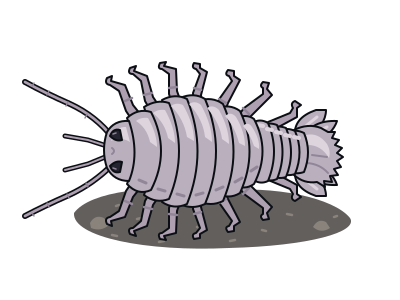
- Giant isopodA deep-sea woodlouse relative as big as a shoe that can go years without eating.
- SandhopperThe tiny jumping crustacean of beaches that steers home by the sun and moon.