A species
Sandhopper
Talitrus saltator
A tiny beach jumper that finds its way home by the sun and moon
You and the sandhopper meet in the Two-sided animals branch, shown at about 580 million years ago (on 11 November, in a calendar from life's shared ancestor to today).
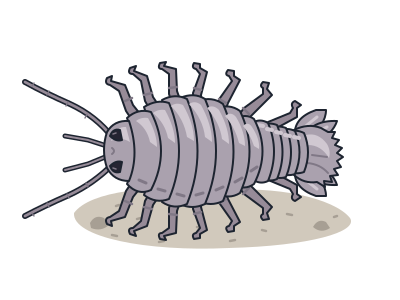
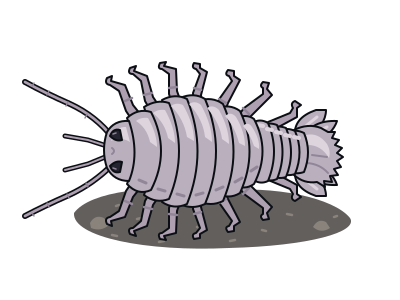
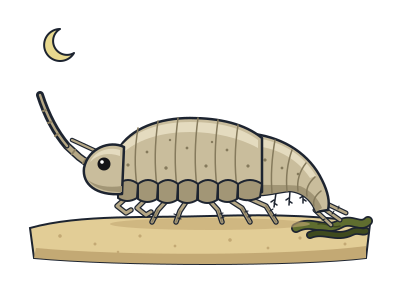
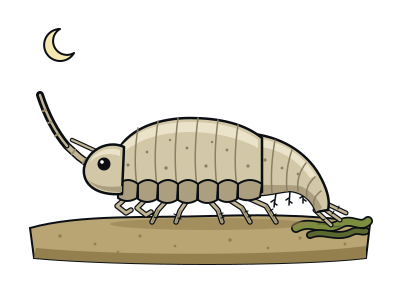
On summer nights, many sandy beaches are busy with tiny jumpers. The sandhopper looks a bit like an insect, but it is a crustacean, a small relative of crabs, shrimp and woodlice. Adults are usually about 1 to 1.5 centimetres long, and the biggest reach about 2 centimetres, about the length of a fingernail.
By day it hides in damp sand above the high-tide mark. It buries itself 10 to 30 centimetres deep or tucks itself under washed-up seaweed. At night it comes out to feed on rotting seaweed along the strandline. Afterwards it has to find its way back to the band of damp sand where it hides by day.
To get home, it reads the sky. By day it steers by the sun, and by night it steers by the moon. Both move across the sky, so it has to allow for the time. Experiments suggest that the moon compass relies on its antennae, while the brain probably runs the sun compass. Young sandhoppers raised in a lab could steer by an artificial moon the first time they saw one. This means the skill seems to be inborn.
Its hop comes from tucking its short tail end under its body and then flicking it out. This can throw it several centimetres into the air, but it cannot steer the jump.
No magnet needed
Scientists used special coils to cancel out Earth's magnetic field. The sandhoppers still found the right direction using the sun and moon.
Mini adults from birth
Females carry about 13 to 15 eggs in a pouch under the body. The young hatch looking like tiny versions of their parents.
Not a real flea
People sometimes call them 'sand fleas', but sandhoppers don't bite. The true sand flea is a different animal, a parasitic insect.
Next to it on the tree
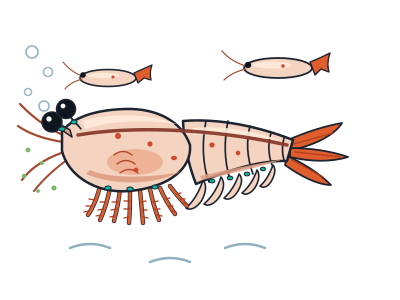
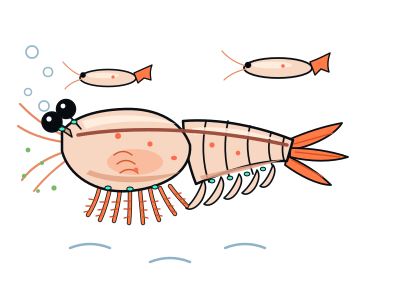
- Antarctic krillFinger-length shrimp-like animals that together outweigh almost any other wild animal and feed the great whales.
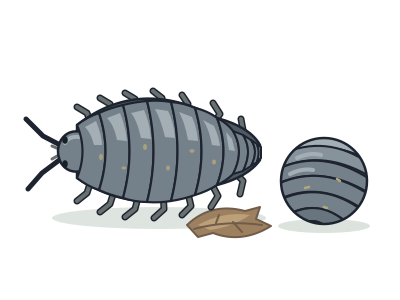
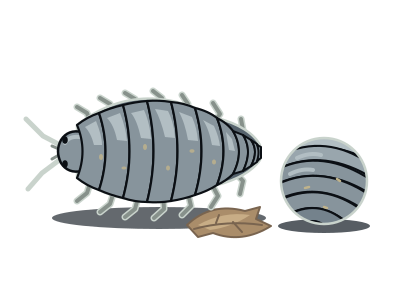
- Pill woodlouseA garden crustacean that rolls into a ball and still breathes through gill-like plates.
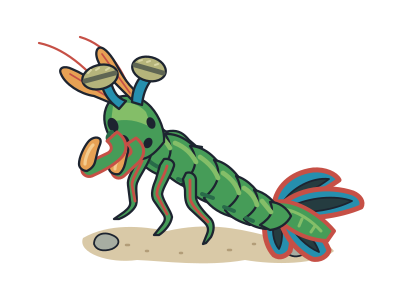
- Peacock mantis shrimpThrows one of the fastest punches in nature, and sees ultraviolet and polarised light.
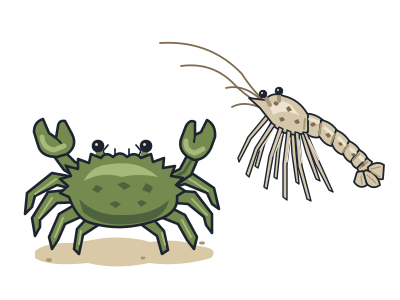
- Crabs, lobsters and shrimpTen-legged crustaceans; the crab shape evolved at least five separate times.
- Giant isopodA deep-sea woodlouse relative as big as a shoe that can go years without eating.