A species
Coconut crab
Birgus latro
A giant hermit crab with coconut-cracking claws.
You and the coconut crab meet in the Two-sided animals branch, shown at about 580 million years ago (on 11 November, in a calendar from life's shared ancestor to today).
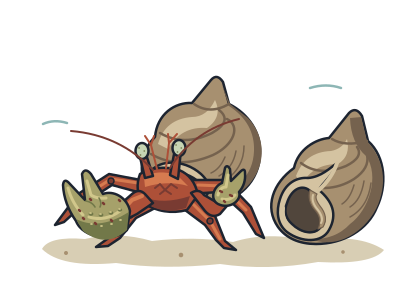
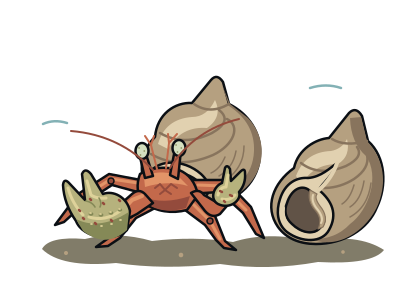
The coconut crab is the largest living land arthropod: an animal with jointed legs and a hard outer covering. Its powerful pincers can break through a coconut’s tough covering to reach the flesh. Yet this bulky giant belongs to the land hermit crab family. Adults have their own protective covering rather than carrying an empty snail shell.
Opening a coconut is not always quick. It can sometimes take several days, and coconuts are far from its only food. On Christmas Island, it mainly eats fruit, seeds and soft material inside fallen trees. It also scavenges animal remains. Despite its weight, it can climb tree trunks and rock faces.
Adults breathe air through special lung-like chambers. They cannot swim and can drown if submerged for too long. But life begins in the sea: the young hatch as tiny drifting larvae. They spend about a month at sea before settling on the bottom and eventually moving ashore.
Not just one colour
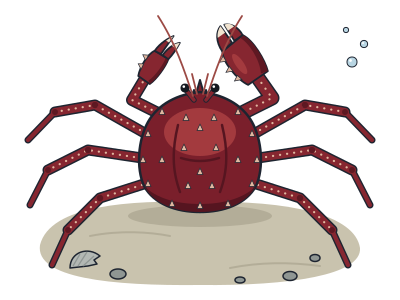
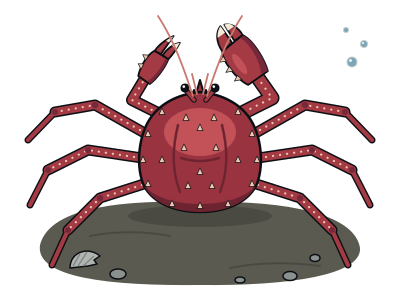
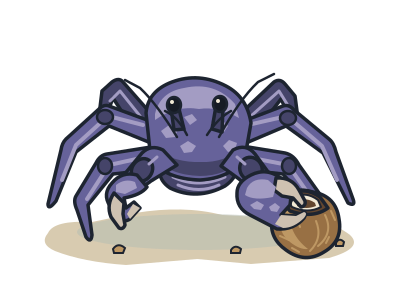
Individuals can be blue, purple, brown or orange-red, often with lighter patches and pale claw or leg tips.
After-dark explorer
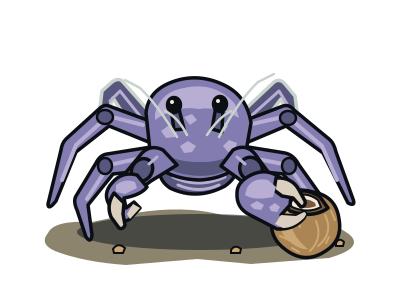
On Christmas Island, coconut crabs usually shelter during daylight and emerge at night or in overcast weather.
A long, slow life
Coconut crabs grow slowly and can live for several decades.