A species
Common hermit crab
Pagurus bernhardus
A borrowed shell, and a new home as it grows.
You and the common hermit crab meet in the Two-sided animals branch, shown at about 580 million years ago (on 11 November, in a calendar from life's shared ancestor to today).
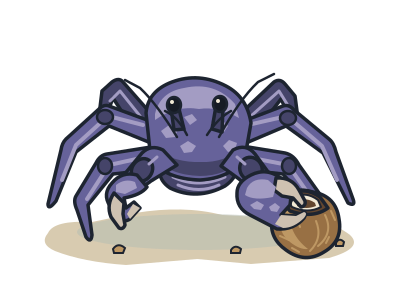
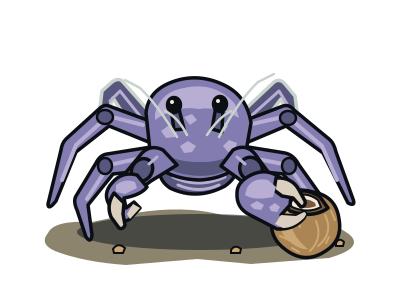
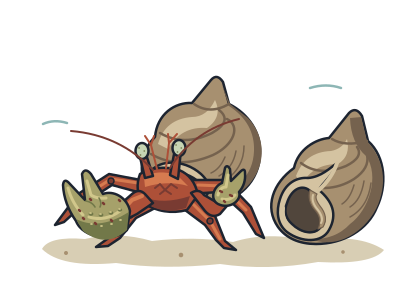
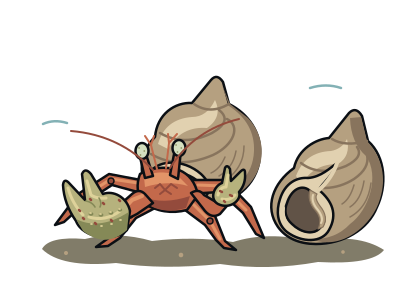
The common hermit crab lives in an empty sea-snail shell and moves house as it grows. Often, a periwinkle or whelk made that spiral home; the crab simply borrows it. Although its pincers look tough, its rear body is soft. The borrowed shell protects the part that does not have hard armour of its own.
Despite its snail-shaped home, this animal belongs to the ten-legged group that includes crabs, lobsters and shrimps. Its enormous relative, the coconut crab, also uses borrowed shells when young, but gives them up as an adult. The common hermit crab keeps relying on these ready-made shelters.
Growing means more than finding a roomier home. The crab must also moult: shed its own outer covering. That is separate from changing its borrowed shell. Finding a suitable shell matters so much that one crab may try to force another out and take over its home.
Unequal pincers
Its right pincer is noticeably larger than its left.
A seabed scavenger
It eats animal remains and plant material.
A drifting start
Females carry developing eggs. After hatching, the tiny young drift in the water before becoming bottom-living youngsters.