A group of living things
Orchids
Orchidaceae
Flower tricksters that fool insects into carrying their pollen
This branch is shown at about 90 million years ago; its age is a rough estimate.
You and orchids meet in the Eukaryotes branch, shown at about 1.8 billion years ago (on 28 July, in a calendar from life's shared ancestor to today).
Orchids may be the biggest family of flowering plants on Earth, with about 28,000 known species. Their only rival is the daisy family, and nobody is sure which of the two is larger. On the tree of life, orchids share a branch with some surprising relatives: onions, aloe vera and the dragon's blood tree.
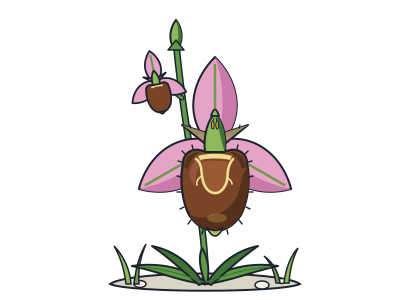
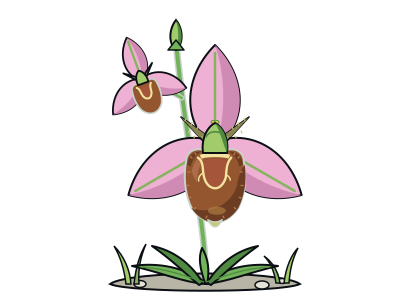
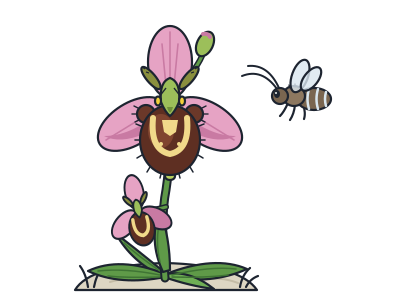
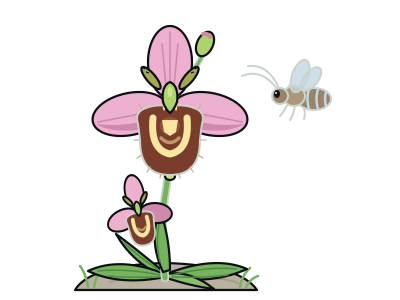
Orchids are famous for tricking insects. Many species offer visitors no reward, such as nectar. Instead, they fool them into carrying their pollen. The bee orchid's furry lip looks like a female bee. Where the right bees live, males try to mate with it and fly off carrying pollen, with nothing to show for their trouble. In Australia, spider orchids give off a scent that copies female wasps. It works so well that male wasps have been seen leaving real females to try to mate with the flowers.
Orchids grow on every continent except Antarctica, from Arctic tundra to tropical rainforests, though most live in the tropics. Many cling to tree branches or rocks instead of growing in soil. Their seeds are among the smallest of any flowering plant, about the size of a speck of dust. Most have no food stored inside, so in the wild almost all orchids need help from a fungus to sprout.
Darwin's moth prediction
One orchid from Madagascar hides its nectar at the bottom of a tube about 33 cm long. In 1862 Charles Darwin predicted there must be a moth with a tongue long enough to reach it. In 1903, after Darwin had died, scientists described a moth from Madagascar with a tongue about 30 cm long.
Pollen in sticky parcels
Most flowers make loose, dusty pollen. Many orchids pack theirs into small clumps instead. When an insect visits, a sticky pad glues the whole parcel onto its head or body, ready to be delivered to the next flower.
Bee orchids that go it alone
In Britain and other northern parts of Europe, bee orchids mostly pollinate themselves. The bee their flowers seem to copy is rare or missing there, so the disguise has almost no one to fool.
Inside orchids
- VanillaThe world's favourite flavour comes from the cured pods of a climbing orchid.
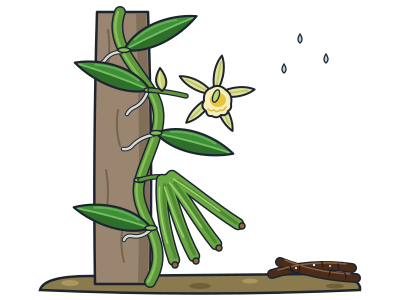
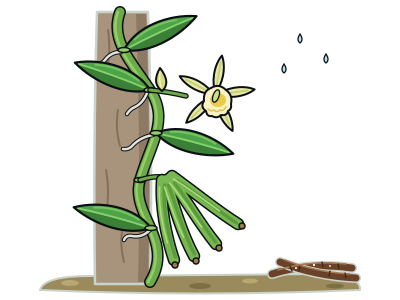
- Bee orchidIts flower looks and smells like a female bee to fool male bees into visiting.
- Moth orchidThe supermarket orchid, whose flat flowers look like moths in flight.
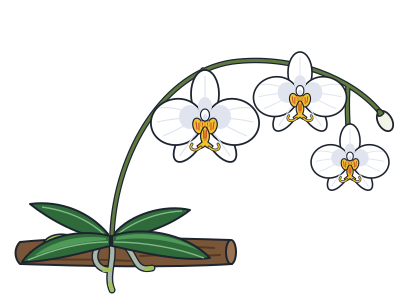
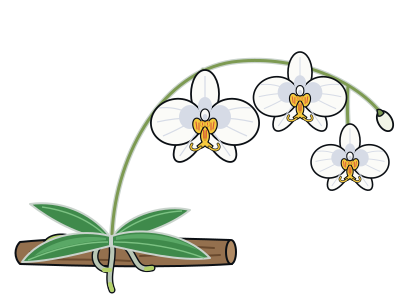
- Lady's slipper orchidA pouch-shaped flower that traps bees briefly so they leave carrying pollen.
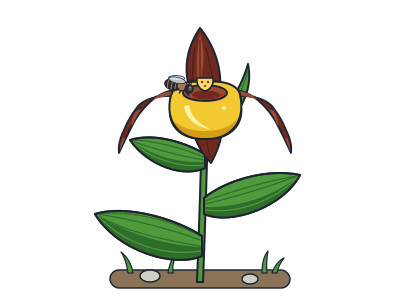
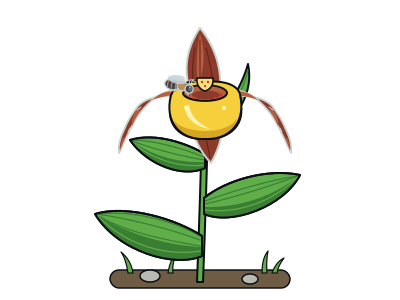
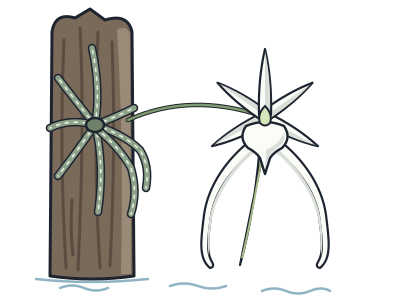
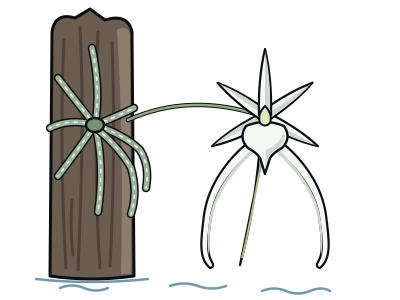
- Ghost orchidA leafless orchid whose white flower seems to float in Florida swamps.
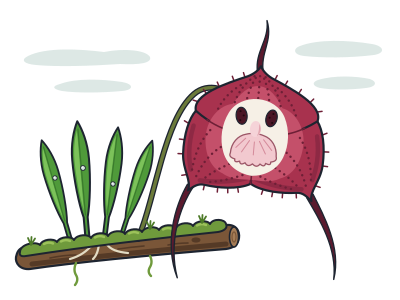
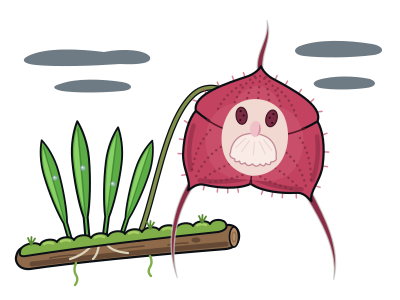
- Monkey-face orchidIts flower looks uncannily like a monkey's face peering from cloud forest.
Next to it on the tree
- Aloe veraA succulent whose cool gel has soothed sunburns for thousands of years.
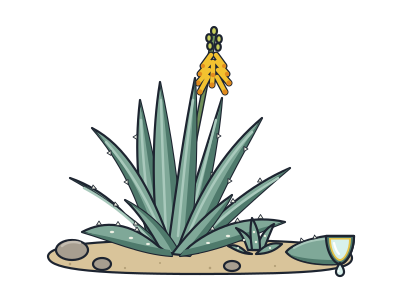
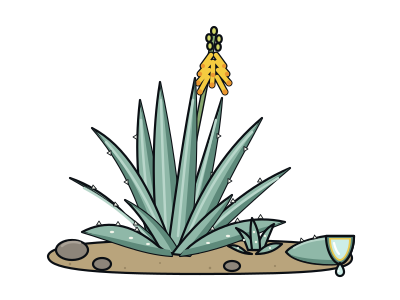
- Onion familyOnions, garlic and daffodils are close cousins that grow from bulbs.
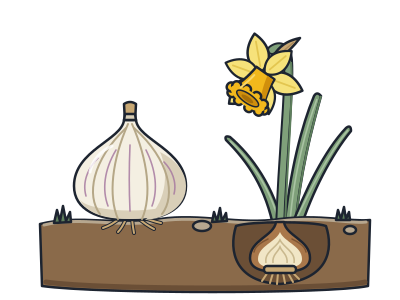
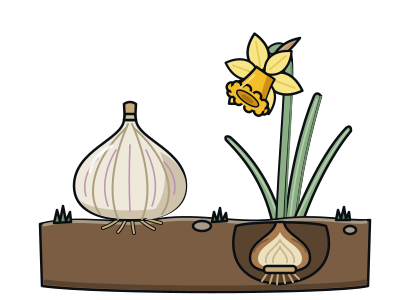
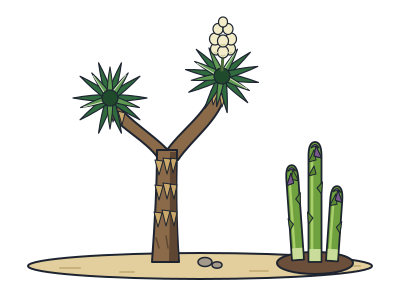
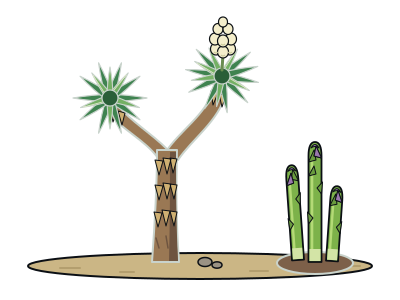
- Asparagus familyAsparagus spears, desert agaves, dragon trees and bluebells all share one family.
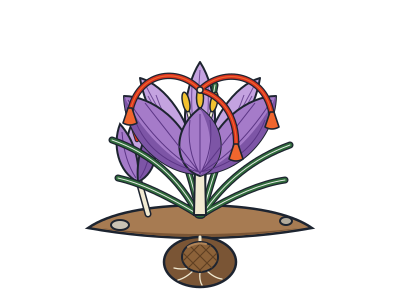
- Saffron crocusEach purple flower gives three red threads, the world's most expensive spice.