A species
Moth orchid
Phalaenopsis amabilis
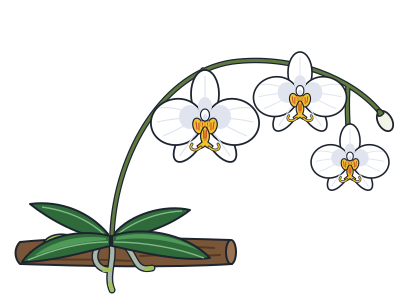
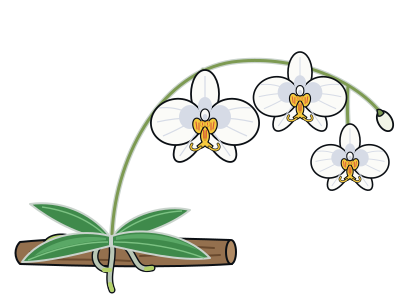
A wild ancestor of the supermarket orchid, with flat white flowers that look like moths in flight.
You and the moth orchid meet in the Eukaryotes branch, shown at about 1.8 billion years ago (on 28 July, in a calendar from life's shared ancestor to today).
The white orchid in a pot at the supermarket has a wild ancestor, and this is one of the most important. Its flat, wide-open flowers sit in a row along an arching stem. To the botanist who named the group, they looked like white moths in flight. The group's name means 'looking like a moth'. The name only describes how the flowers look. It does not mean that moths pollinate them.
Most moth orchids in shops are hybrids bred by people, not the wild plant. Even so, most of them have this species in their family tree. The finest white ones come almost entirely from it or its closest relatives. People once thought it was very hard to grow, but it is now an easy plant for beginners.
It belongs to the orchid family, one of the two biggest families of flowering plants, with about 28,000 species. Two of its relatives on the tree are vanilla, the orchid family's only major food crop, and the bee orchid.
In the wild it clings to tree trunks and branches in steamy lowland rainforest. It grows from the Philippines and Indonesia to New Guinea and north-east Australia. It is not a parasite. It only uses the tree for support, and its long, silvery roots take in water from rain and air.
A national flower
In Indonesia it is called anggrek bulan, the 'moon orchid'. In 1993 a presidential decree made it one of the country's three national flowers, calling it the 'flower of charm'.
Named 'lovely'
The second part of its scientific name is Latin for 'lovely'. It was first described in 1750 and got its present name in 1825, when it became the founding species of the whole moth orchid group.
Endangered in Australia
The Australian form of this orchid is rare in the rainforests of north-east Queensland. It is listed as endangered, mainly because people illegally dig up wild plants.
Next to it on the tree
- VanillaThe world's favourite flavour comes from the cured pods of a climbing orchid.
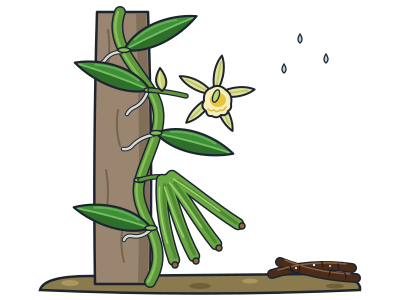
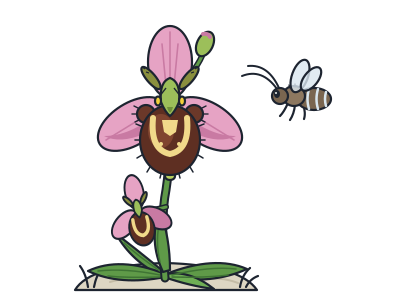
- Bee orchidIts flower looks and smells like a female bee to fool male bees into visiting.
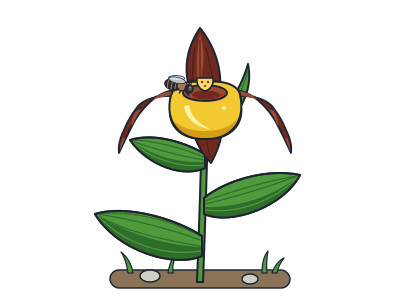
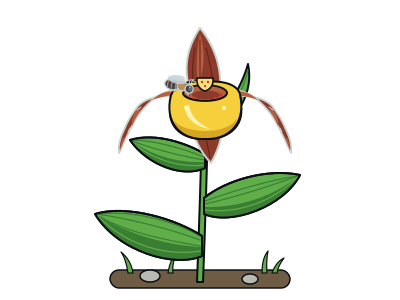
- Lady's slipper orchidA pouch-shaped flower that traps bees briefly so they leave carrying pollen.
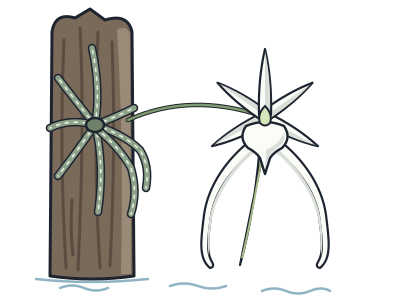
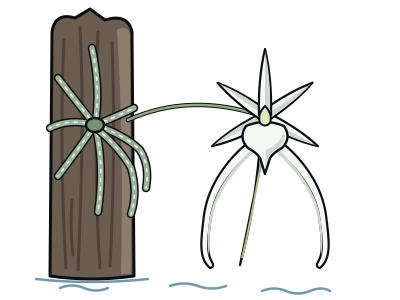
- Ghost orchidA leafless orchid whose white flower seems to float in Florida swamps.
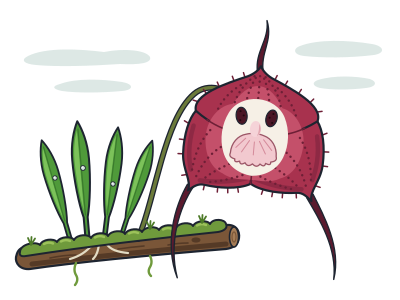
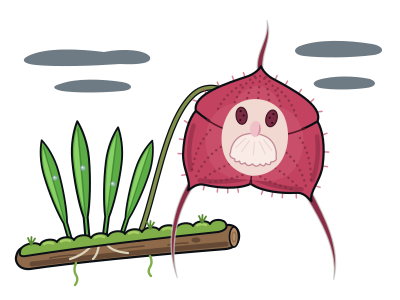
- Monkey-face orchidIts flower looks uncannily like a monkey's face peering from cloud forest.