A species
Ghost orchid
Dendrophylax lindenii
A leafless orchid whose white flower seems to float in mid-air
You and the ghost orchid meet in the Eukaryotes branch, shown at about 1.8 billion years ago (on 28 July, in a calendar from life's shared ancestor to today).
Deep in the swamps of south-western Florida, a pure-white flower seems to hang in mid-air with no leaf in sight. This is the ghost orchid. It belongs to the same big family as vanilla and the moth orchid, but it looks like none of them.
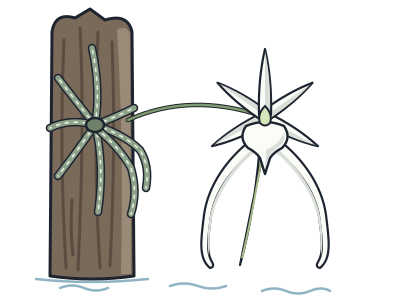
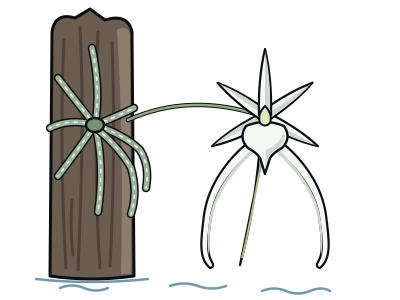
The plant has no leaves at all. Almost all of it is roots: flat, green-grey cords that grip the bark of trees, often pond-apple trees. They blend in with the bark so well that the flower seems to float, and that is how it got its name. These green roots also do almost all of the plant's photosynthesis.
The flower is roughly the length of a palm. Its lip has two long tails that twist downwards, a bit like the back legs of a leaping frog. Behind it hangs a long, thin nectar tube. Camera traps showed that several kinds of night-flying hawkmoth visit, and fig sphinx and pawpaw sphinx moths were photographed carrying its pollen on their heads.
It grows wild in south-western Florida and western Cuba. In 2025 the US government said fewer than 1,000 were left in the United States, with poaching the main threat, and proposed listing it as endangered.
Morning perfume
Its flowers smell fruity, a bit like apples, and the scent is strongest in the early morning.
A fungus friend
The ghost orchid relies on a partnership with a fungus for nutrients. Scientists think a shortage of the right fungi may be part of why it is so rare.
Named after a collector
Its species name honours the Belgian plant collector Jean Jules Linden, who found it in Cuba in 1844.
Next to it on the tree
- VanillaThe world's favourite flavour comes from the cured pods of a climbing orchid.
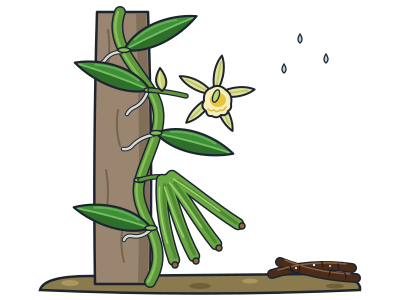
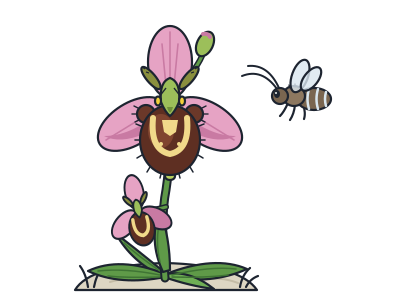
- Bee orchidIts flower looks and smells like a female bee to fool male bees into visiting.
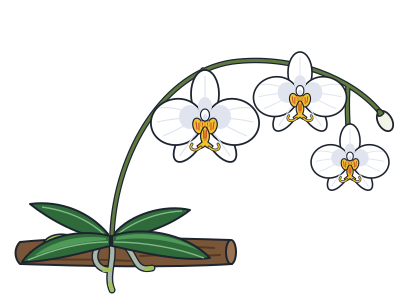
- Moth orchidThe supermarket orchid, whose flat flowers look like moths in flight.
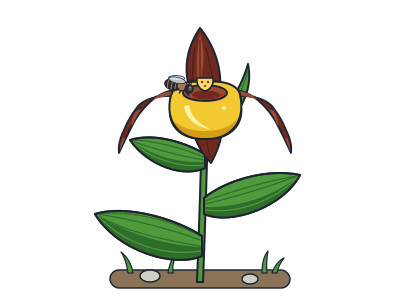
- Lady's slipper orchidA pouch-shaped flower that traps bees briefly so they leave carrying pollen.
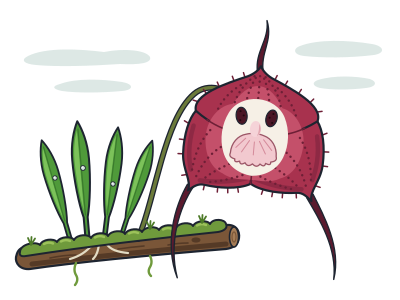
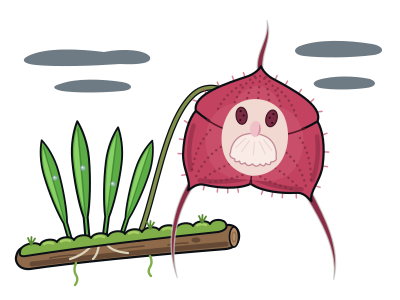
- Monkey-face orchidIts flower looks uncannily like a monkey's face peering from cloud forest.