A species
Vanilla
Vanilla planifolia
The world's favourite flavour comes from a climbing orchid
You and the vanilla meet in the Eukaryotes branch, shown at about 1.8 billion years ago (on 28 July, in a calendar from life's shared ancestor to today).
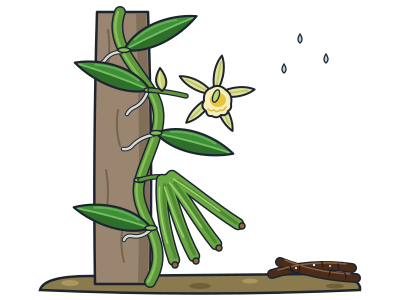
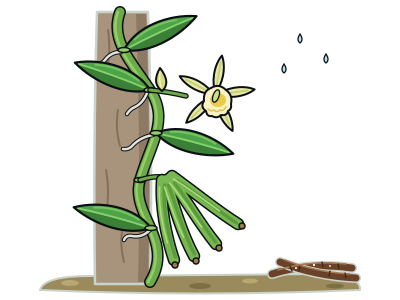
The world's favourite flavour comes from an orchid. Vanilla is a relative of the moth orchid you might see on a windowsill. But it is not a small potted flower. It is a climbing vine with thick, fleshy stems. It grips tree trunks with roots that sprout from its stem. In the wild it can climb about 15 to 30 metres. At its longest, that is longer than a tennis court. It comes from warm, wet tropical forests stretching from southern Mexico and Central America to Colombia and northern Brazil.
Its pale greenish-yellow flowers open for just one day each. A flap inside the flower keeps the pollen away from the part that needs it, so in nature very few flowers ever become pods. In 1841 Edmond Albius, a 12-year-old enslaved boy on the island of Réunion, worked out how to pollinate the flowers by hand. He used a thin stick and his thumb. Nearly all vanilla flowers on farms are still pollinated by hand using his method.
The pods look like thin green bananas and take about six to nine months to grow. When they are picked they do not taste of vanilla at all. Months of curing slowly turn them dark brown and release vanillin, the main vanilla flavour.
Pricier than you'd think
By weight, vanilla is the world's second most expensive spice after saffron. That is mostly because so much of the work is done by hand. New vines grown from cuttings take about three years before they even flower.
Mostly not the real thing
An estimated 95% of vanilla-flavoured products use vanillin made in factories, not flavour from real vanilla pods.
Specks in your ice cream
Each pod holds thousands of tiny black seeds. They are the little dark specks you see in real vanilla ice cream.
Next to it on the tree
- Bee orchidIts flower looks and smells like a female bee to fool male bees into visiting.
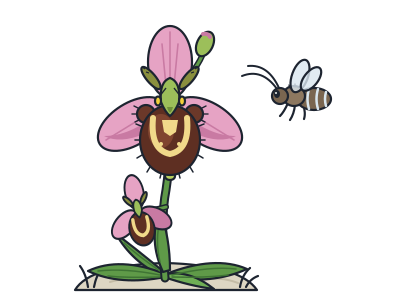
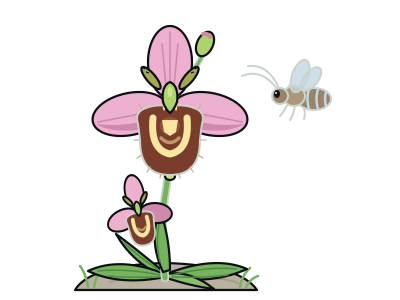
- Moth orchidThe supermarket orchid, whose flat flowers look like moths in flight.
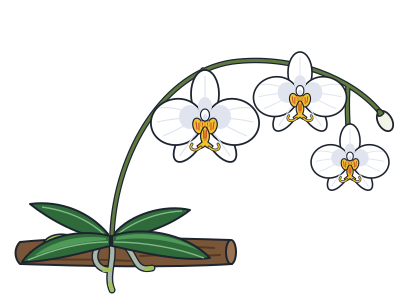
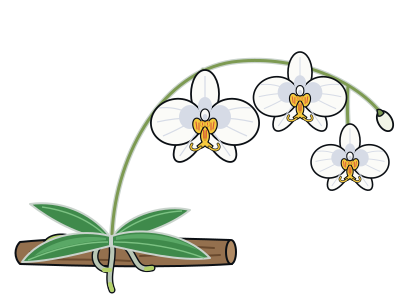
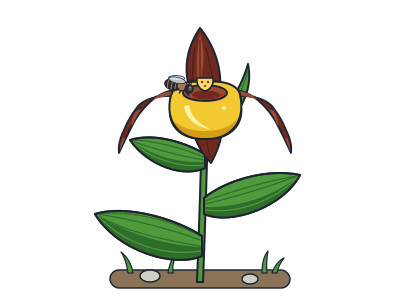
- Lady's slipper orchidA pouch-shaped flower that traps bees briefly so they leave carrying pollen.
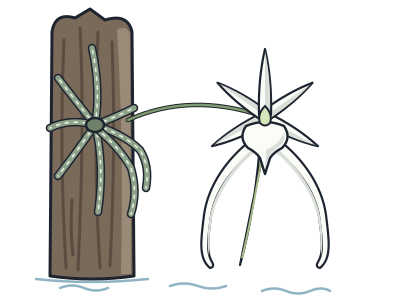
- Ghost orchidA leafless orchid whose white flower seems to float in Florida swamps.
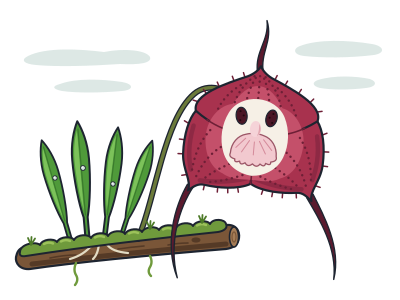
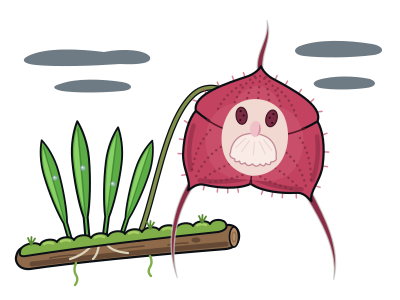
- Monkey-face orchidIts flower looks uncannily like a monkey's face peering from cloud forest.