A group of living things
Onion family
Amaryllidaceae
Onions, garlic and daffodils: cousins that grow from bulbs
This branch is shown at about 55 million years ago; its age is a rough estimate.
You and onion family meet in the Eukaryotes branch, shown at about 1.8 billion years ago (on 28 July, in a calendar from life's shared ancestor to today).
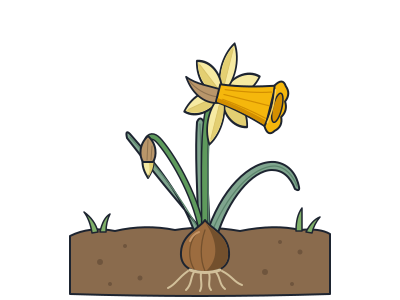
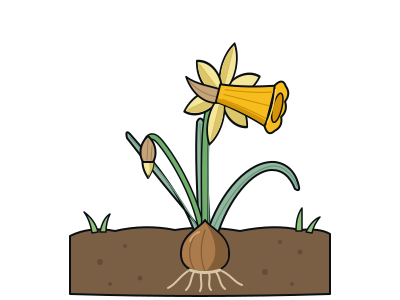
The onion in your kitchen and the daffodil in your garden are cousins in the same plant family. Garlic, leeks, chives, snowdrops and potted amaryllis belong to it too. Onions and garlic are the closest relatives here. Daffodils and snowdrops sit on a neighbouring branch of the family. Scientists once gave onions and garlic a family of their own. In 2009 they were moved into one bigger family with daffodils and their relatives.
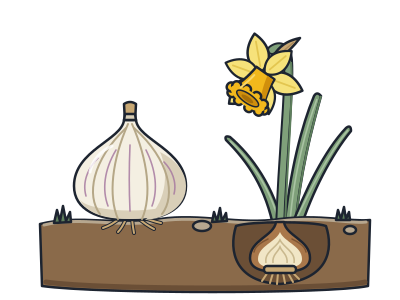
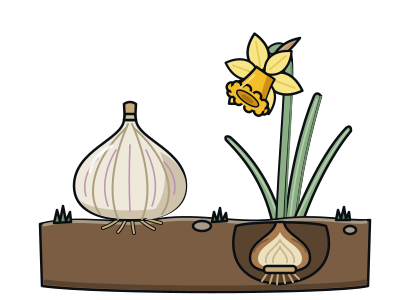
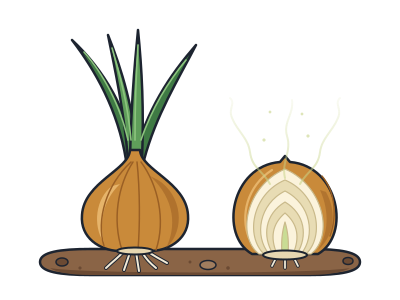
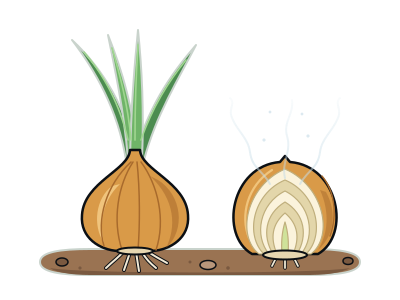
Most of these plants grow from bulbs. A bulb is a short underground stem wrapped in fleshy leaves or leaf bases that store food. It lets the plant rest safely underground through a dry or cold season and then grow again. The flowers usually have six similar petal-like parts. In many members, the flowers grow in a cluster of stalks that spread out from one point, like the ribs of an umbrella.
The family has about 1,600 to 1,800 species. On the onion side, the strong smell and taste come from substances that contain sulphur. Plants grown in soil with little sulphur can lose much of their oniony flavour.
Daffodils don't have that oniony smell, and they are poisonous. Every part of a daffodil contains a poison, especially the bulb. Daffodil bulbs look like onions, but they don't smell like onions and they don't make your eyes water. People have become ill after mixing them up, so never eat a bulb unless you know exactly what it is.
Garlic fit for a king
Well-preserved garlic was found in the tomb of the Egyptian king Tutankhamun, which dates from about 1325 BC.
Cloves, not seeds
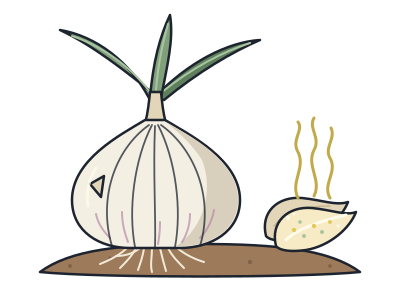
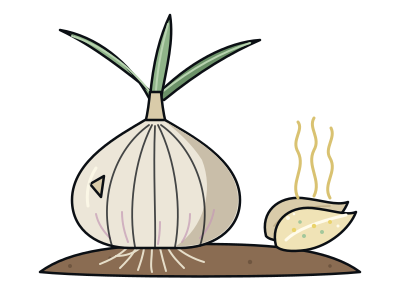
Most farmed garlic can't make seeds. Farmers grow almost all of it by planting single cloves.
Not for pets
Onions, garlic and some of their relatives are poisonous to dogs and cats because of their sulphur substances.
Inside onion family
Next to it on the tree
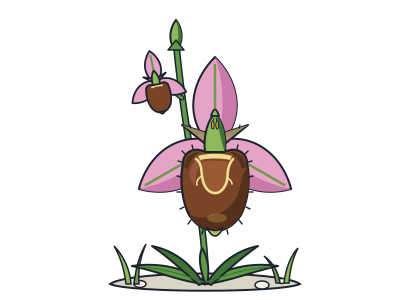
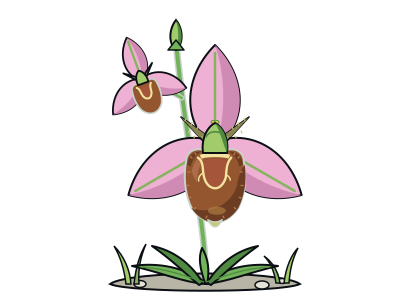
- OrchidsPerhaps the largest flower family, famous for tricking insects into pollinating them.
- Aloe veraA succulent whose cool gel has soothed sunburns for thousands of years.
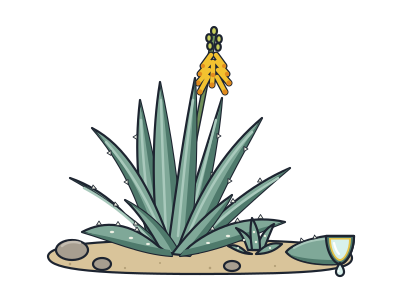
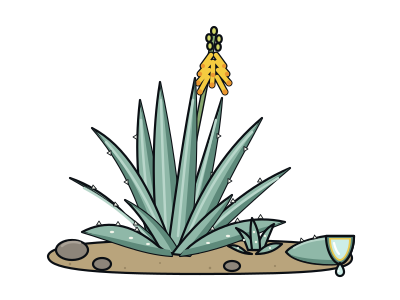
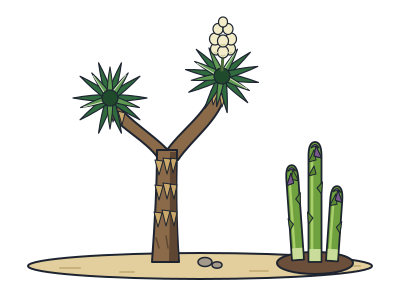
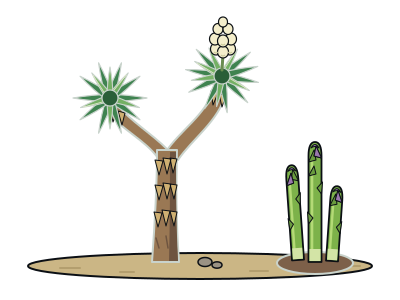
- Asparagus familyAsparagus spears, desert agaves, dragon trees and bluebells all share one family.
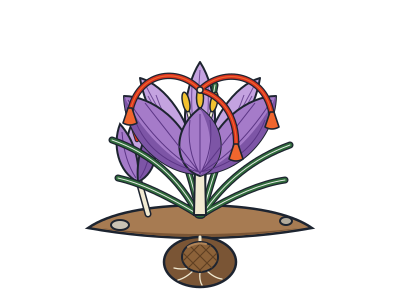
- Saffron crocusEach purple flower gives three red threads, the world's most expensive spice.