A species
Garlic
Allium sativum
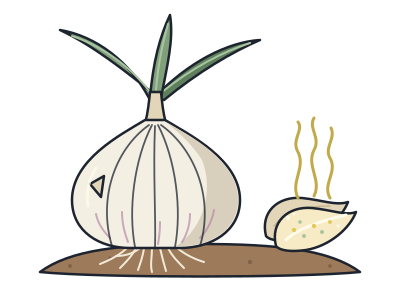
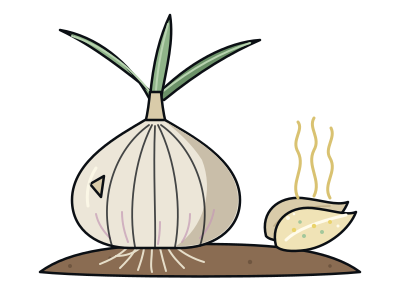
A clove that only gets its sharp smell once you crush it
You and the garlic meet in the Eukaryotes branch, shown at about 1.8 billion years ago (on 28 July, in a calendar from life's shared ancestor to today).
A whole garlic clove smells fairly mild. Its sharp smell isn't stored inside. Instead, it forms in a moment, when you cut, crush or chew the clove. The clove stores a chemical with no smell, called alliin, and an enzyme called alliinase, but keeps the two shut away from each other. Break the cells and they mix, and the enzyme turns alliin into allicin. Allicin gives fresh garlic its sharp smell.
This trick is a defence. An animal biting the plant sets off the same reaction, and allicin puts off pests. Because the ingredients are already stored, ready to go, the plant doesn't have to make anything new when it is attacked. The defence forms by itself the moment the plant is damaged.
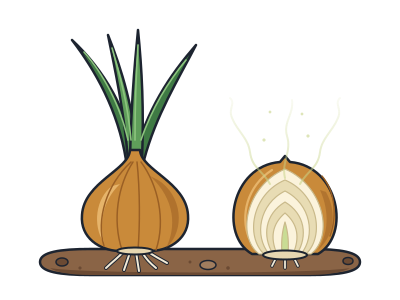
Onions are garlic's close relatives, and they use the same kind of enzyme on a slightly different starting chemical. In onions, a second enzyme then makes a compound that stings your eyes. That is why chopping onions makes you cry. Shallots, leeks and chives belong to the same plant group too.
Garlic grows from an underground bulb of about 10 to 20 cloves, each wrapped in papery skin. Farmers grow almost all garlic by planting single cloves, not seeds, so each new plant is a copy of its parent.
It comes out through your skin
After people ate grilled garlic, one of its sulfur compounds was given off through their skin. The amount peaked after about 30 minutes and was still above normal 8 hours later.
An ancient crop
People in Mesopotamia have grown garlic for at least 4,000 years. Well-preserved garlic was even found in Tutankhamun's tomb in Egypt.
Not for pets
Vets consider garlic toxic to dogs and cats, so it's not a safe treat for pets.