A species
Onion
Allium cepa
The kitchen vegetable that fights back with an invisible gas
You and the onion meet in the Eukaryotes branch, shown at about 1.8 billion years ago (on 28 July, in a calendar from life's shared ancestor to today).
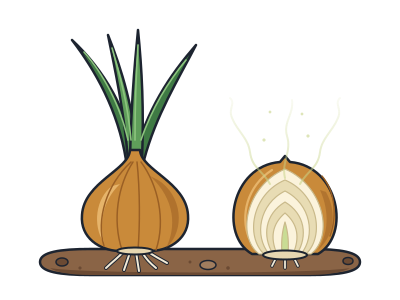
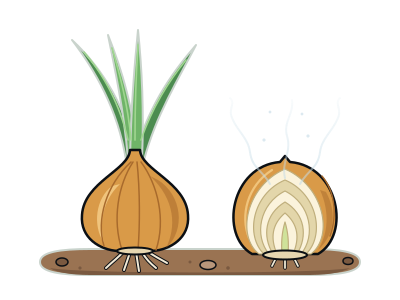
Slice an onion and within seconds your eyes start to sting. Juice splashing up is not the cause. When cutting breaks the onion's cells, an enzyme breaks down sulfur compounds that the plant stores. A second enzyme turns what is made into a chemical that quickly becomes a gas. The gas drifts up and irritates nerves in your eyes, so they make tears.
Scientists think this sulfur chemistry is part of the onion's defence against insects and germs that might damage it. Garlic, a close relative, has the first enzyme but lacks the second. That is why chopping garlic does not make you cry.
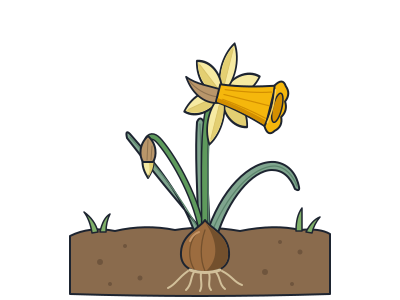
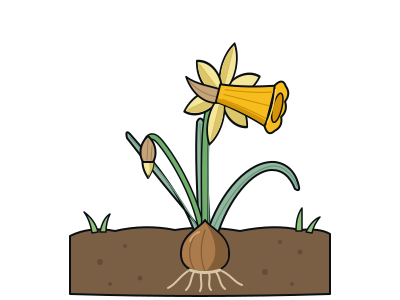
The onion belongs to a huge branch of flowering plants that also includes orchids, aloe vera and the dragon's blood tree. Daffodils and snowdrops are also in the onion's family.
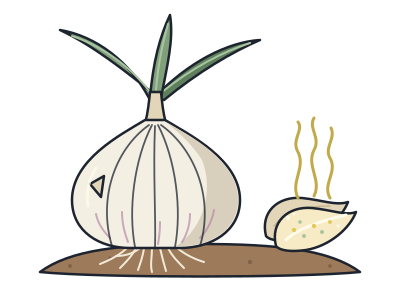
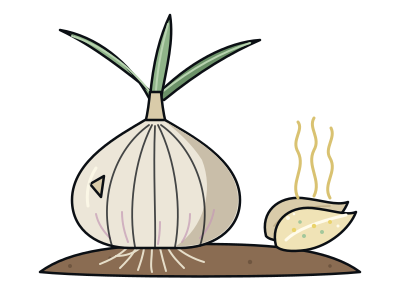
The bulb we eat is not a root. It is a very short stem wrapped in thick, fleshy leaf bases that store food. If you leave an onion in the ground for a second year, it grows a hollow stalk up to about a metre tall. On top sits a round ball of small flowers.
A prize-winning discovery
In 2002, Japanese researchers showed that a separate, previously unknown enzyme makes the tear chemical. Their work won the 2013 Ig Nobel Prize in Chemistry.
Written about for thousands of years
Onions appear in Sumerian writings from about 2500 BC and in Egyptian texts from about 1600 BC.
A plant with no wild home
The onion is known only as a crop. Nobody has ever found it growing truly wild, although related wild onions grow in Central Asia and Iran.