A species
Daffodil
Narcissus pseudonarcissus
A trumpet-shaped spring flower with a poisonous bulb that squirrels usually leave alone
You and the daffodil meet in the Eukaryotes branch, shown at about 1.8 billion years ago (on 28 July, in a calendar from life's shared ancestor to today).
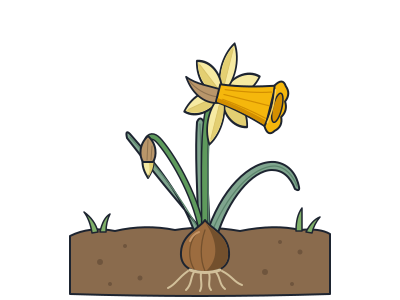
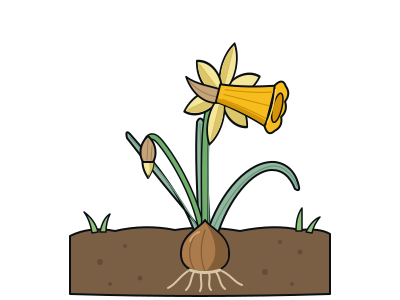
Every part of the daffodil is poisonous, and the bulb under the ground is the most dangerous part. A gardening expert at Purdue University in the United States calls daffodils generally free of pests. She suggests planting daffodils instead of tulips, because squirrels and other rodents love to eat tulip bulbs.
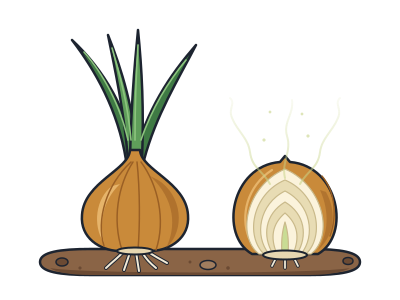
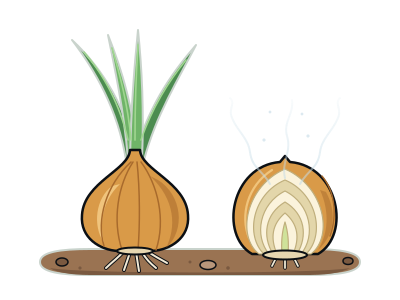
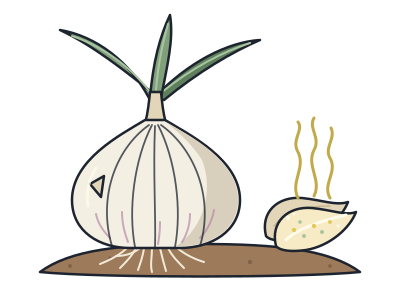
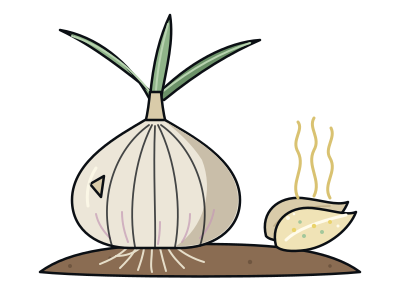
Here is the surprise: onions and garlic are relatives of the daffodil. They all belong to the amaryllis family, a group of about 1,600 kinds of plant. Most of these plants grow from bulbs and hold their flowers at the top of a leafless stalk. Daffodils sit on a different branch of the family from onions, so they are relatives, not close siblings.
That family likeness can cause trouble. Daffodil bulbs are often mistaken for onions when the two are stored together. Eating a daffodil bulb causes vomiting and tummy pain, although it is rarely deadly. Only the onion is safe to eat.
The wild daffodil grows up to about 30 cm tall, about the length of a school ruler, and has narrow leaves. Its pale yellow outer petals spread around a darker yellow trumpet. This two-tone look is how you tell it apart from most garden daffodils.
An itchy job
Daffodils contain tiny needle-like crystals. People who handle the bulbs often can get an itchy rash known as 'daffodil picker's rash'.
More flowery cousins
Snowdrops and amaryllis flowers also belong to the daffodil's family.
A mix of poisons
A daffodil contains at least 15 related poisons, including one called lycorine. They are most concentrated in the outer layers of the bulb.