A species
Sweet orange
Citrus sinensis
One of the world's best-known fruits was never wild. It began as a cross between two other citrus fruits.
You and the sweet orange meet in the Eukaryotes branch, shown at about 1.8 billion years ago (on 28 July, in a calendar from life's shared ancestor to today).
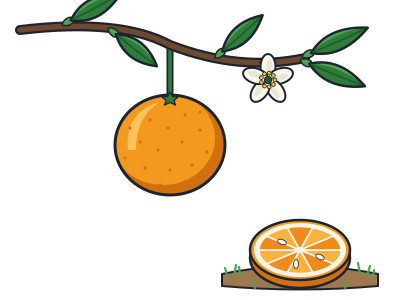
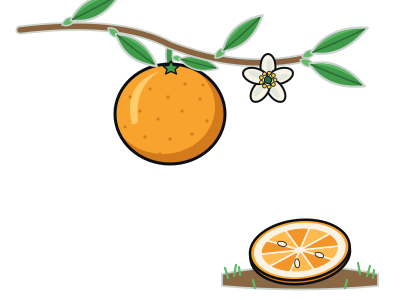
You will not find sweet oranges growing wild in any forest. The orange is a hybrid, a mix that goes back to two wild ancestors: the pomelo and the mandarin. Its mother line goes back to the pomelo, but more than half of its DNA comes from the mandarin.
This mixing probably happened long ago, somewhere in a region that covers southern China, north-east India and Myanmar. Chinese writing mentions oranges by 314 BC, more than 2,300 years ago. Much later, traders carried sweet oranges to the Mediterranean, and Spanish explorers took them to the Americas from 1493. Now it is often called the most commonly grown tree fruit in the world.
On the tree of life, citrus sits in the same group as maples and mangoes. So the orange in your lunchbox is a relative of a tall maple tree and a tropical mango tree.
Here is a surprise: a green orange can be fully ripe. The peel turns orange once nights cool below about 13 °C. In hot tropical places, ripe sweet oranges often stay green. Also, an orange does not get any sweeter once it is picked.
The orange has a child
Grapefruit is a cross between a pomelo and a sweet orange. It appeared in Barbados in the 1700s, where people called it the 'forbidden fruit'.
A slipped letter
The word for the fruit once began with an n. In French, 'une norenge' was probably heard as 'une orenge', and the n dropped away. The fruit had its name first, and English speakers only started using 'orange' for the colour from about 1502.
Navel oranges are clones
The common navel orange began as one odd branch that grew at a monastery in Brazil about 200 years ago. It has no seeds, so every tree is grown from cuttings joined onto another tree.
Next to it on the tree
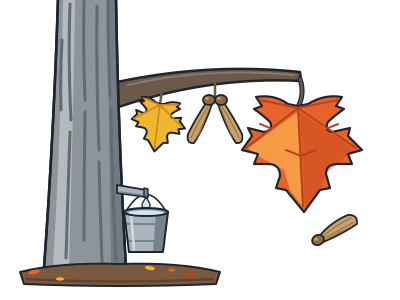
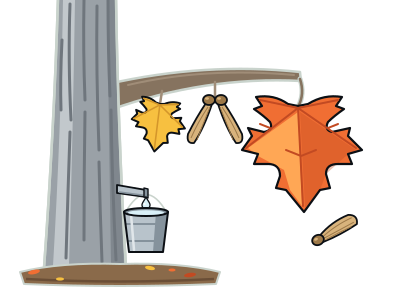
- Sugar mapleIts sap boils down to maple syrup; its seeds spin like helicopters.
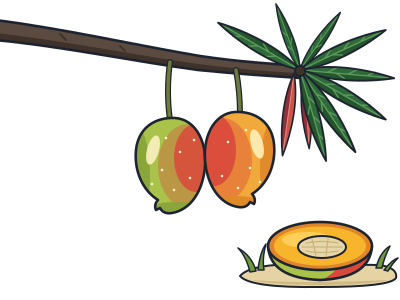
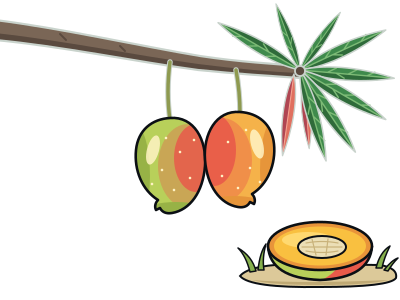
- MangoA cousin of cashew and poison ivy; its skin can irritate sensitive people.
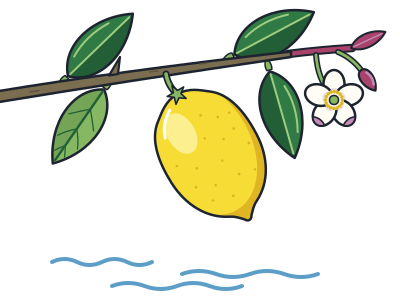
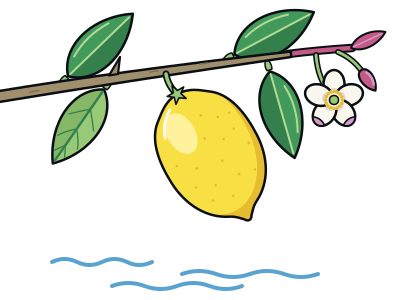
- LemonA hybrid of sour orange and citron, prized by sailors to prevent scurvy.
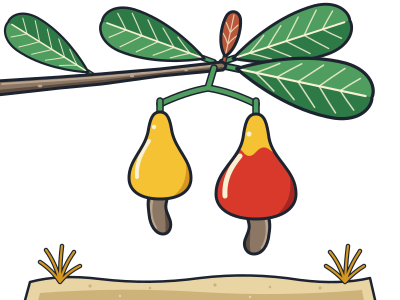
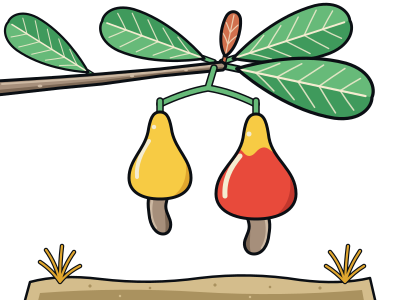
- CashewEach nut hangs below a swollen fleshy stalk called the cashew apple.
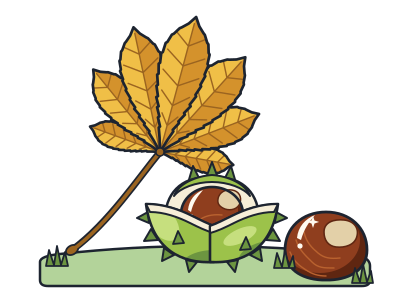
- Horse chestnutThe shiny conkers children play with come from this tree.
- FrankincenseA desert tree whose fragrant resin was traded across the ancient world.