A species
Sugar maple
Acer saccharum
The tree that gives us maple syrup and spinning helicopter seeds
You and the sugar maple meet in the Eukaryotes branch, shown at about 1.8 billion years ago (on 28 July, in a calendar from life's shared ancestor to today).
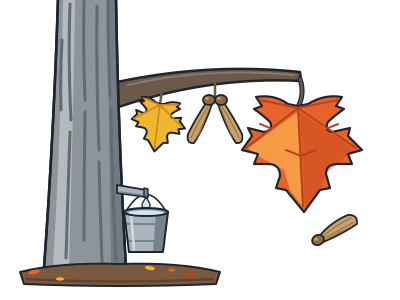
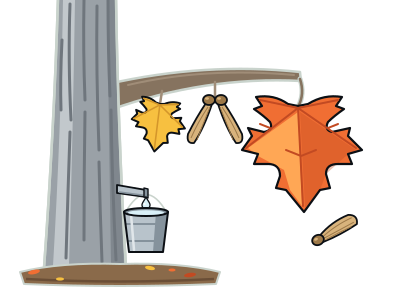
Every bottle of pure maple syrup starts as clear, watery sap from trees like this one. The sap is only a little sweet, usually about 2–3% sugar. So people boil away most of the water. About 40 buckets of sap make just one bucket of syrup. Indigenous peoples of North America were making maple sugar long before Europeans arrived.
The sap runs in late winter and early spring, when freezing nights take turns with thawing days. At night, ice in the wood squeezes tiny gas bubbles. When the ice melts, the gas expands and pushes sap out of any hole. The roots are not doing the pushing. Once the leaves come out, the flow stops.
The 'helicopters' are winged fruits, each holding one seed. They grow in joined pairs, and each half has a thin, papery wing. When they fall, the pairs split apart and each half spins like a helicopter blade. The spinning makes a tiny whirlwind of air above the wing. This slows the fall, so the wind has more time to carry the seed away.
Here is the surprise: this forest giant is a relative of the orange and the mango. All three belong to one big group of flowering plants, along with cashews and mahogany. Its closer relatives, in the same plant family, include lychees and horse chestnuts.
Courtside timber
Sugar maple wood is very hard. It is used for basketball courts, including NBA floors, and for bowling alleys, baseball bats and musical instruments.
A tree that shares water
It does something called hydraulic lift. Its roots draw water up from deep in the soil and let some of it out nearer the surface, where neighbouring plants can use it.
Inspiring tiny flyers
The whirl of air above a spinning maple seed roughly doubles its lift. Engineers have studied this to help design tiny flying machines.
Next to it on the tree
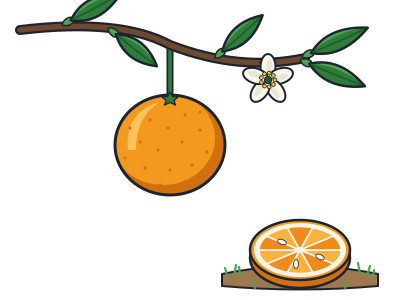
- Sweet orangeNot a wild species: an ancient cross between pomelo and mandarin.
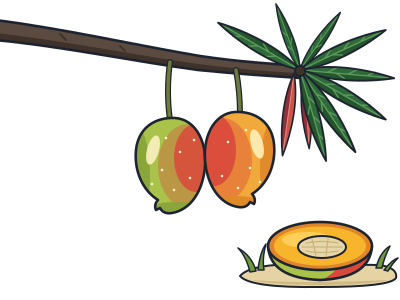
- MangoA cousin of cashew and poison ivy; its skin can irritate sensitive people.
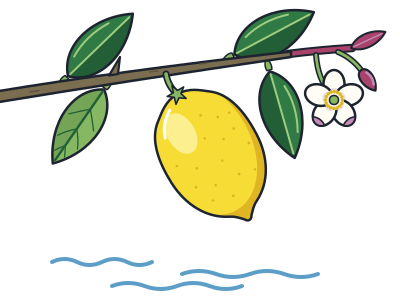
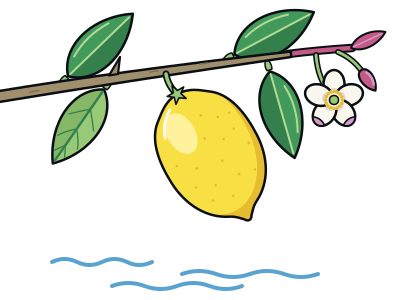
- LemonA hybrid of sour orange and citron, prized by sailors to prevent scurvy.
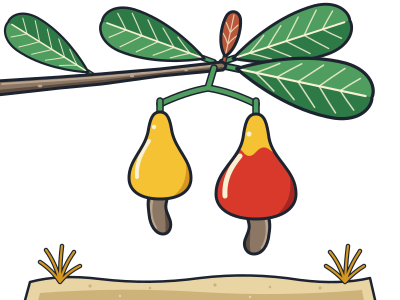
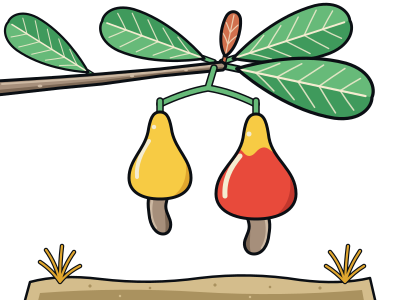
- CashewEach nut hangs below a swollen fleshy stalk called the cashew apple.
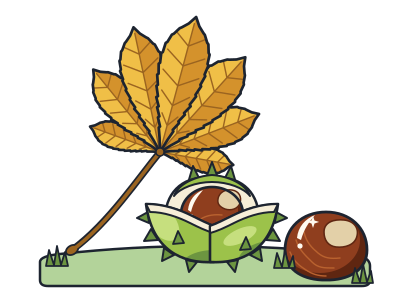
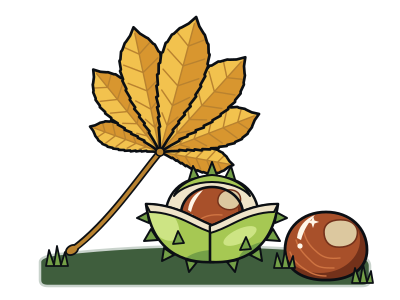
- Horse chestnutThe shiny conkers children play with come from this tree.
- FrankincenseA desert tree whose fragrant resin was traded across the ancient world.