A species
Living stones
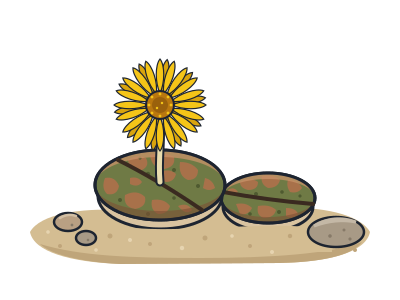
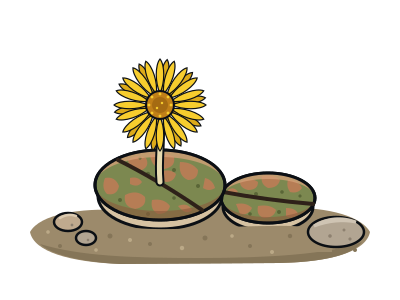
Lithops lesliei
Two fat leaves dressed up as pebbles
You and the living stones meet in the Eukaryotes branch, shown at about 1.8 billion years ago (on 28 July, in a calendar from life's shared ancestor to today).
Look closely at a stony patch of grassland in southern Africa, and one of the 'pebbles' might be a plant. Each living stone is just two fat, juicy leaves joined almost to the top, with hardly any stem. Their stony colours and speckled tops are thought to help them hide from animals that would eat their water-filled leaves. A study using photos found that, to human eyes, they really do match the nearby rocks. That is unusual, because camouflage is thought to be rare in plants.
Surprisingly, these pebble plants sit in the same big plant group as cacti, carnations and even the Venus flytrap. Even so, they are not cacti. They belong to a different family, called the ice plant family.
Most of the plant is underground, with only the flat top showing. The thick leaves store enough water to last for months without rain. In a drought, they can shrink down below the soil. Each year a new pair of leaves grows inside the old pair, which withers away like papery skin. In autumn, a single daisy-like flower pokes out of the slit between the leaves. It is usually bright yellow and about as wide as the plant itself.
Mistaken for a pebble
In 1811 the naturalist William Burchell picked up what he thought was an oddly shaped pebble in South Africa. It turned out to be a living stone.
Rain-powered seeds
The seed capsules only open when they get wet. Raindrops can splash the seeds out, and the capsule closes again when it dries.
A stony name
The scientific name for the living stone group comes from Ancient Greek words that roughly mean 'stone face'.
Next to it on the tree
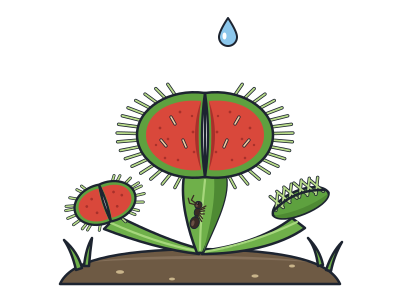
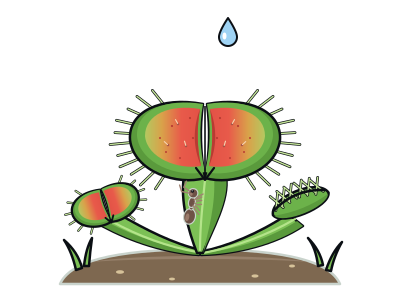
- Venus flytrapSnaps its leaf shut on an insect, but only after two touches, so raindrops do not fool it.
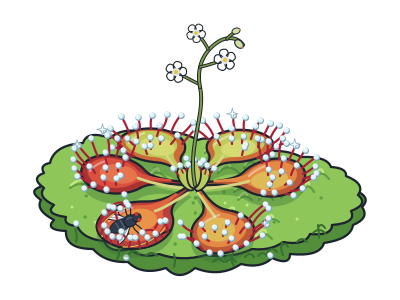
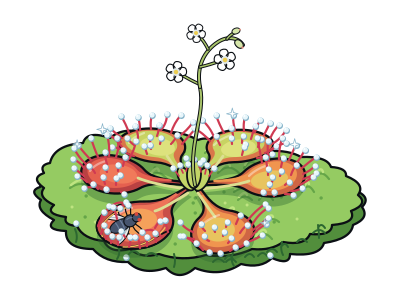
- Round-leaved sundewSticky glittering hairs trap insects, then the leaf slowly curls around its meal.
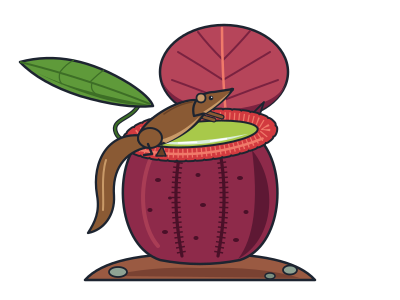
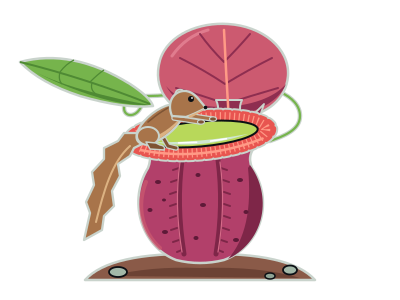
- Giant pitcher plantPitchers big enough to hold two litres; tree shrews use them as toilets, feeding the plant.
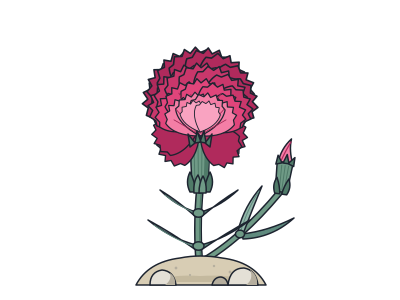
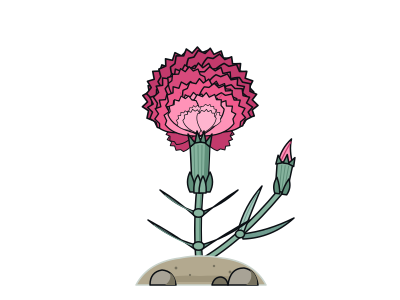
- CarnationA frilly garden flower whose family name gave this whole group its name.
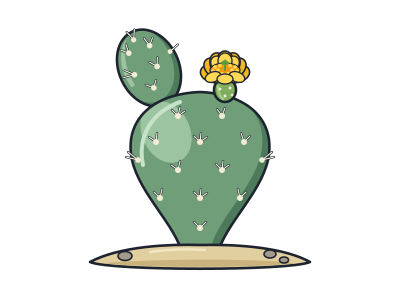
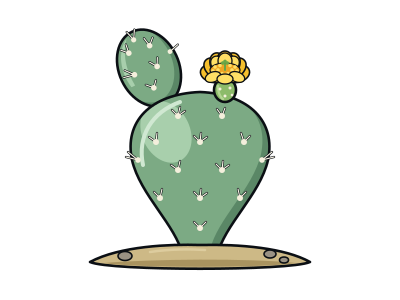
- CactiAbout 1,800 spiny succulents of the Americas, where spines are leaves and stems do the work.
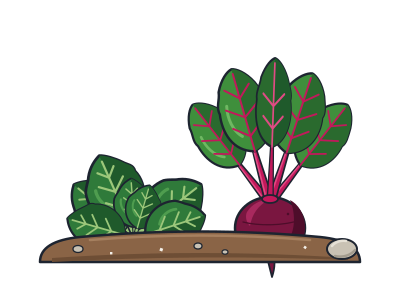
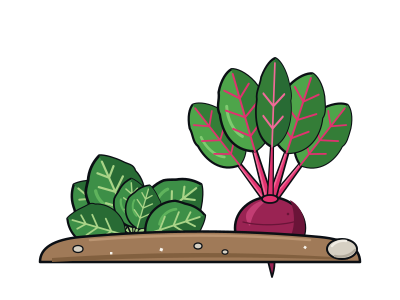
- Amaranth familyBeetroot, spinach and quinoa belong to one family of tough, salt-tolerant plants.
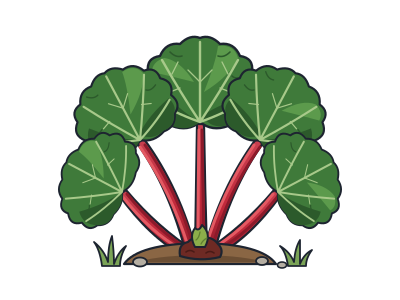
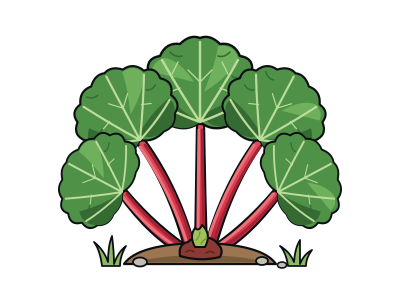
- RhubarbWe eat its sour stalks as a fruit, but its leaves are poisonous.