A species
Spinach
Spinacia oleracea
A leafy green from old Persia that races to flower when summer days grow long.
You and the spinach meet in the Eukaryotes branch, shown at about 1.8 billion years ago (on 28 July, in a calendar from life's shared ancestor to today).
Spinach is a leafy vegetable that has travelled a long way. It is thought to have been first grown in and around old Persia, now Iran, about 2,000 years ago. From there it spread east to China and, through the Arab world, west to Europe in the Middle Ages. In England it was once called the 'Spanish vegetable'.
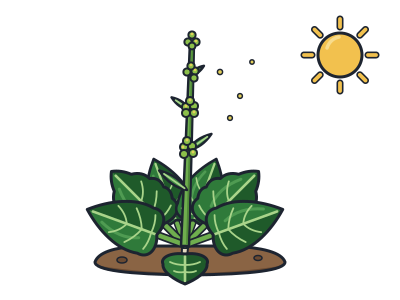
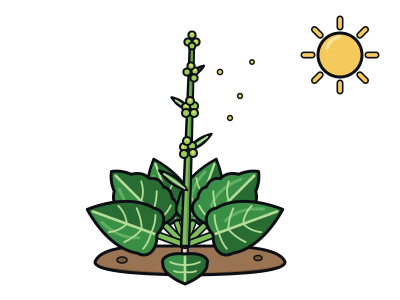
Spinach has a habit that gardeners know well. It is a long-day plant, so when the days stretch out in late spring and summer, it 'bolts'. Its stem shoots up fast, and the plant stops making leaves and starts making flowers and seeds. After that, the leaves lose their flavour. Bolting is not a disease. It is the plant's normal switch to flowering, and heat or cold can make it happen sooner. That is why people grow spinach in the cool months of spring and autumn.
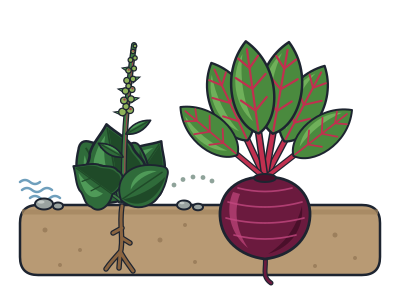
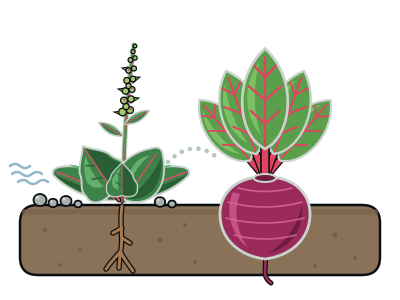
Its family may surprise you. Spinach belongs to the amaranth family, along with beetroot, chard, quinoa and many tumbleweeds. Most spinach plants are either male or female. Its tiny green flowers have no showy petals, and the wind carries their pollen, not insects.
A spring treat
In medieval Europe, people valued spinach because it was ready in early spring, when few other fresh vegetables were around.
Mostly water
Raw spinach is about 91% water and has very little energy, but it is very rich in vitamin K.
China's crop
The world grew about 31 million tonnes of spinach in 2024, and China grew about nine-tenths of it.