A species
Beet
Beta vulgaris
One wild seaside plant gave us beetroot, chard and sugar
You and the beet meet in the Eukaryotes branch, shown at about 1.8 billion years ago (on 28 July, in a calendar from life's shared ancestor to today).
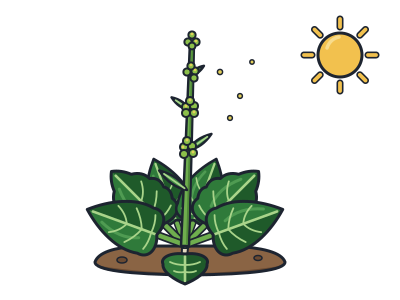
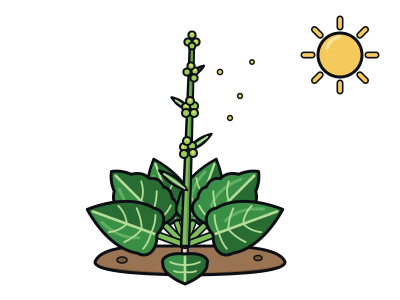
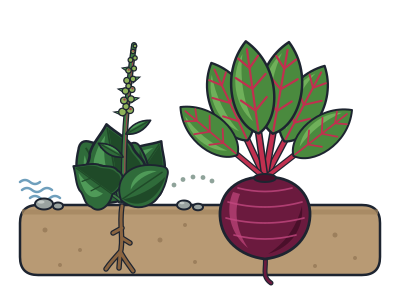
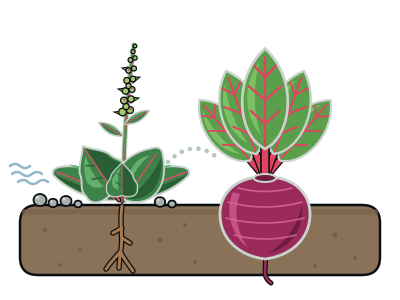
Beetroot, chard and sugar beet look like three different crops, but they are all one species. They all come from sea beet, a tough wild plant that still grows on beaches, sea walls and cliffs around Europe, North Africa and southern Asia. It copes well with salty sea spray but needs plenty of sun.
Wild sea beet has glossy, leathery, dark green leaves that you can eat like spinach. Its root, though, is thin and often forked, so it is no good as a vegetable. For most of history, people grew beets for their leaves. Fat, juicy roots came only from breeding, and they are not clearly recorded until the early 1500s.
Over time, people bred the plant in different directions: big leaves for chard, a fat, mostly deep red root for beetroot, and a large white root packed with sugar for sugar beet. A modern sugar beet root is nearly one-fifth sugar.
Beet's place on the tree of life is a surprise too. It belongs to the same big group of plants as cacti, carnations and the Venus flytrap. Its deep red comes from pigments called betalains. Among plants, only some members of this group make them. Many cacti use the same kind of pigment for their reds, but carnations use a different kind.
A sugar discovery
In 1747, a chemist in Berlin got sugar out of beetroot and showed it was the same as cane sugar. His beets were less than 2% sugar.
Pink surprise
About 1 in 10 people get pink or red wee after eating beetroot. It is harmless and seems to happen when the body does not fully break down the red pigment.
Two-year plan
Beet usually takes two years to complete its life. In the first year it grows leaves and a root that stores food. In the second year it sends up a flowering stem up to about 120 cm tall, covered in tiny green or reddish flowers. Their pollen is carried mainly by the wind.