A group of living things
Hydroids and siphonophores
Hydrozoa
Tiny polyps, drifting colonies and glowing jellies, all in one group.
This branch is shown at about 500 million years ago; its age is a rough estimate.
You and hydroids and siphonophores meet in the Animals branch, shown at about 700 million years ago (on 1 November, in a calendar from life's shared ancestor to today).
Hydrozoans are some of the most varied members of the jellyfish and coral group. Some are tiny polyps fixed to rocks or seaweed. Some are drifting colonies with trailing stinging tentacles. Others are see-through jellies that can glow. Most live in the sea, but a few, like the freshwater hydra, live in ponds and lakes.
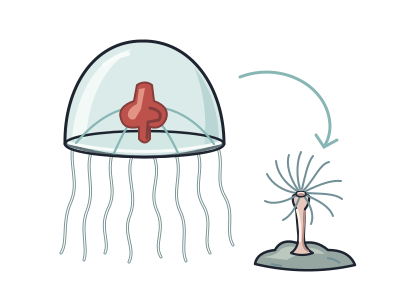
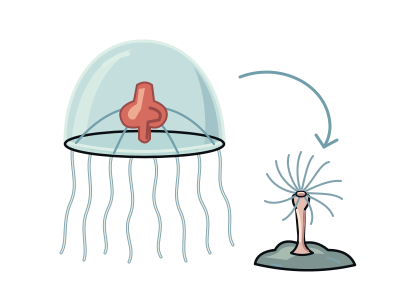
Most hydrozoans switch between two body forms during their life. One is a polyp, which stays fixed in place, often as part of a colony. The other is a free-swimming jelly called a medusa. Some species have lost one of these stages.
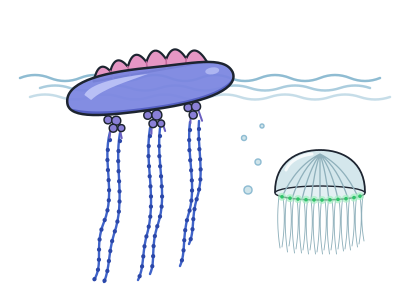
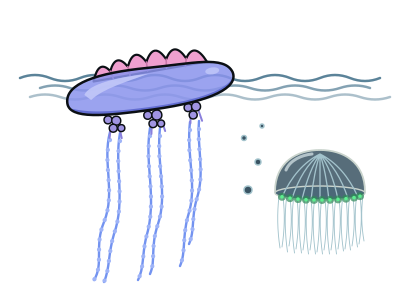
In a colony, the members share the work. Some catch food, some make jellies for breeding, and some defend the colony with stinging cells. The Portuguese man o' war looks like one animal, but it is really a colony of four kinds of specialised members. Its purple-blue float can be up to about 30 cm long. It cannot swim, so it drifts on the wind and currents. It belongs to a group of open-water colonies called siphonophores. Nearly all siphonophores can make their own light.
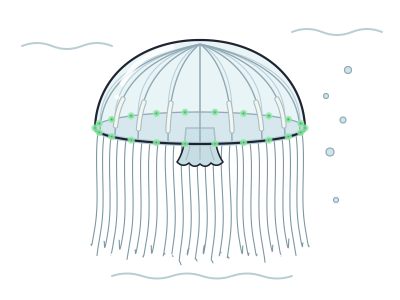
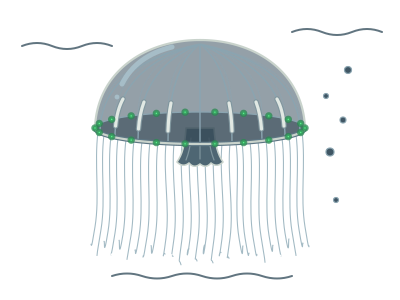
The crystal jelly is almost completely clear. It makes blue light, and a second protein turns that light green. Scientists now use this glowing green protein to light up cells in their research.
A rare red glow
Some deep-sea siphonophores give off red light. That is very rare among sea animals.
First on the list
The Portuguese man o' war was the first siphonophore ever described by scientists, back in 1758.
A giant polyp
Most hydrozoan polyps are tiny, but one deep-sea kind grows single polyps up to about 2 metres tall.
Inside hydroids and siphonophores
- Portuguese man o' warNot one jellyfish but a floating colony of specialised individuals working as one.
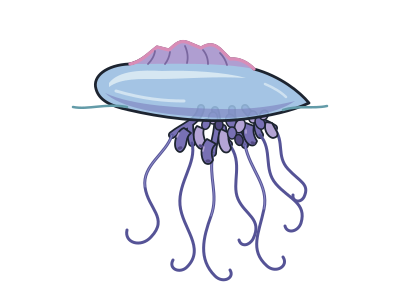
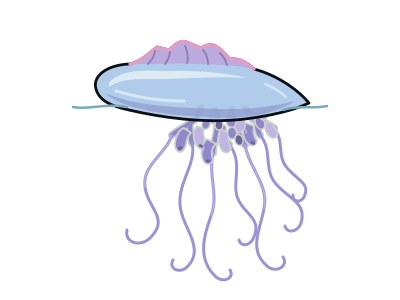
- Freshwater hydraA tiny freshwater polyp that can regrow its whole body from a small piece and barely seems to age.
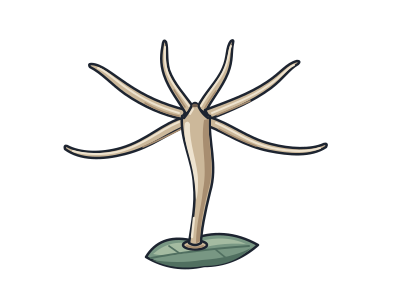
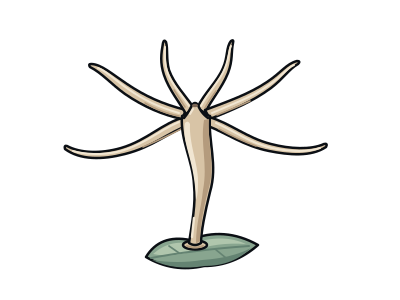
- Immortal jellyfishWhen injured or old, it can turn back into a baby polyp and start life again.
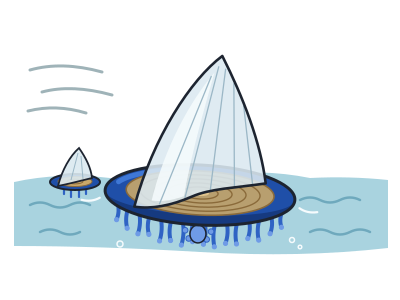
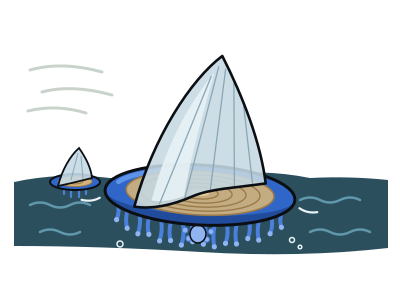
- By-the-wind sailorA blue raft with a stiff sail that drifts wherever the wind blows, sometimes washing ashore in millions.
- Crystal jellyA clear jelly whose glowing green protein became a Nobel-winning tool for lighting up cells.
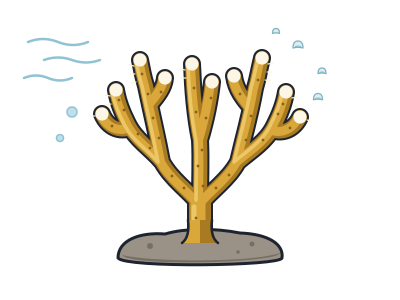
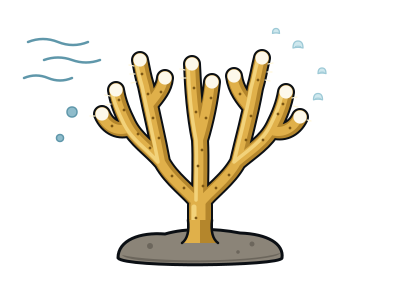
- Fire coralLooks like a coral and builds reefs, but is really a hydrozoan cousin of the man o' war.
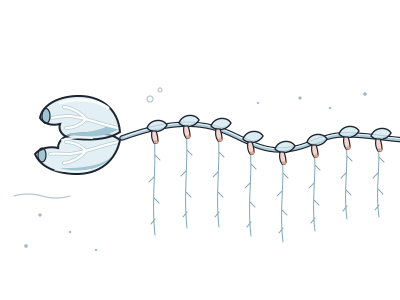
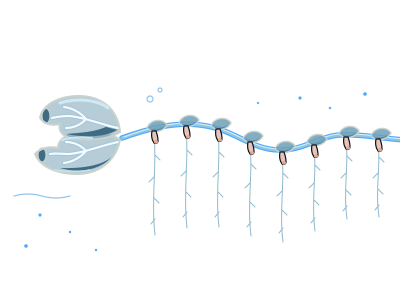
- Giant siphonophoreA see-through string of linked individuals that can stretch as long as a blue whale.
Next to it on the tree
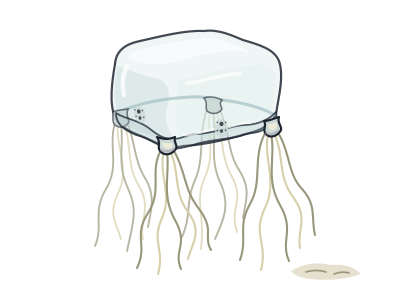
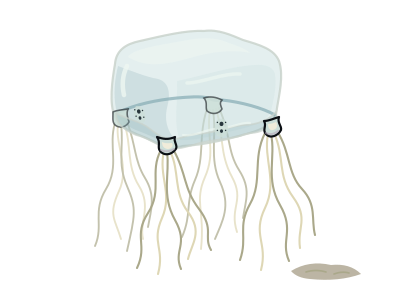
- Sea waspA box-shaped jellyfish with 24 eyes and one of the most dangerous stings in the sea.
- True jellyfishThe classic jellyfish: a pulsing bell with trailing arms, grown from a polyp that buds off baby jellies.
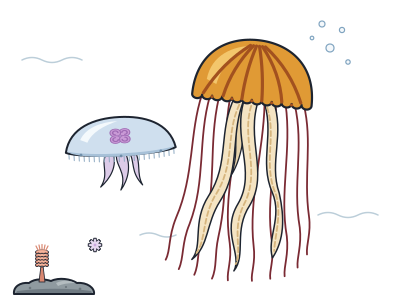
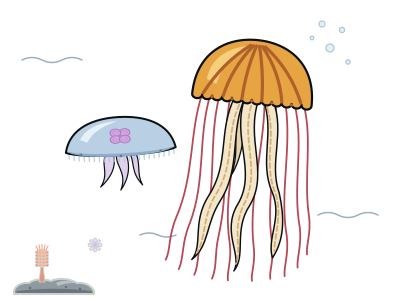
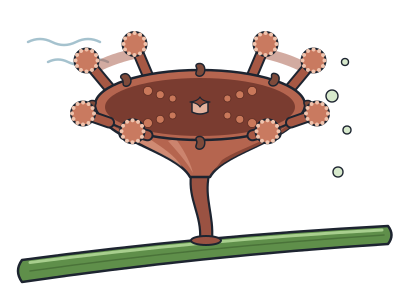
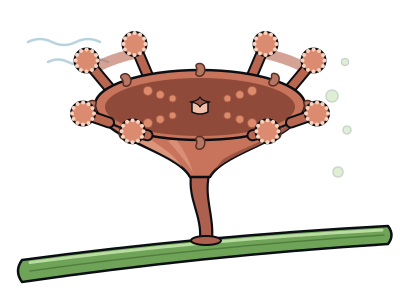
- Stalked jellyfishA jellyfish that never swims, living stuck to seaweed by a stalk like an upside-down flower.
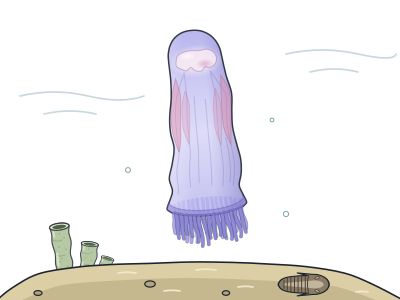
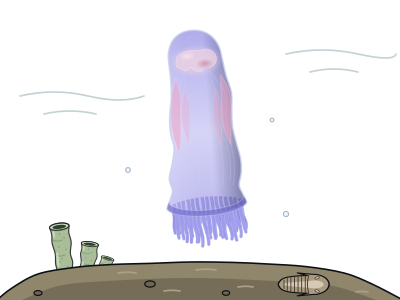
- BurgessomedusaThe oldest known swimming jellyfish, a bell-shaped fossil from the Burgess Shale with dozens of tentacles.