A species
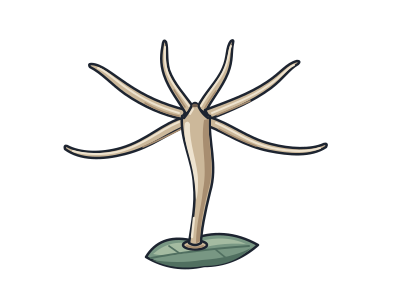
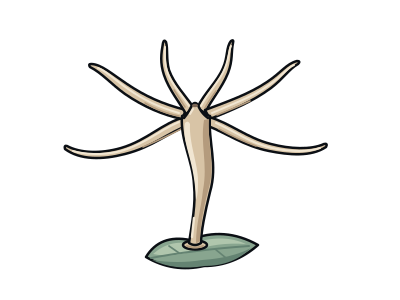
Freshwater hydra
Hydra vulgaris
A tiny jellyfish relative that rebuilds itself and barely seems to age.
You and the freshwater hydra meet in the Animals branch, shown at about 700 million years ago (on 1 November, in a calendar from life's shared ancestor to today).
Some small pieces of this tiny freshwater animal can rebuild a complete body. Researchers have seen this happen with pieces containing just a few hundred cells. That is remarkable regrowth, but it does not mean every tiny fragment can survive.
Its family connections are surprising too. It belongs to the same main branch of the jellyfish-and-coral family as the Portuguese man o’ war. Most animals on that branch live in the sea. Hydras are freshwater exceptions, living in ponds, quiet pools and gentle streams.
Its resistance to ageing is just as striking as its ability to regrow. An eight-year study tracked about 2,300 hydras. In those protected conditions, their risk of dying did not rise with age, and reproduction did not decline. That is not proof of an endless life. Outside the laboratory, hydras still face predators, disease and pollution.
One opening, two jobs
The same opening takes in food and releases undigested remains.
Not a baby jellyfish
Unlike many jellyfish relatives, hydras never develop a free-swimming, bell-shaped adult stage.
Always replacing cells
Stem cells continually replace old or dying cells as part of everyday body maintenance.
Next to it on the tree
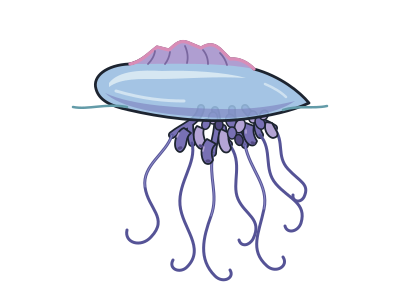
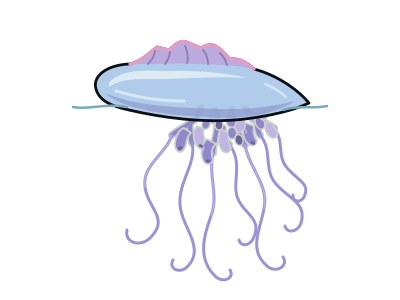
- Portuguese man o' warNot one jellyfish but a floating colony of specialised individuals working as one.
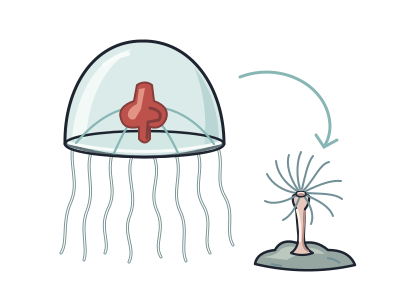
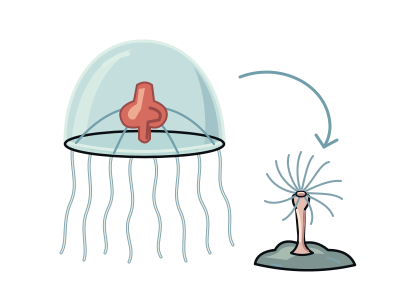
- Immortal jellyfishWhen injured or old, it can turn back into a baby polyp and start life again.
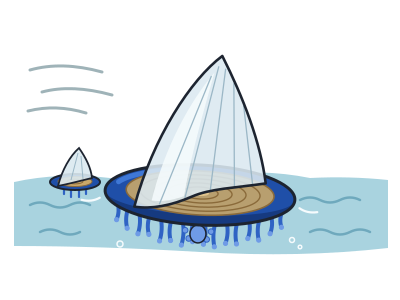
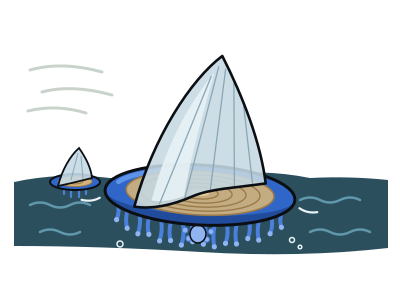
- By-the-wind sailorA blue raft with a stiff sail that drifts wherever the wind blows, sometimes washing ashore in millions.
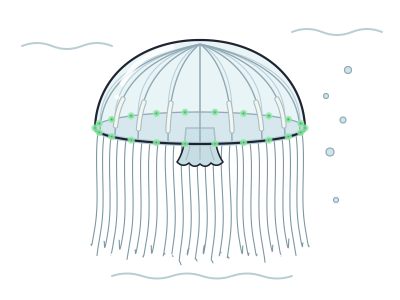
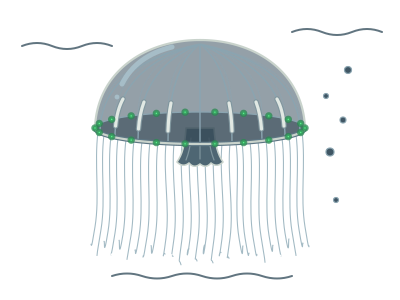
- Crystal jellyA clear jelly whose glowing green protein became a Nobel-winning tool for lighting up cells.
- Fire coralLooks like a coral and builds reefs, but is really a hydrozoan cousin of the man o' war.
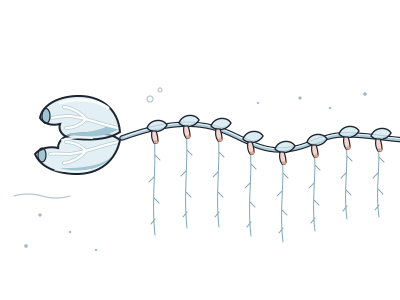
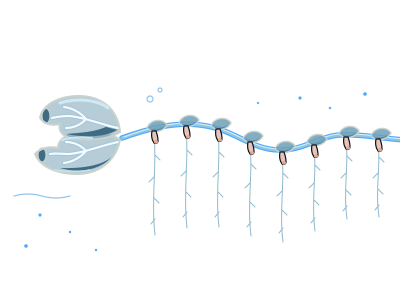
- Giant siphonophoreA see-through string of linked individuals that can stretch as long as a blue whale.