A species
By-the-wind sailor
Velella velella
A tiny blue raft with a glassy sail, blown wherever the wind wants
You and the by-the-wind sailor meet in the Animals branch, shown at about 700 million years ago (on 1 November, in a calendar from life's shared ancestor to today).
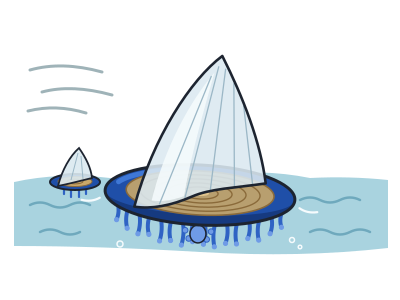
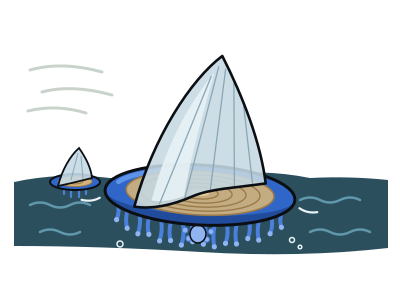
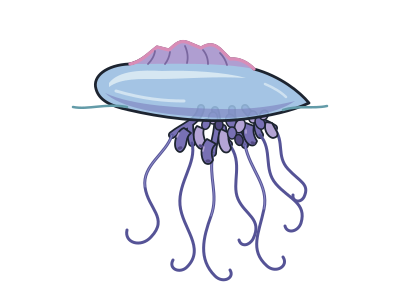
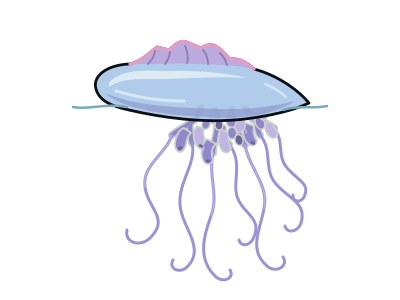
Picture a blue raft about as long as your little finger, with a clear, stiff sail standing on top. That is the by-the-wind sailor. It cannot swim or steer. It just drifts on the surface of the open ocean wherever the wind and currents carry it. When the winds change, often during storms, whole fleets get blown towards land. In some years, millions wash up on North America's west coast.
The sail runs at an angle across the float. On some sailors it slants one way, and on others it slants the mirror-image way. So some drift to the left of the wind and others to the right. Air-filled chambers inside the float keep it bobbing at the surface.
It looks like a jellyfish, but it is not a true one. It belongs to the same big group as jellyfish, sea anemones and corals, but it is only a distant relative of the common moon jelly. Its closest relative is the blue button, another small blue drifter.
Short blue tentacles hang underneath. Their stinging cells catch tiny floating animals. Its sting is rarely harmful to people, unlike the painful sting of the Portuguese man o' war.
Mistaken for litter
On the beach, a stranded sailor dries out and turns brittle and see-through. It can look like a cellophane sweet wrapper, and within a day or two its blue fades to white.
Hunted by fellow drifters
Some predators float along with it and eat it. These include violet snails, which ride on rafts of bubbles, and a small sea slug. Ocean sunfish eat it too.
Thousands of tiny jellyfish
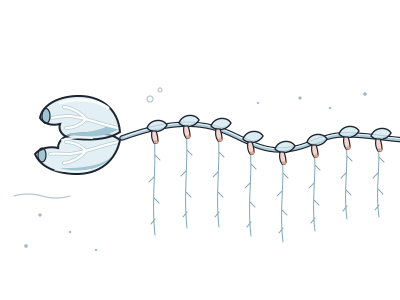
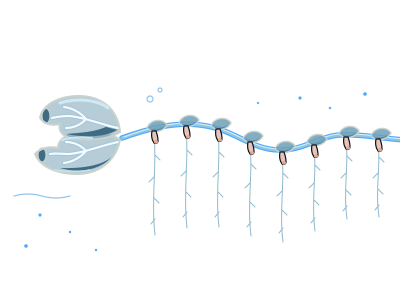
Its underside buds off thousands of tiny jellyfish, each only about 1 mm across. They carry partner algae that make food from sunlight.
Next to it on the tree
- Portuguese man o' warNot one jellyfish but a floating colony of specialised individuals working as one.
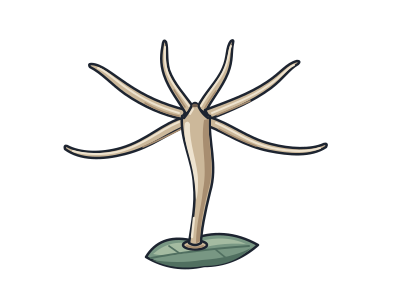
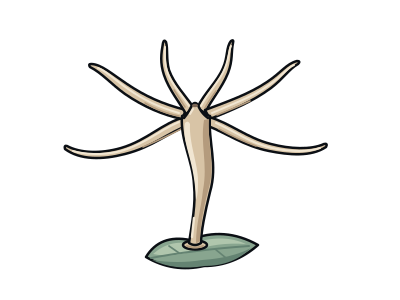
- Freshwater hydraA tiny freshwater polyp that can regrow its whole body from a small piece and barely seems to age.
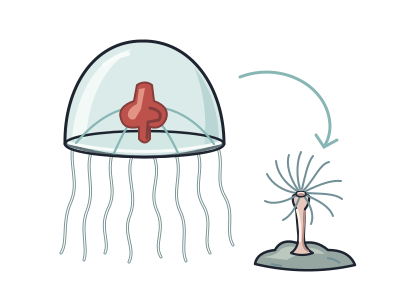
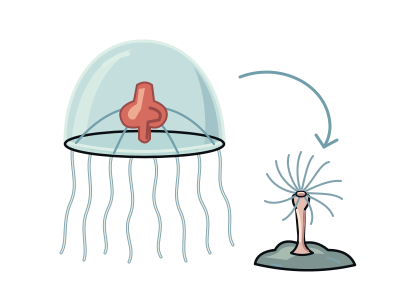
- Immortal jellyfishWhen injured or old, it can turn back into a baby polyp and start life again.
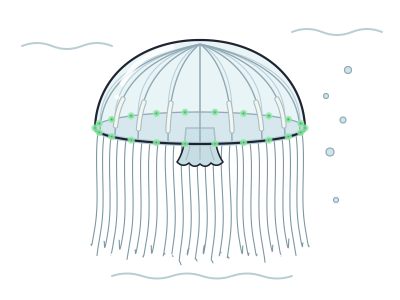
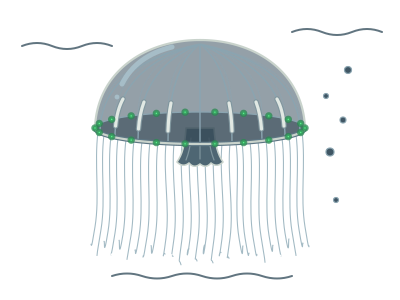
- Crystal jellyA clear jelly whose glowing green protein became a Nobel-winning tool for lighting up cells.
- Fire coralLooks like a coral and builds reefs, but is really a hydrozoan cousin of the man o' war.
- Giant siphonophoreA see-through string of linked individuals that can stretch as long as a blue whale.