A species
Giant siphonophore
Praya dubia
A see-through living chain that can stretch longer than a blue whale.
You and the giant siphonophore meet in the Animals branch, shown at about 700 million years ago (on 1 November, in a calendar from life's shared ancestor to today).
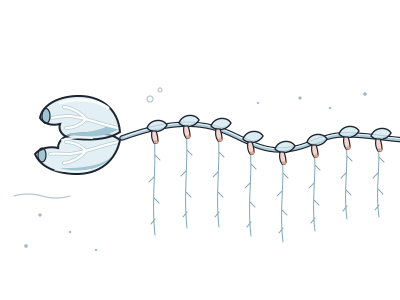
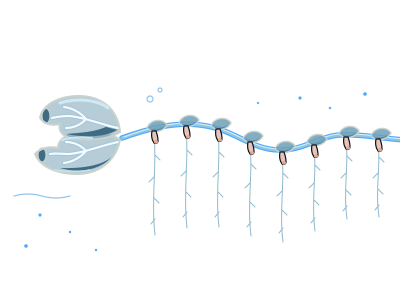
Picture a see-through rope drifting through the dark ocean, longer than a blue whale. The giant siphonophore can reach about 40 metres, a little more than three buses parked end to end. Yet it is very thin and weighs only a tiny fraction of what a whale weighs.
It isn't one animal in the usual sense. It is a colony: a chain of many genetically identical units called zooids. Each zooid is specialised for one main job, such as swimming, feeding, catching prey or reproducing, and none can survive on its own. At the front, two large, clear swimming bells pulse to pull the whole chain through the water.
Its family connections may surprise you. It is a cnidarian, in the same big group as jellyfish and corals. The Portuguese man o' war is a siphonophore too, so the two are close relatives. Unlike the man o' war, though, it has no gas-filled float that keeps it at the surface. It swims with its two bells instead.
It hunts with a gauzy curtain of stinging tentacles that hangs about 2 to 3 metres below the chain. When small crustaceans or jellies touch the threads, they are quickly hauled up to the feeding zooids. In the deep, it can also give off a soft blue glow.
Too delicate to catch
Its body is so fragile that it collapses when brought to the surface. Scientists only understood its full shape after watching living colonies underwater.
Broken by the currents
Rough currents sometimes break the colony apart and carry pieces of it into shallower water.
A big, deep family
There are about 200 known kinds of siphonophore, and most of them live in the deep ocean.
Next to it on the tree
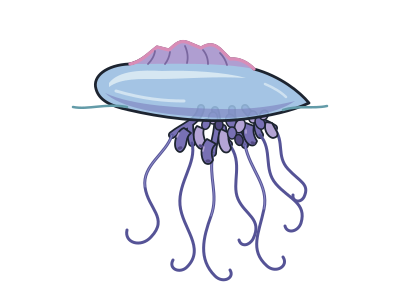
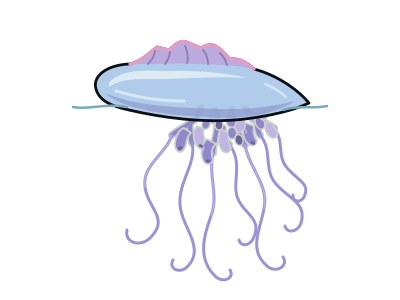
- Portuguese man o' warNot one jellyfish but a floating colony of specialised individuals working as one.
- Freshwater hydraA tiny freshwater polyp that can regrow its whole body from a small piece and barely seems to age.
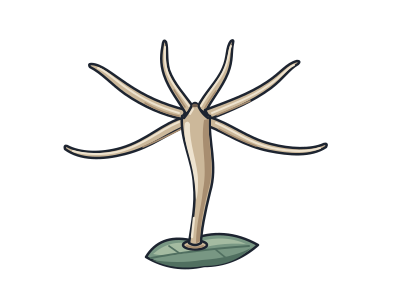
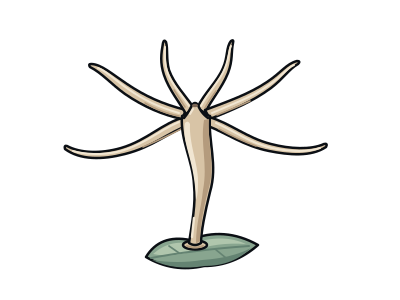
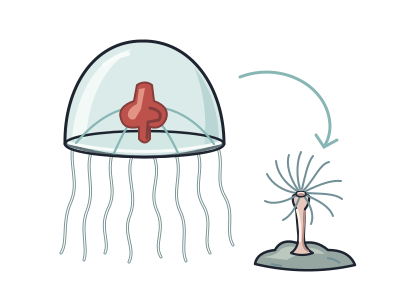
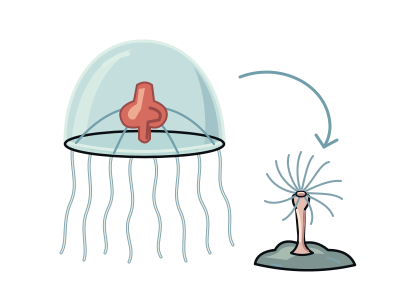
- Immortal jellyfishWhen injured or old, it can turn back into a baby polyp and start life again.
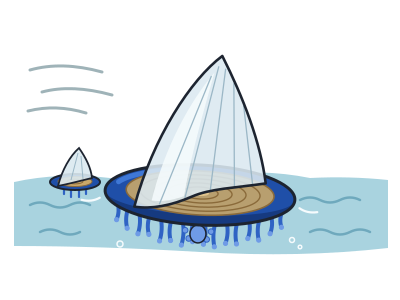
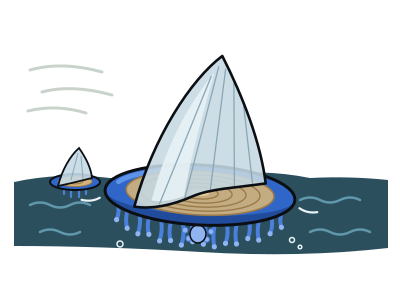
- By-the-wind sailorA blue raft with a stiff sail that drifts wherever the wind blows, sometimes washing ashore in millions.
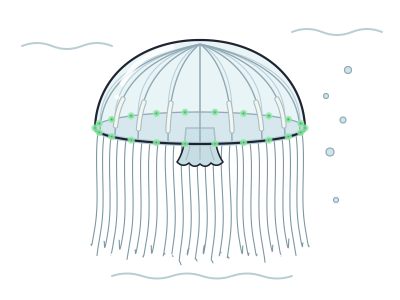
- Crystal jellyA clear jelly whose glowing green protein became a Nobel-winning tool for lighting up cells.
- Fire coralLooks like a coral and builds reefs, but is really a hydrozoan cousin of the man o' war.