A group of living things
Jellyfish and hydroids
Medusozoa
Coral relatives, from swimming bells to tiny polyps
This branch is shown at about 560 million years ago; its age is a rough estimate.
You and jellyfish and hydroids meet in the Animals branch, shown at about 700 million years ago (on 1 November, in a calendar from life's shared ancestor to today).
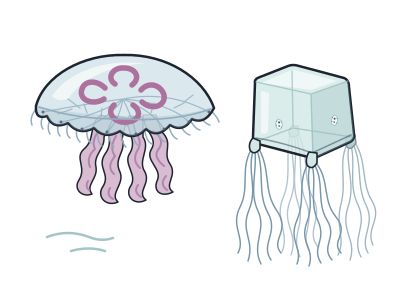
Many of these relatives of corals and sea anemones can grow into swimming bells. This branch includes true jellyfish, box jellyfish, hydroids and stalked jellyfish. Despite their tentacles, they are not close relatives of squid or octopuses. Special cells containing tiny stinging capsules connect them with their coral and anemone relatives.
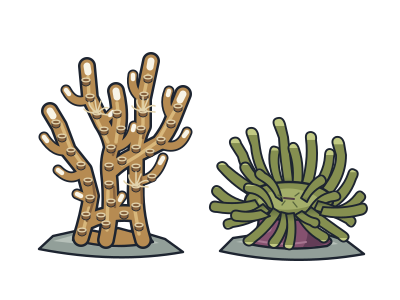
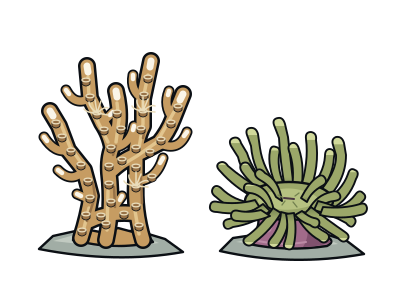
Many members have two very different body forms. One is a polyp: a body with tentacles, usually attached to a surface. The other is a medusa: usually a swimming bell. In many true jellyfish, the attached form makes a stack of little discs. These separate and grow into swimming jellyfish.
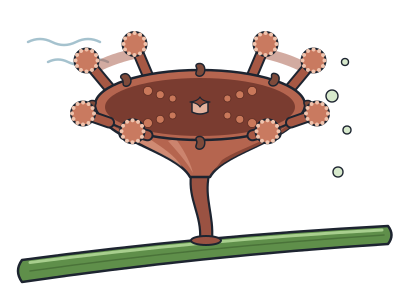
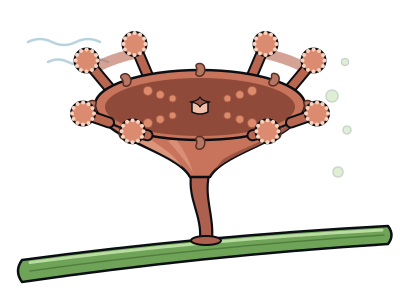
But a swimming bell is not compulsory in this family. Hydras never produce one. Stalked jellyfish live attached to rocks or seaweed, with bodies shaped like little trumpets. So this branch holds both familiar drifting bells and relatives without a free-swimming bell stage.
Not four eyes
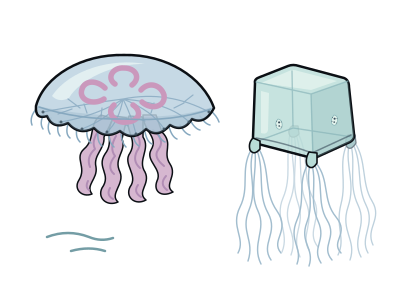
The four horseshoe-shaped markings inside a moon jellyfish are reproductive organs, not eyes or brains.
Connected teams
Many hydroids form colonies of connected polyps. Different polyps can specialise in feeding, defence or reproduction.
Food for others
Fish, sea turtles and even other jellyfish eat jellyfish.
Inside jellyfish and hydroids
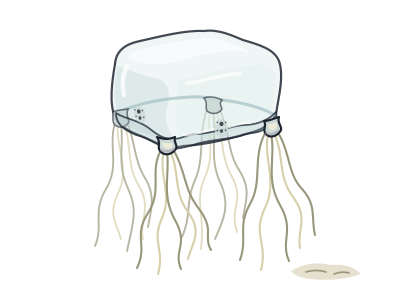
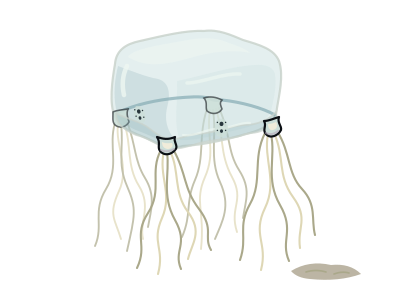
- Sea waspA box-shaped jellyfish with 24 eyes and one of the most dangerous stings in the sea.
- True jellyfishThe classic jellyfish: a pulsing bell with trailing arms, grown from a polyp that buds off baby jellies.
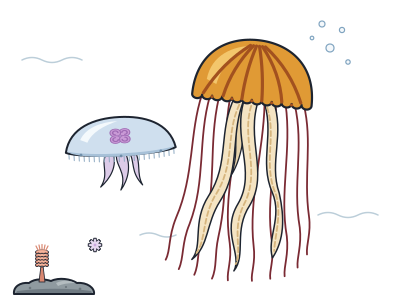
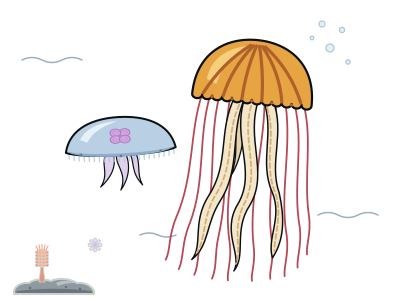
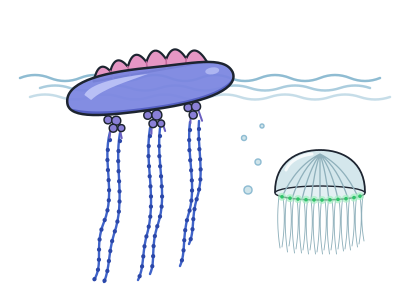
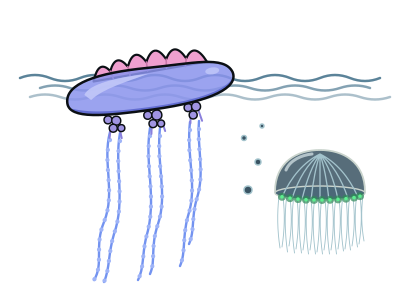
- Hydroids and siphonophoresThe most varied cnidarians: tiny polyps, floating colonies and jellies that can glow.
- Stalked jellyfishA jellyfish that never swims, living stuck to seaweed by a stalk like an upside-down flower.
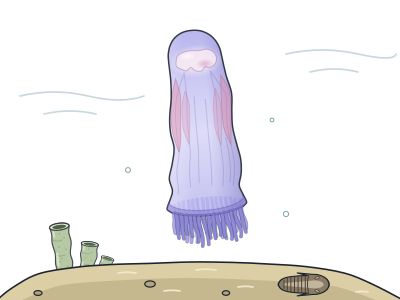
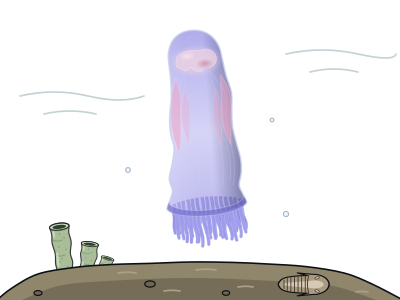
- BurgessomedusaThe oldest known swimming jellyfish, a bell-shaped fossil from the Burgess Shale with dozens of tentacles.