A group of living things
True jellyfish
Scyphozoa
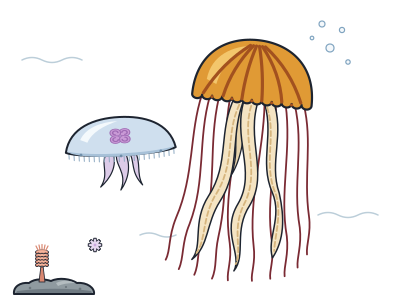
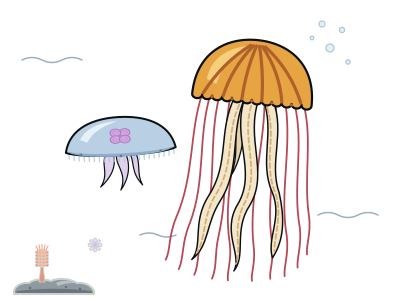
The classic pulsing jellyfish, which usually spends its early life as a tiny polyp on the seabed.
This branch is shown at about 400 million years ago; its age is a rough estimate.
You and true jellyfish meet in the Animals branch, shown at about 700 million years ago (on 1 November, in a calendar from life's shared ancestor to today).
This is the jellyfish most people picture: a soft, see-through bell that pulses through the water, with frilly arms trailing underneath. But most true jellyfish do not look like this when they are young. Most start as a tiny swimming larva that settles on a rock or other hard surface on the seabed. There it grows into a polyp only a few millimetres tall, shaped like a miniature sea anemone. Later, the polyp stacks up like a pile of saucers and pinches off baby jellies from its top, one after another.
Each baby looks like a tiny clear star and grows into an adult bell. A single moon jelly polyp can release tens of them. The polyp can keep going for several years and make new jellies every year.
That stuck-down polyp stage is a clue to their family. Jellyfish are relatives of corals and sea anemones, which spend their whole lives as polyps. Jellyfish are not fish at all. They have no brain, heart, blood or skeleton, and they are about 95% water. A simple net of nerves lets them react to the world around them. To swim, they squeeze the bell, then let it spring back, which gives them an extra push for very little effort.
Jellies in space
In 1991, nearly 2,500 moon jelly polyps and babies flew on the Space Shuttle Columbia so scientists could study how weightlessness affected them.
Sense organs on the rim
Small notches around the bell's edge hold between 4 and 16 tiny sense organs. These help the jelly keep its balance, and some include simple spots that sense light.
A giant of cold seas
The lion's mane is one of the largest true jellyfish. It has hundreds of hair-like tentacles. In the very biggest, the bell can reach about 2 metres across, and the tentacles can trail for tens of metres.
Inside true jellyfish
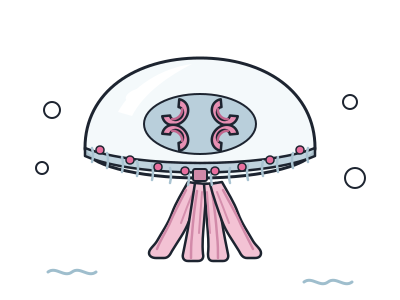
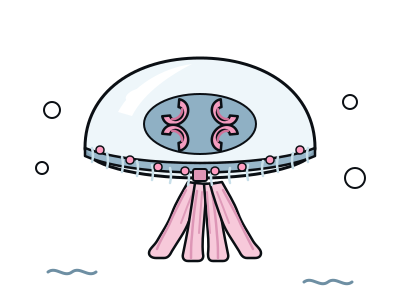
- Moon jellyfishNo brain, no heart, no bones, and 95% water, yet it has drifted the oceans for ages.
- Lion's mane jellyfishThe largest known jellyfish, with tentacles that can trail for over 30 metres.
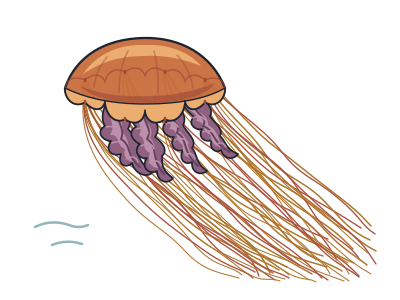
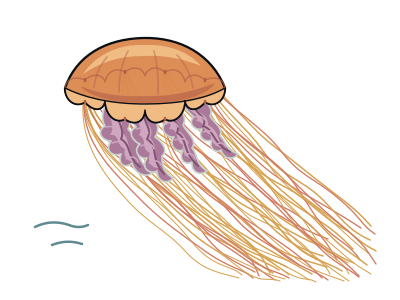
- Pacific sea nettleA golden-brown bell with long maroon arms, a favourite in aquarium jellyfish tanks.
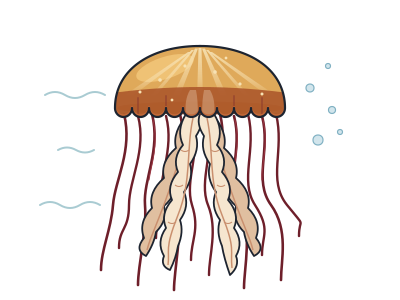
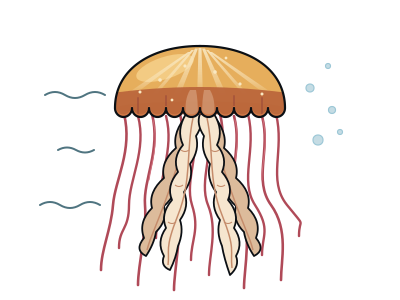
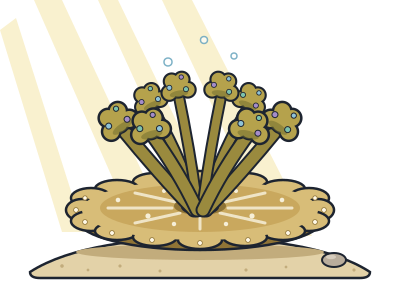
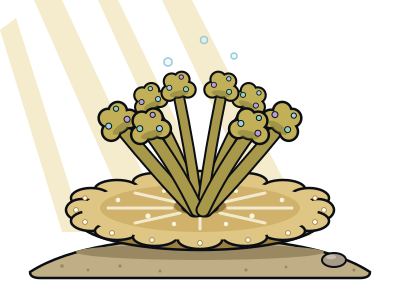
- Upside-down jellyfishLies bell-down on the sand with its arms up, sunbathing so the algae inside it can feed it.
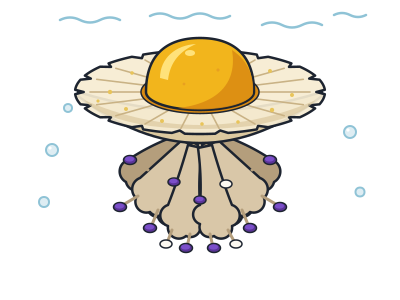
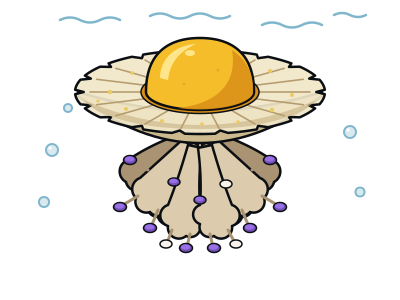
- Fried egg jellyfishA Mediterranean jellyfish that looks exactly like a fried egg floating in the sea.
Next to it on the tree
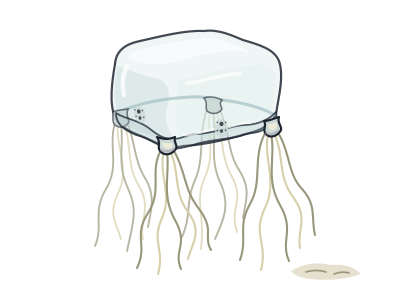
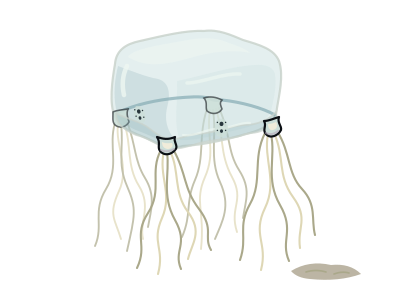
- Sea waspA box-shaped jellyfish with 24 eyes and one of the most dangerous stings in the sea.
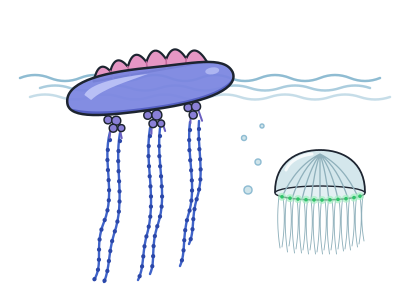
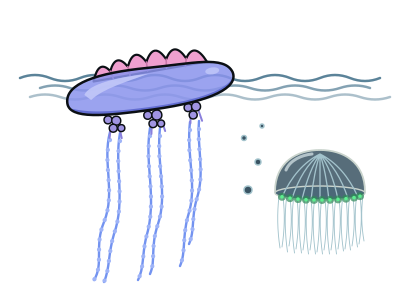
- Hydroids and siphonophoresThe most varied cnidarians: tiny polyps, floating colonies and jellies that can glow.
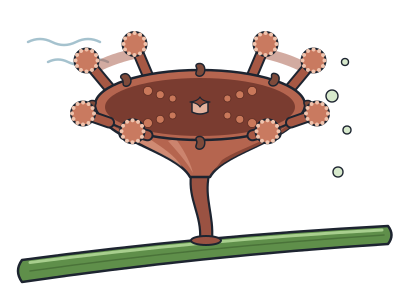
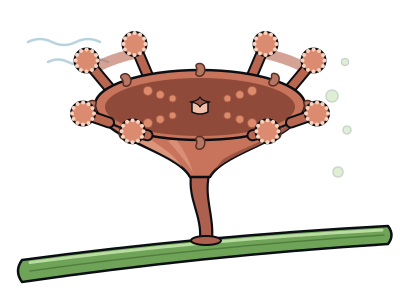
- Stalked jellyfishA jellyfish that never swims, living stuck to seaweed by a stalk like an upside-down flower.
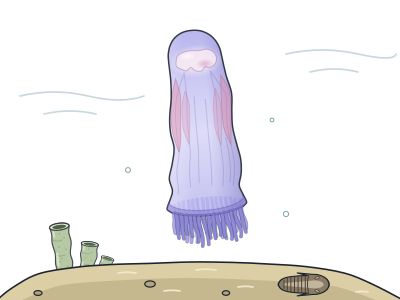
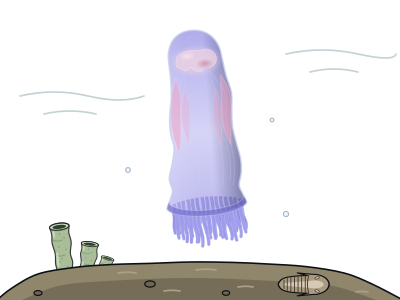
- BurgessomedusaThe oldest known swimming jellyfish, a bell-shaped fossil from the Burgess Shale with dozens of tentacles.