A species
Lion's mane jellyfish
Cyanea capillata
A jellyfish giant with an extraordinary trailing mane.
You and the lion's mane jellyfish meet in the Animals branch, shown at about 700 million years ago (on 1 November, in a calendar from life's shared ancestor to today).
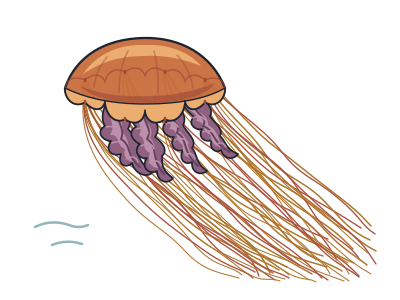
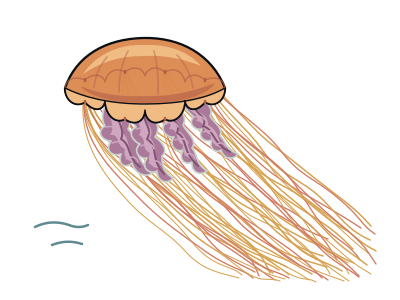
The lion's mane is the largest known jellyfish, with tentacles that can trail for over 30 metres. Those lengths belong to exceptional giants, not everyday animals. It shares the group called true jellyfish with the moon jellyfish: two relatives with very different looks.
In British waters, its bell—the rounded main body—is usually about 30–50 centimetres across. Exceptional bells can reach about 2 metres. Beneath it hang eight groups of fine tentacles, which can number more than a thousand altogether. Four broad, frilly feeding arms hang underneath too. These are separate from the thin, trailing tentacles.
This is an animal of cold northern seas. The swimming jellyfish lives in open water, including near the surface in coastal waters and bays. Its food includes small drifting animals, fish and other jellyfish—even its moon jellyfish relatives. For all its impressive size, it can still become a meal for a leatherback sea turtle.
A travelling shelter
Young pollack and other fish can shelter around its bell. Some young crabs hitch rides too.
Two ways of living
Its familiar swimming stage usually lasts less than a year. A tiny stage attached to a surface may live for several years.
A patterned rim
The bell's rim has 16 rounded sections arranged in eight pairs.
Next to it on the tree
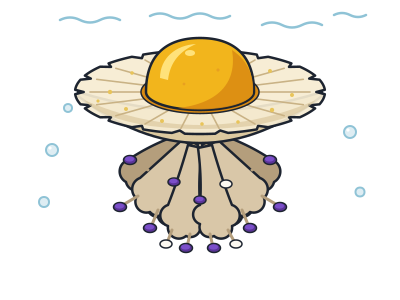
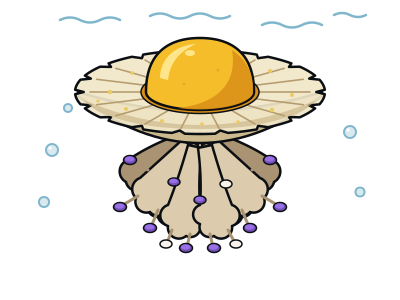
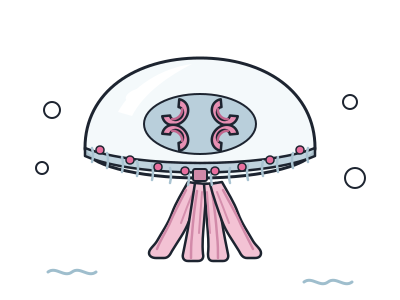
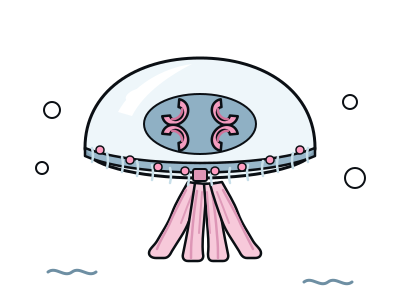
- Moon jellyfishNo brain, no heart, no bones, and 95% water, yet it has drifted the oceans for ages.
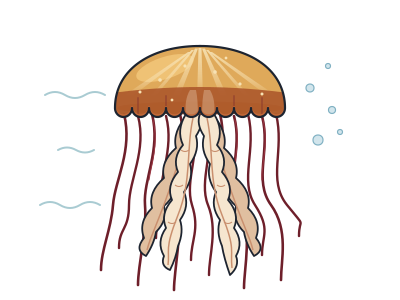
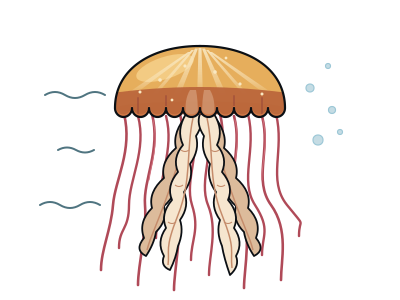
- Pacific sea nettleA golden-brown bell with long maroon arms, a favourite in aquarium jellyfish tanks.
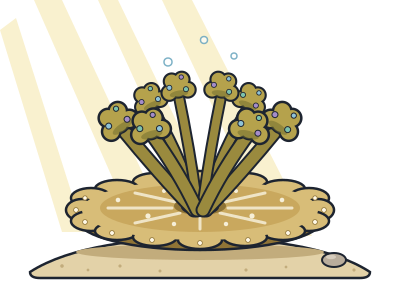
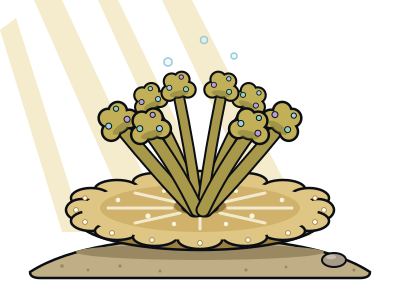
- Upside-down jellyfishLies bell-down on the sand with its arms up, sunbathing so the algae inside it can feed it.
- Fried egg jellyfishA Mediterranean jellyfish that looks exactly like a fried egg floating in the sea.