A species
Pacific sea nettle
Chrysaora fuscescens
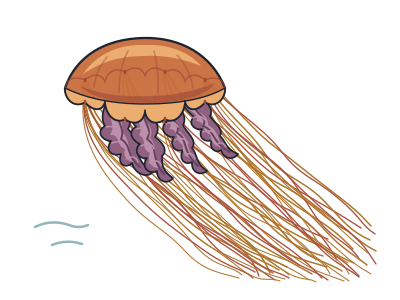
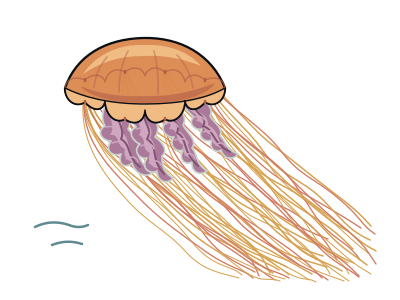
A golden-brown jellyfish that trails long maroon tentacles, and a star of aquarium jelly tanks.
You and the pacific sea nettle meet in the Animals branch, shown at about 700 million years ago (on 1 November, in a calendar from life's shared ancestor to today).
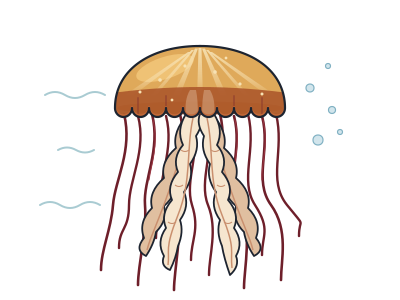
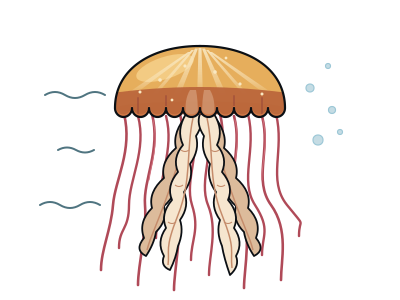
Picture a golden-brown bell about as wide as a dinner plate, trailing long, dark maroon streamers. Since about the 1990s, the Pacific sea nettle has been one of the most popular jellyfish in public aquariums. People love its colours and long tentacles, and it is fairly easy to keep.
It belongs to the true jellyfish, the same group as the moon jellyfish and the lion's mane jellyfish. Despite the name, a jellyfish is not a fish. It has no brain, heart or bones. Instead, eight tiny sense structures around the edge of its bell have simple eye spots that tell light from dark, plus balance organs that help it stay upright.
It has two kinds of streamers. Twenty-four thin maroon tentacles hang from the rim of the bell. Four frilly, paler mouth arms hang from the centre and spiral as they go. They can grow several metres long. Both carry stinging cells that catch tiny drifting animals, fish eggs and even other jellyfish. For people, the sting feels about like a bee sting and is rarely serious.
In the wild it lives in cool coastal waters, mostly off California and Oregon. In autumn and winter, many gather near the surface in bays and harbours.
Crab hitchhikers
Young crabs sometimes ride on sea nettles. They hide in the bell and nibble it, which can leave the jellyfish looking tattered.
A golden name
Its group's name comes from Chrysaor, a figure in Greek myth. The name means roughly 'golden weapon'.
Starts life stuck down
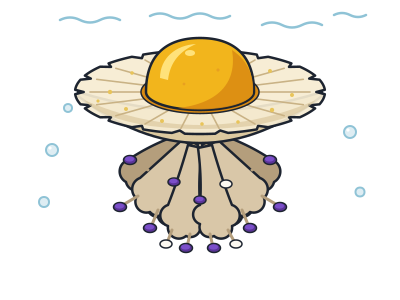
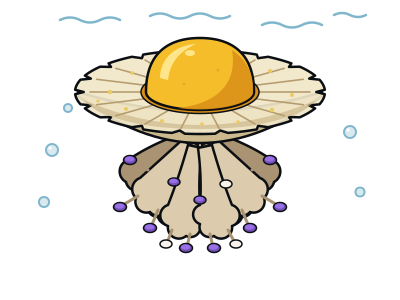
A sea nettle starts as a tiny larva that settles and becomes a polyp fixed to a surface. Later the polyp buds off a stack of tiny eight-armed baby jellies, and each one can grow into an adult.
Next to it on the tree
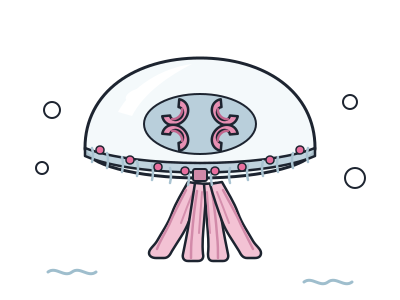
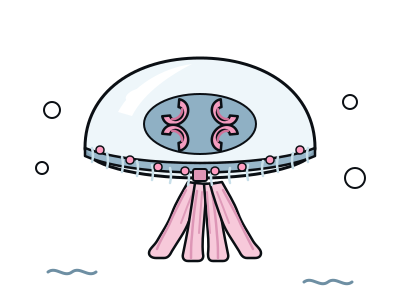
- Moon jellyfishNo brain, no heart, no bones, and 95% water, yet it has drifted the oceans for ages.
- Lion's mane jellyfishThe largest known jellyfish, with tentacles that can trail for over 30 metres.
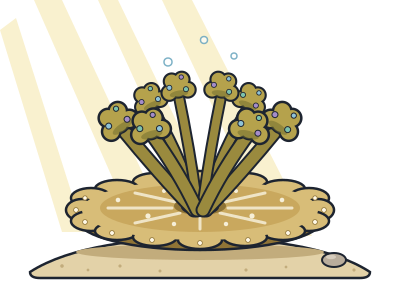
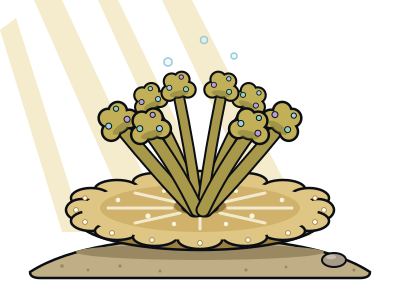
- Upside-down jellyfishLies bell-down on the sand with its arms up, sunbathing so the algae inside it can feed it.
- Fried egg jellyfishA Mediterranean jellyfish that looks exactly like a fried egg floating in the sea.