A species
Upside-down jellyfish
Cassiopea andromeda
A jellyfish that lies upside down on the sand, sunbathing its algae partners.
You and the upside-down jellyfish meet in the Animals branch, shown at about 700 million years ago (on 1 November, in a calendar from life's shared ancestor to today).
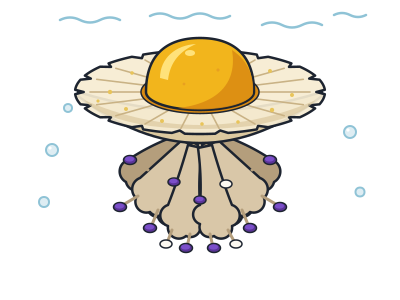
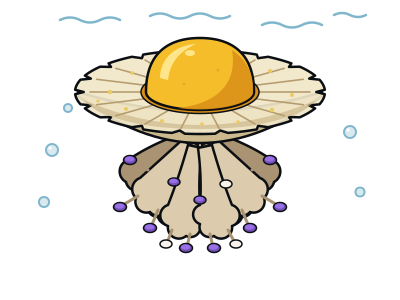
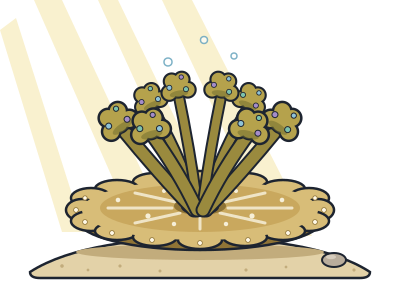
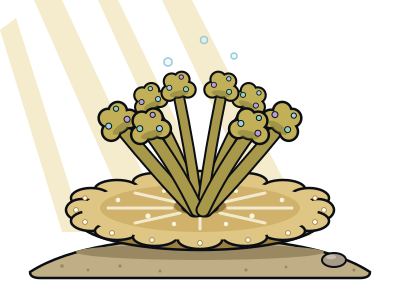
Most jellyfish drift through open water. This one lies bell-down on the sandy seabed, like an upturned plate, with its frilly arms pointing up at the light. It is not hurt. It is sunbathing for the tiny partners that live inside it.
Tiny single-celled algae live in the tissues that face upwards. They use sunlight to make sugars and share them with the jellyfish. This is often said to be about 90% of the food it needs. In return, the algae get a sunny, sheltered home. The jellyfish catches the rest of its food as tiny drifting animals. Instead of one central mouth, it has many small mouths spread along its branching arms.
Because it sits still with its arms up, people often mistake it for a sea anemone. But it is a true jellyfish, in the same group as moon jellyfish and lion's mane jellyfish, and it can swim if it is disturbed. While it rests, it gently pulses the edge of its bell. This pushes water over its arms and brings in food and oxygen.
It lives in warm, calm, shallow water on sandy flats, in lagoons and around mangroves.
Sleeping without a brain
Upside-down jellyfish were tested in a lab. As far as scientists know, they were the first animals without a brain shown to have a sleep-like state. They pulsed about a third less at night and were slower to react while 'asleep'.
Algae first, then grow up
A young polyp has to pick up its partner algae before it can change into a baby jellyfish.
Through the Suez Canal
It comes from the Red Sea and Indo-Pacific. It had reached the Suez Canal by the late 1800s, and it was later found in the Mediterranean Sea.
Next to it on the tree
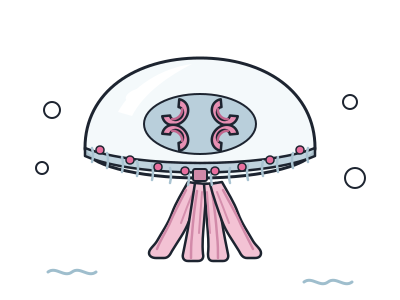
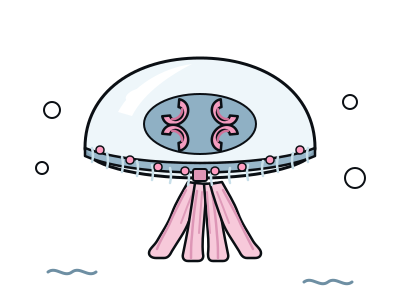
- Moon jellyfishNo brain, no heart, no bones, and 95% water, yet it has drifted the oceans for ages.
- Lion's mane jellyfishThe largest known jellyfish, with tentacles that can trail for over 30 metres.
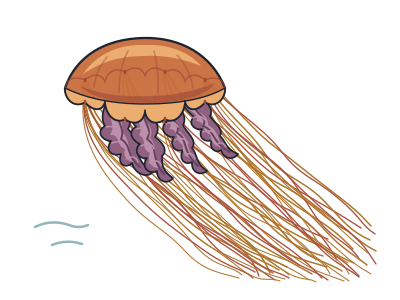
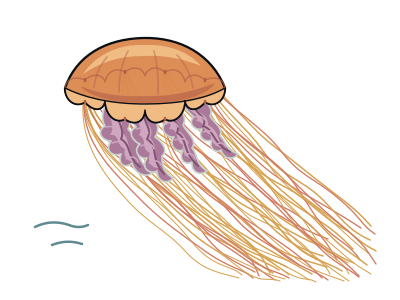
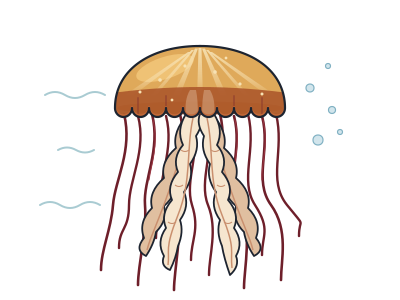
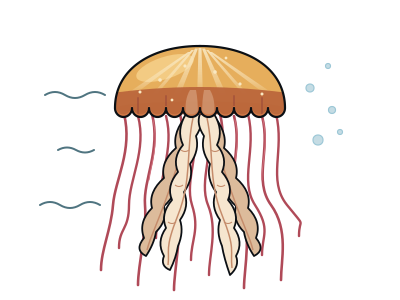
- Pacific sea nettleA golden-brown bell with long maroon arms, a favourite in aquarium jellyfish tanks.
- Fried egg jellyfishA Mediterranean jellyfish that looks exactly like a fried egg floating in the sea.