A species
Sea wasp
Chironex fleckeri
Twenty-four eyes, a box-shaped body and a powerful sting.
You and the sea wasp meet in the Animals branch, shown at about 700 million years ago (on 1 November, in a calendar from life's shared ancestor to today).
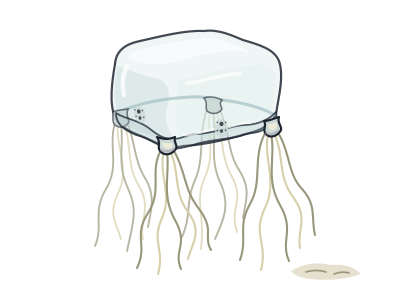
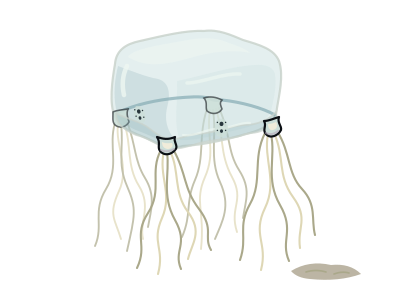
The sea wasp is a box-shaped jellyfish with 24 eyes and one of the most dangerous stings in the sea. Despite its name, it is no insect wasp. Its box-jellyfish branch is separate from the rounded jellyfish group that includes the moon jellyfish beside it on the tree.
Its nearly transparent bell—the main part of its body—resembles a soft box open underneath. Four bundles carry up to about 60 trailing tentacles. Its eyes sit in clusters on the four sides, rather than forming a face. Yet this animal has no central brain. A network of nerves lets it respond to its surroundings.
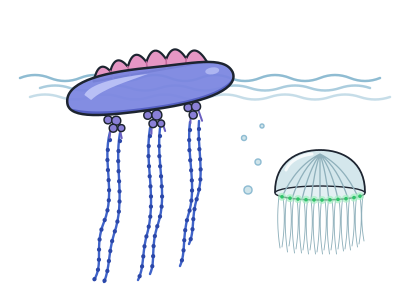
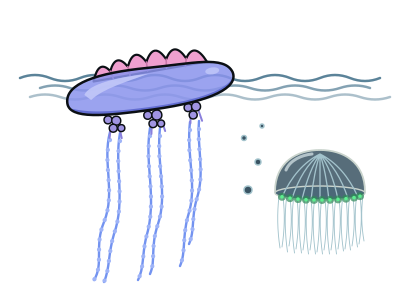
The sea wasp lives in warm, shallow coastal waters around northern Australia, from Western Australia through the Northern Territory to Queensland. Unlike another neighbour on the tree, the Portuguese man o' war, a sea wasp is one animal, not a group of specialised animals living together.
A small seafood menu
Young sea wasps mainly eat small shrimp. Adults also catch fish.
A tiny beginning
Its life cycle includes an attached stage called a polyp, about 1–2 millimetres in size, before the free-swimming jellyfish stage.
No heartbeat
Like other jellyfish, the sea wasp has no bones, heart or blood.
Next to it on the tree
- True jellyfishThe classic jellyfish: a pulsing bell with trailing arms, grown from a polyp that buds off baby jellies.
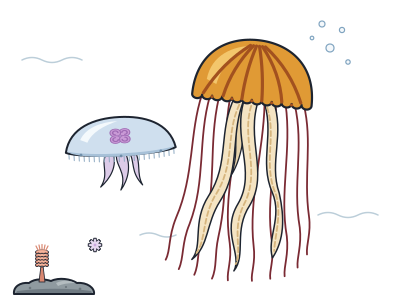
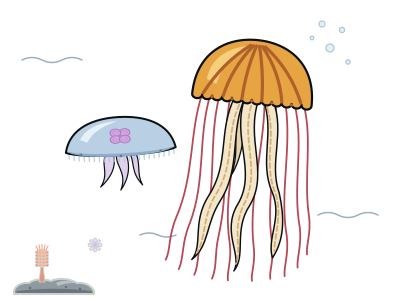
- Hydroids and siphonophoresThe most varied cnidarians: tiny polyps, floating colonies and jellies that can glow.
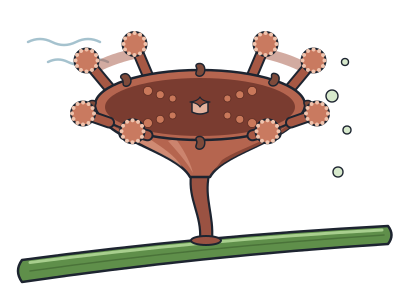
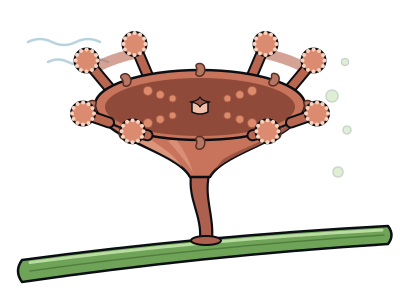
- Stalked jellyfishA jellyfish that never swims, living stuck to seaweed by a stalk like an upside-down flower.
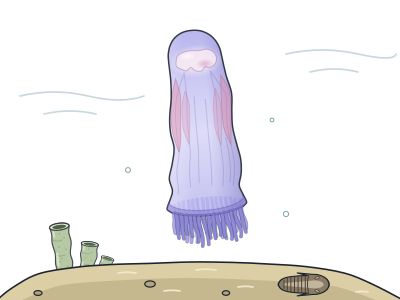
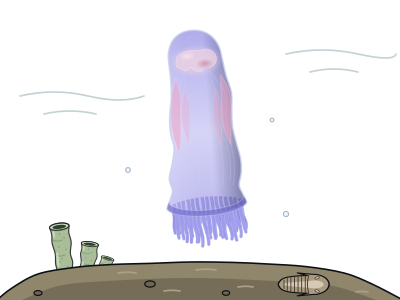
- BurgessomedusaThe oldest known swimming jellyfish, a bell-shaped fossil from the Burgess Shale with dozens of tentacles.