A species
Crystal jelly
Aequorea victoria
A see-through jelly whose green glow became a Nobel-winning tool for lighting up cells
You and the crystal jelly meet in the Animals branch, shown at about 700 million years ago (on 1 November, in a calendar from life's shared ancestor to today).
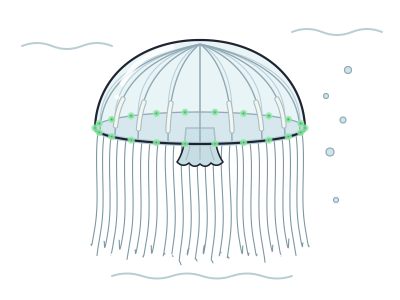
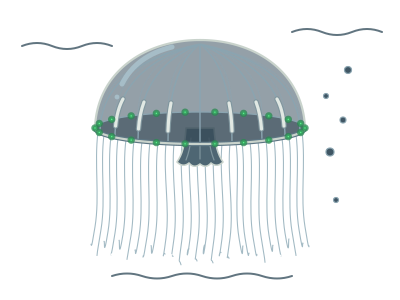
This see-through jelly holds a secret that changed biology. When it is disturbed, tiny specks around the rim of its bell glow green. The protein behind that green light, called GFP, is now used in labs around the world to light up living cells. In 2008 three scientists shared the Nobel Prize in Chemistry for discovering and developing it.
The glow needs two proteins working together. One, called aequorin, makes blue light when it meets calcium. GFP takes in that energy and gives it out as green light. In 1994 the scientist Martin Chalfie put the GFP gene into bacteria and roundworms, and they glowed too. Roger Tsien's lab later made GFP brighter and created blue, cyan and yellow versions. Now scientists can tag different parts of a cell in different colours.
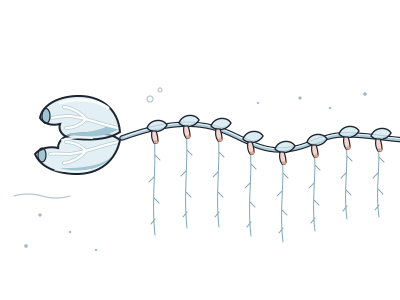
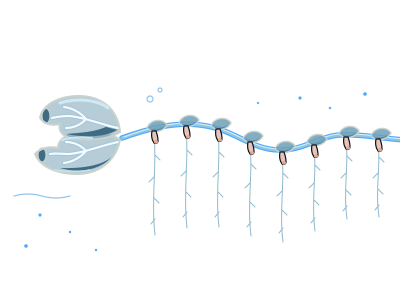
On the tree of life, this jelly sits in the group of hydroids and siphonophores, alongside the Portuguese man o' war, the freshwater hydra and the immortal jellyfish. Its bell is a clear, colourless dome with up to about 150 thin tentacles hanging from the edge. It drifts in waters off the Pacific coast, from the Bering Sea to southern California. It mostly eats comb jellies and other small jellies, and its stings are harmless to people.
Started as a footnote
In 1962 the scientist Osamu Shimomura wrote a paper about aequorin, the jelly's blue-light protein. GFP got only a brief mention in a footnote.
Hundreds of thousands of jellies
Over about 20 years, Shimomura's team collected more than 850,000 of these jellies near Friday Harbor in Washington State, USA, to study their light.
Two lives
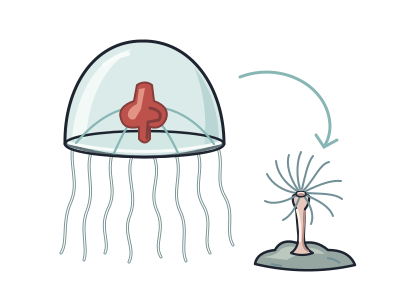
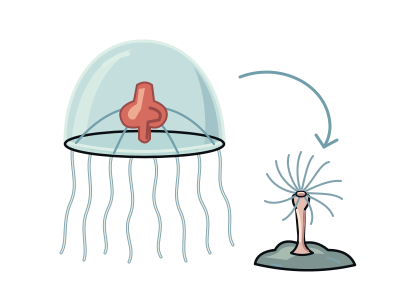
Its life has two stages. Tiny polyps live attached to the seabed or to hard things such as shells. Each spring they bud off free-swimming jellies, which live for about six months and die off by autumn.
Next to it on the tree
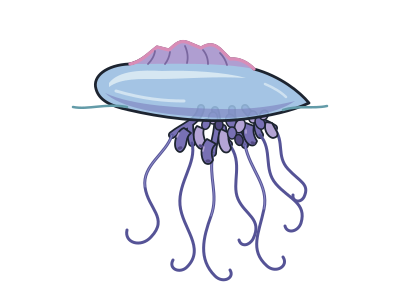
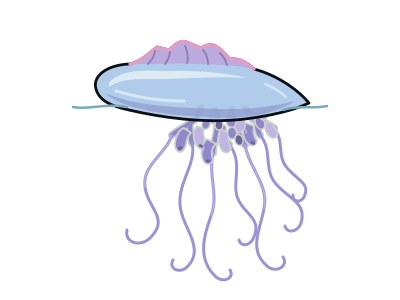
- Portuguese man o' warNot one jellyfish but a floating colony of specialised individuals working as one.
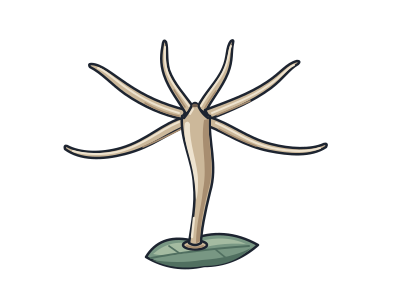
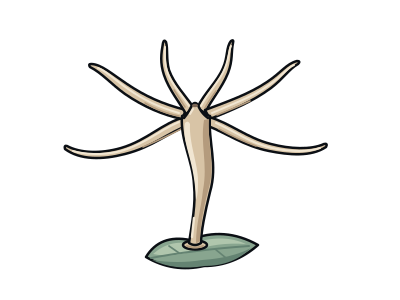
- Freshwater hydraA tiny freshwater polyp that can regrow its whole body from a small piece and barely seems to age.
- Immortal jellyfishWhen injured or old, it can turn back into a baby polyp and start life again.
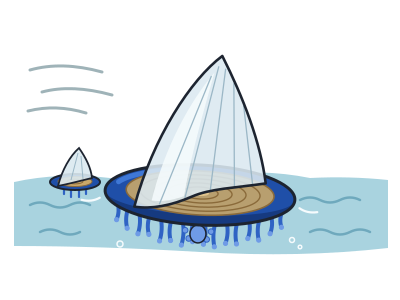
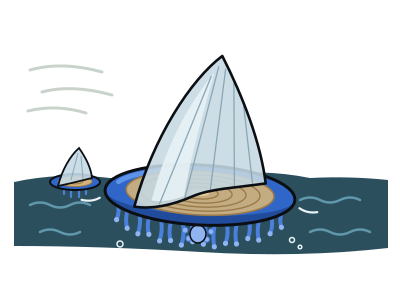
- By-the-wind sailorA blue raft with a stiff sail that drifts wherever the wind blows, sometimes washing ashore in millions.
- Fire coralLooks like a coral and builds reefs, but is really a hydrozoan cousin of the man o' war.
- Giant siphonophoreA see-through string of linked individuals that can stretch as long as a blue whale.